
Unveiling Yasuní: A Macro Photographer's Journey...
Yasuní National Park, nestled in the heart of the Ecuadorian Amazon, is a name whispered with reverence among biologists and nature enthusiasts alike. It’s not just a rainforest; it's a biodiversity hotspot, a place teeming with life in numbers that defy comprehension. As a wildlife photographer specializing in macro photography and conservation, I recently embarked on a multi-day expedition to Yasuní, a journey that would redefine my understanding of the natural world and underscore the urgent need for its protection. Join me as I unveil Yasuní through my lens, exploring the vibrant tapestry of life that makes this corner of the Amazon so incredibly special. This article is designed to inspire your own visit to Yasuní and potentially booking Yasuní National Park Tours with vistalocation.com, promoting sustainable travel and directly supporting local communities.
What is Yasuní National Park?
Yasuní National Park is a protected area located in Ecuador, within the Amazon rainforest. Recognized globally as one of the most biodiverse regions on Earth, it's a sanctuary for an astonishing number of plant and animal species. UNESCO recognizes Yasuní as a Biosphere Reserve, a testament to its ecological significance.
Photographing the Nocturnal Amazon
One of the most unforgettable experiences in Yasuní is venturing out on night photography Amazon rainforest walks. The forest transforms under the cloak of darkness, revealing a hidden world of nocturnal creatures. Equipped with my Canon MP-E 65mm 1-5x Macro Photo lens, I set out to capture the intricate beauty of insects that emerge after sunset. Focusing in low light is a significant challenge, requiring patience and a steady hand. I rely heavily on a macro twin flash to illuminate my subjects, bringing out details that would otherwise remain hidden.
On one particular night, our guide, Mateo, spotted a beetle unlike any I had seen before. Its exoskeleton shimmered with an iridescent sheen, reflecting a spectrum of colors I struggled to describe. It appeared to be a newly discovered species. Capturing its image was a test of skill and equipment. The slightest movement would blur the shot, and maintaining focus at such close range demanded precision. After many attempts, I finally captured a series of images that truly conveyed the beetle's remarkable beauty.

A close-up of an iridescent beetle photographed during a night walk in Yasuní. The image highlights the beetle's shimmering exoskeleton and intricate details captured with a macro lens, demonstrating the hidden beauty of the nocturnal Amazon.
Birding in Yasuní: A Photographer's Paradise
Early morning in Yasuní is magical. The air is thick with mist, and the sounds of the rainforest awaken as the sun begins to rise. I joined a local guide on a early morning canoe trips along the blackwater rivers, hoping to capture the vibrant plumage of the region's avian inhabitants. My weapon of choice was the Canon EF 100-400mm f/4.5-5.6L IS II USM lens, perfect for capturing distant subjects while maintaining image quality.
One bird, in particular, caught my eye: the Hoatzin. This prehistoric-looking bird is known for its vibrant plumage and unique calls. As the Hoatzin emerged from the mist, perched on a branch overhanging the river, I managed to capture a series of stunning photographs. The lens allowed me to isolate the bird against the blurred background of the rainforest, highlighting its distinctive features.
Best Time to Visit Yasuní National Park
The best time to visit Yasuní National Park for Ecuador Amazon Bird Photography is during the dry season, which typically runs from December to March and June to August. During these months, rainfall is lower, making it easier to navigate the forest and spot wildlife.
Guided Hikes: Discovering Yasuní's Mammals
Beyond the insects and birds, Yasuní is home to a diverse array of mammals. I embarked on several guided hikes in Yasuní National Park for mammal viewing with Elena, a knowledgeable guide from the Kichwa community. Elena's deep understanding of the rainforest and its inhabitants was invaluable in our search for elusive creatures.
We focused on the intricate root systems of emergent trees, which provide shelter and habitat for countless species. Photographing mammals in the dense rainforest is challenging. The light is often dim, and the animals are wary of human presence. I attempted to capture a photograph of a pygmy marmoset, the world’s smallest monkey, using a wide aperture to blur the background and create depth. The challenge was to maintain focus on such a small, quick-moving subject while respecting its natural habitat. This is ethical wildlife photography Yasuní National Park.
This photograph captures a pygmy marmoset clinging to a tree branch in Yasuní. The wide aperture used blurs the background, creating depth and drawing attention to the monkey's small size and unique features, while illustrating the challenges of photographing elusive mammals in the rainforest.
What equipment do you need for macro photography in the rainforest?
For best equipment Amazon rainforest macro photography, you will need:
- A macro lens with a magnification ratio of at least 1:1
- A sturdy tripod for stability
- A macro twin flash to illuminate subjects in low light
- Rain gear to protect your equipment from the elements
A Taste of the Amazon: Sustainable Dining
No trip to Yasuní is complete without experiencing the local cuisine. The indigenous communities of the Amazon have a deep connection to the land and a wealth of culinary knowledge. I had the opportunity to sample several traditional dishes, prepared with sustainably sourced ingredients. This falls under the category of Amazonian Cuisine Ecuador.
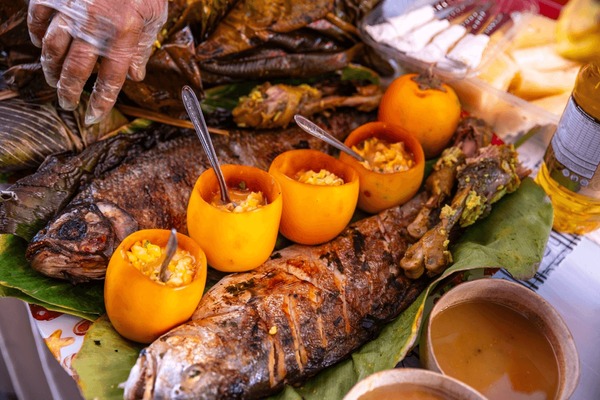
Maito de pescado
Maito de pescado is a traditional dish made by wrapping fish in bijao leaves and steaming it over an open fire. The fish is typically sourced from local rivers, ensuring its freshness and sustainability. The preparation process is a community effort, with everyone pitching in to gather ingredients and prepare the meal. The taste is exquisite, the fish infused with the smoky aroma of the leaves.
Chicha de yuca
Chicha de yuca is a fermented cassava drink that holds significant cultural importance in the Amazon. The cassava is traditionally prepared by the women of the community, who chew it to break down the starches before fermenting it. The resulting drink is slightly sour and slightly sweet, a refreshing and nutritious beverage.
Chontacuros
Chontacuros are grubs that are considered a delicacy in the Amazon. The ethical considerations surrounding their consumption are important to understand. The practice supports local livelihoods and promotes sustainable resource management. The grubs are typically harvested from palm trees and can be eaten raw or cooked. They are a rich source of protein and provide an important source of nutrition for the local communities.
Conservation Challenges in Yasuní
Despite its ecological importance, Yasuní National Park faces numerous threats. Oil extraction and deforestation are major concerns, endangering the region’s biodiversity and the livelihoods of the indigenous communities who call it home.
It is crucial to remember Yasuní National Park Conservation is an ongoing process.
Vistalocation's Commitment to Sustainable Tourism
Vistalocation.com is committed to promoting sustainable tourism Yasuní and supporting the local communities who are working to protect it. By partnering with indigenous communities, Vistalocation ensures that tourism benefits the local economy while minimizing its environmental impact.
Yasuní's Biodiversity is Disappearing. Act Now! (Video Concept)
- HOOK (0-3 seconds): Start in medias res with a dramatic close-up of a vibrant Poison Dart Frog (shot on RED in cinematic 4K, professional) with its intense colors filling the frame. Action word: "Suddenly."
- SCENE (3-7 seconds): Rapidly cut (edited with slow-motion elements) between different macro shots of diverse insects, reptiles, and amphibians found in Yasuní: a praying mantis camouflaged amongst orchids (dutch tilt, depth of field), a caiman lurking in a blackwater river at night (neon lighting to highlight its eyes), and a Morpho butterfly spreading its wings. Show these clips rapidly in slow-motion, using a high-speed camera. Pack the punch early.
- TWIST (7-10 seconds): Unexpectedly zoom out from a tiny spider on a leaf to reveal the scale of the rainforest, but pan quickly to show oil extraction infrastructure in the distance (orbit shot). The video ends with a call to action: "Yasuní's Biodiversity is Disappearing. Act Now. Support Sustainable Tourism." Emotion: Curiosity, amazement, sadness.
Eco-Friendly Travel in Yasuní
Choosing Eco-Friendly Travel in Yasuní is an essential part of protecting this area. When you book a tour, consider these points:
- Use responsible tour operators that are certified
- Respect the wildlife
- Engage the locals
Conclusion
My journey into Yasuní National Park was an experience that will stay with me forever. The incredible biodiversity, the warmth of the local communities, and the urgent need for conservation have left an indelible mark on my soul. I urge you to experience the magic of Yasuní for yourself, to witness the beauty of the Amazon through your own eyes, and to support the efforts to protect this precious ecosystem. Book your sustainable tour with vistalocation.com today and become a part of the solution. Book Now
Are there jaguars in Yasuní National Park?
Yes, Yasuní National Park is home to jaguars, although sightings are rare due to their elusive nature. Your chances of seeing one are higher with an experienced local guide.