Unearthing Namibia's Secrets: A Scientific Journ...
Namibia. The name conjures images of towering dunes, vast deserts, and perhaps, the famed Welwitschia mirabilis. But beyond the well-trodden paths lies a Namibia rich in geological wonders, scientific discovery, and unique ecological adaptations. This isn't your typical safari; this is a journey into the heart of Namibia's under-explored corners, fueled by curiosity and a thirst for knowledge. Join me as I recount my recent adventure, from the haunting remnants of diamond rushes to groundbreaking research on desert survival, and uncover what makes this land so scientifically captivating. This exploration focused on Namib Desert microclimate research projects, and included conservation volunteer programs.
A Ghostly Start: Sperrgebiet and the Sands of Time
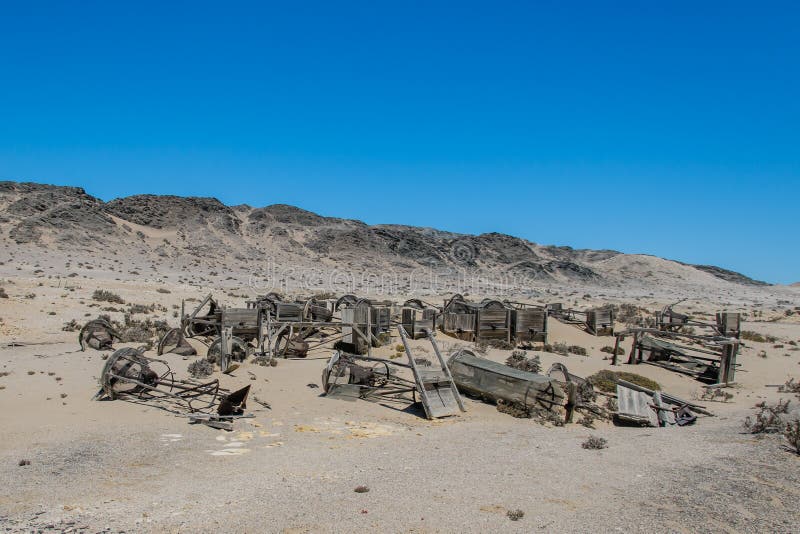
My Namibian adventure began in the forbidden "Sperrgebiet" (Forbidden Zone) National Park (GPS: -26.9417° S, 15.6317° E), a place steeped in history and eerily beautiful decay. The abandoned diamond mining settlement of Kolmanskop stands as a stark reminder of the diamond rush that gripped this region in the early 20th century. Walking through the sand-filled houses, once bustling with life, felt like stepping into a surreal painting. The desert reclaims its territory with each gust of wind, creating a haunting juxtaposition of man's ambition and nature's enduring power. Kolmanskop offered an opportunity to ponder Namibia's geological heritage.
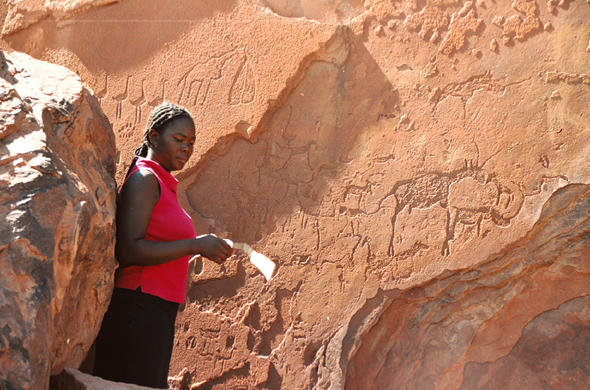
The contrast was striking as I travelled north to Twyfelfontein in Damaraland (GPS: -20.7500° S, 14.5000° E). Here, the landscape is etched with ancient rock engravings – a testament to the San people who inhabited this region thousands of years ago. These engravings, dating back as far as 6,000 years, depict animals, symbols, and abstract patterns, offering a glimpse into the spiritual and cultural beliefs of these early inhabitants. A private guide for rock art documentation in Twyfelfontein is highly recommended. The sheer age and artistry of these petroglyphs were truly awe-inspiring, a stark contrast to the more recent, yet equally poignant, ruins of Kolmanskop.
Unlocking Desert Secrets at Gobabeb: An Interview with Dr. Henschel
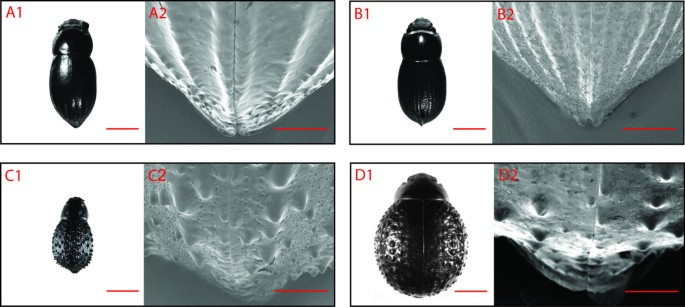
My next stop was the Desert Research Foundation of Namibia (DRFN) in Gobabeb (GPS: -23.6667° S, 14.5000° E), a hub of scientific research dedicated to understanding and preserving the Namib Desert ecosystem. I had the privilege of interviewing Dr. Joh Henschel, the director, whose insights into desert ecology were truly enlightening. His research, particularly on the Stenocara gracilipes beetle, also known as the fog-basking beetle, is nothing short of revolutionary. This research highlights Namibia's endemic flora and fauna.
Dr. Henschel explained how the beetle has evolved a remarkable adaptation to survive in this arid environment: collecting water from the fog that rolls in from the Atlantic Ocean. Scanning Electron Microscopy (SEM) is used to analyze the microstructure of the beetle's shell. The shell’s surface is covered in tiny nano-scale bumps and waxy coatings. These bumps act as condensation nuclei, attracting water droplets, while the waxy coating allows the water to quickly roll down into the beetle's mouth. It's a marvel of natural engineering, demonstrating the power of evolution in action. The DRFN exemplifies the sustainable tourism initiatives in Zambezi Region Namibia.
Sandboarding Physics at Dune 7: Singing Sands and Barchan Formation
Leaving Gobabeb, I headed to Dune 7 near Walvis Bay for a thrilling sandboarding experience. But this wasn't just about the adrenaline rush; it was also an opportunity to observe the fascinating physics at play in the formation of these towering sand dunes. Dune 7, one of the highest dunes in the Namib, is a prime example of a barchan dune – a crescent-shaped dune formed by wind action.
As I carved down the dune, I also experienced the phenomenon of "singing sand" – a low-frequency sound produced when sand grains avalanche down the dune's slip face. This phenomenon, explored in depth by Andreotti, B., Bonneau, L., & Clement, E. (2005) in Physics of Fluids, is caused by the friction between the sand grains as they slide past each other. It's a truly unique and unforgettable sensory experience. Experiencing sandboarding also emphasizes remote sensing data for conservation volunteering.
Nighttime Encounters: The Cartwheeling Spider
As darkness fell, I embarked on a guided spider safari, an experience that truly pushed me outside my comfort zone. Our target: the Carparachne aureoflava, a spider known for its incredible cartwheeling defense mechanism. When threatened, this spider folds its legs and rolls away at high speed, covering distances of up to 20 meters!
Using a Fenix TK16 V2.0 flashlight with a red filter to minimize disturbance, we searched the dunes for these elusive creatures. The biomechanics of their cartwheeling ability are fascinating, involving precise coordination of leg movements and body posture to maintain balance and momentum. This is a prime example of Namibia citizen science travel. Witnessing this incredible display of adaptation firsthand was a highlight of the trip.
A Taste of Tradition: Ovambo Cuisine
No trip to Namibia is complete without experiencing the local cuisine. I had the opportunity to sample traditional Ovambo dishes, including Oshiwambo (chicken stew) and Mahangu pap (millet porridge). The Oshiwambo was rich and flavorful, while the Mahangu pap, a staple food in northern Namibia, provided a hearty and satisfying meal. The use of Eembe oil (Marula oil) for flavoring added a unique nutty taste. Eembe oil is composed primarily of oleic and linoleic acids, contributing to its distinct flavor profile. The fermentation process of Mahangu pap with traditional cultures from previous batches adds depth and complexity to the dish. It's a testament to the resourcefulness and culinary traditions of the Ovambo people.
Botanical Wonders: Welwitschia and Dr. Curtis
Meeting with Dr. Barbara Curtis, a botanist specializing in desert flora, was another highlight of my trip. Her work focuses on Welwitschia mirabilis, an iconic plant that can live for over a thousand years. Dr. Curtis explained how drone imagery, captured with a Sony Alpha 7R IV with a 24-70mm GM lens, is used to map Welwitschia populations and assess their health, providing valuable data for conservation efforts. She also discussed the plant's genetic diversity and its remarkable adaptation mechanisms for surviving in the harsh desert environment. Understanding these adaptations is vital for best time to visit Namibia for botany tours.
Naukluft Mountains: Hiking and Endemic Plants (A Budget-Friendly Alternative)
Instead of the well-known Gamsberg Mountain, I decided to explore the Naukluft Mountains (GPS: -24.2667° S, 16.1833° E) for hiking and spotting endemic plant species. This offered a more budget-friendly and less crowded experience. The rugged terrain and stunning views made for a challenging but rewarding hike, and I was able to identify numerous plant species with the help of "Plants of Southern Namibia" by Coleen Mannheimer. I also saw some rare bird watching guide specimens.
Responsible Travel: Supporting NaDEET
Throughout my journey, I was mindful of the ethical considerations involved in traveling to such a unique and fragile environment. It's crucial to support local conservation organizations like the Namib Desert Environmental Education Trust (NaDEET). NaDEET promotes sustainable living and environmental education in Namibia. By supporting their educational programs and initiatives, we can help ensure the long-term preservation of this incredible ecosystem. Consider Namibia conservation volunteer programs. You can learn more and contribute at their website: NaDEET.
Namibia's Fog-Basking Beetle Symphony: A Viral Video Script
(Visuals in 4K)
- HOOK (0-2 seconds): Close-up of a Stenocara gracilipes beetle tilting forward on a dune to collect fog droplets. Slow-motion shot emphasizing water droplets bursting down its back. ACTION: "Gathering."
- SCENE (2-7 seconds): Time-lapse showing multiple beetles congregating on a dune during a morning fog event, highlighting their coordinated behavior.
- TWIST (7-10 seconds): Transitions into a minimalist Pixar-style 3D animated infographic explaining the beetle's shell structure, featuring nano-scale bumps and waxy coatings optimized for fog collection. Text overlay: "NAMIBIA: Tiny Architect."
Conclusion: A Land of Discovery
My journey through Namibia was far more than just a vacation; it was an immersive experience that ignited my curiosity and deepened my appreciation for the natural world. From the haunting beauty of Kolmanskop to the groundbreaking research at Gobabeb, Namibia offers a wealth of opportunities for scientific discovery and exploration. By embracing responsible travel practices and supporting local conservation efforts, we can help ensure that this incredible land continues to inspire and educate for generations to come. Are you ready to unearth Namibia's secrets? Book a guided tour of Namibia's fossil sites, or consider volunteering in Namibia conservation impact.