Tuvalu: A Climate Scientist's Urgent Plea
The e...
The equatorial sun beat down with relentless intensity as our small plane touched down on Funafuti Atoll. The turquoise lagoon shimmered, a breathtaking vista of postcard perfection. But even before I fully disembarked, the illusion shattered. Knee-high king tides already lapped at the airport tarmac, a stark and unwelcome reminder of the encroaching ocean. This was Tuvalu, a nation on the front lines of climate change, and I, Dr. Anya Sharma, a climate scientist specializing in sea-level rise impacts, was here to witness its struggle firsthand. Sea level rise in Tuvalu is currently measured at approximately 5mm per year, significantly higher than the global average, threatening to submerge the nation within decades. My mission: to document, analyze, and amplify the urgent cry for help emanating from this vulnerable island nation. My trip is dedicated to observing the impacts of climate change in Pacific Islands, and to advocate for change.
The aerial view of Funafuti Atoll shows the narrow landmass and the surrounding ocean, illustrating Tuvalu's vulnerability to sea-level rise as documented by Dr. Sharma during her research trip. The image highlights the immediate threat to this island nation.
Celebrating Resilience: A Fatele in Vaiaku
One evening, I was invited to a fatele in Vaiaku, the capital village. The air thrummed with anticipation. As the sun dipped below the horizon, casting long shadows across the sandy ground, the dancers emerged. Adorned in vibrant titi (grass skirts) and fau (leaf headbands), they moved with a grace that belied the weight of the challenges facing their nation. The rhythmic chanting, punctuated by the resonant thud of wooden crates used as drums, filled the air. The fatele began as a slow, almost mournful narrative, each movement telling a story of their ancestors, their connection to the land and the ocean, and their deep-rooted cultural identity. But as the performance progressed, it transformed into an energetic display of resilience, a defiant assertion of their spirit in the face of adversity. This celebration was more than just a performance; it was a community's powerful resistance to climate change in Tuvalu. Tuvalu culture and climate change are intimately intertwined.
The Unfolding Crisis: Relocation Realities
The following day, I attended a community meeting focused on relocation planning. The atmosphere was heavy with a mix of apprehension and resignation. The discussion centered around the practical challenges of relocating to Fiji – securing land, finding employment, adapting to a new culture. But more profound were the emotional considerations. Leaving their ancestral lands meant losing their cultural identity, their connection to generations past. The concern for supporting Tuvalu community climate change was palpable. One community elder, his face etched with worry, voiced the sentiment that hung in the air: "We are the ocean's children, but the ocean is taking us." This statement really brought home the terrible consequences of climate change. What are the long-term effects of climate change for Tuvalu?
Pulaka and Perseverance: A Taste of Tradition
I had the opportunity to learn how to prepare Pulaka in a traditional umu, an earth oven. In the late afternoon sun, casting long shadows across the preparations, we dug a pit, carefully layering it with hot stones. The Pulaka, a starchy root vegetable, was wrapped in banana leaves before being placed in the oven to roast. The communal aspect of this activity was striking – everyone worked together, sharing stories and laughter. Pulaka is a staple food in Tuvalu, but the increasing saltwater intrusion, one of the most devastating impacts of climate change in Pacific Islands, makes it harder and harder to grow. Tasting the roasted Pulaka, with its earthy flavor, was a poignant reminder of the traditions threatened by the encroaching sea.

The image shows Tuvaluans preparing Pulaka in a traditional Umu. This food production method is endangered by climate change, specifically saltwater contamination, highlighting the threat to food security in Tuvalu.
Visible Impacts: Erosion and Intrusion
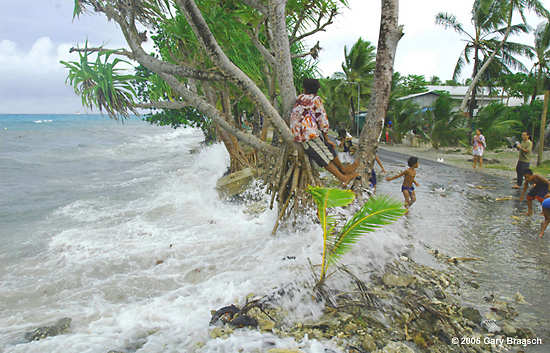
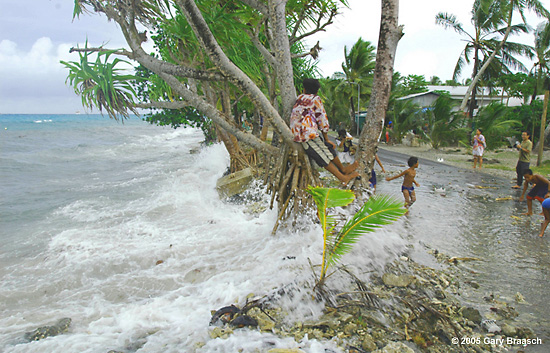
Everywhere I looked, the visible impacts of climate change were undeniable. Near Fongafale, coastal erosion had ravaged the shoreline, crumbling seawalls and exposing the roots of trees precariously clinging to the edge. The saltwater intrusion was contaminating the freshwater lens, making it increasingly difficult to grow crops and access clean drinking water. How is sea level rise affecting Fongafale Tuvalu? The destruction to land has been catastrophic. The encroaching ocean serves as a constant and visual threat. The situation is truly dire.
Documenting the Crisis: Drones and Data
To fully grasp the scale of the crisis, I utilized a DJI Mavic 3 Pro drone to document the islands and the encroaching ocean. The drone allowed me to capture high-resolution orthomosaic images for scientific analysis, precisely documenting the changing coastline with GPS coordinates and altitude data. However, I was acutely aware of the ethical considerations. I obtained informed consent from the community and ensured that my photography respected their privacy and cultural sensitivities. Furthermore, I collaborated with local youth, training them in drone operation, empowering them to document their own stories and become stewards of their own narrative. Drone photography Tuvalu sea level rise is an effective way to capture what is happening to the islands. Is it safe to travel to Tuvalu given climate change impacts?

This image captures Dr. Sharma using a drone to document coastal erosion and sea-level rise in Tuvalu. The high-resolution imagery provides critical data for scientific analysis, as well as empowering local youth in documenting their own stories and monitoring environmental changes.
Ethical Considerations for Drone Photography in Vulnerable Environments
It's vital when doing this work to respect the local community. Therefore, the main steps to achieve that are:
- Respect Cultural Norms: Be aware of local customs regarding photography and filming.
- Obtain Informed Consent: Always seek permission before capturing images of people or sensitive areas.
- Protect Privacy: Avoid capturing images that could compromise individuals' privacy.
- Data Security: Ensure that collected data is stored and managed securely, protecting sensitive information.
- Community Involvement: Engage local communities in the data collection process, sharing findings and empowering them to use the technology for their own purposes.
A Call to Action: The Urgency of Now
Tuvalu is more than just a destination; it is a symbol of the urgent need for global climate action. I urge you to support organizations working on climate change mitigation and adaptation, such as the Tuvalu National Adaptation Programme of Action (NAPA). Consider visiting Tuvalu responsibly, minimizing your environmental impact, and supporting local communities. And most importantly, pressure your governments to adopt more ambitious climate policies. The future of Tuvalu, and countless other vulnerable communities around the world, depends on it. What is the future of Tuvalu with climate change? The answer depends on what action is taken now. Consider making a donation to supporting Tuvalu community climate change. This is our chance to make a difference.