Tsingy de Bemaraha: A Spiky Paradise Worth Fight...
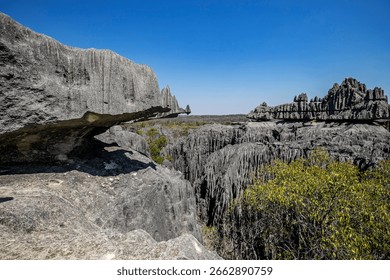
Imagine this: the sun beating down, sweat dripping, dust coating every conceivable surface...but then, you see it. Rising like a cathedral of karst from the earth, the Tsingy de Bemaraha is an alien landscape that will forever be etched in your memory. This UNESCO World Heritage Site in Madagascar is an adventure, a challenge, and an experience that will leave you breathless. Getting there is half the battle (especially the infamous RN9), but trust me, the reward is worth every bump and puncture. So, pack your sense of adventure, your best 4x4 survival skills, and prepare to enter a spiky paradise unlike any other.
From Morondava to the Moon (aka, the RN9)
My adventure began in Morondava, a bustling coastal town where the scent of the sea mixes with the sweet aroma of vanilla. The market buzzed with life, a kaleidoscope of colors and sounds. As the sun began its descent, painting the iconic baobab trees against a fiery sky, I knew I was on the cusp of something extraordinary. But first, I had to face the RN9.
Imagine driving on the moon...if the moon was made of potholes and dust! This "highway" (and I use the term loosely) is the main artery leading to Bekopaka, the gateway town to the Tsingy de Bemaraha National Park. Let me be clear: you absolutely need a robust 4x4. Don't even think about attempting this journey in anything less.
I rented my trusty Land Cruiser in Morondava, making sure to haggle a bit (it's part of the experience!). More importantly, I made sure to carry a tire repair kit. The RN9 is notorious for punctures, and you'll likely encounter several along the way. Slow motion footage plays in my mind now when I think of the RN9 and the ruggedness it presented. The journey took a grueling 8 hours, a testament to the road's unforgiving nature. But with each bone-jarring jolt, the anticipation grew.
Entering the Cathedral of Karst: The Tsingy Formations
Finally, after what felt like an eternity, I arrived in Bekopaka. The next morning, I was ready to explore the Tsingy. And let me tell you, nothing can truly prepare you for the sheer scale and uniqueness of these geological formations. The word "Tsingy" itself means "where one cannot walk barefoot" in Malagasy, and it's an understatement.
The Tsingy is a petrified forest of limestone blades, a cathedral of karst sculpted by millennia of wind and rain. The razor-sharp formations reach towards the sky, creating a landscape that feels both alien and awe-inspiring. Walking through the designated trails (you absolutely need a guide!), I felt like I was navigating a labyrinth of stone. The GoPro POV when I was navigating the Tsingy gives a great sense of the wonder!
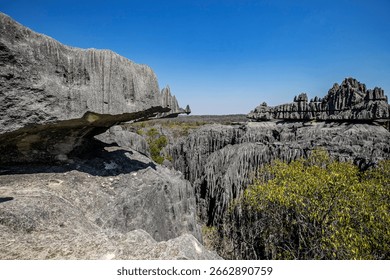
The Tsingy formations at sunset, showcasing their unique and razor-sharp landscape.
Wildlife Encounters: Searching for the Silky Sifaka
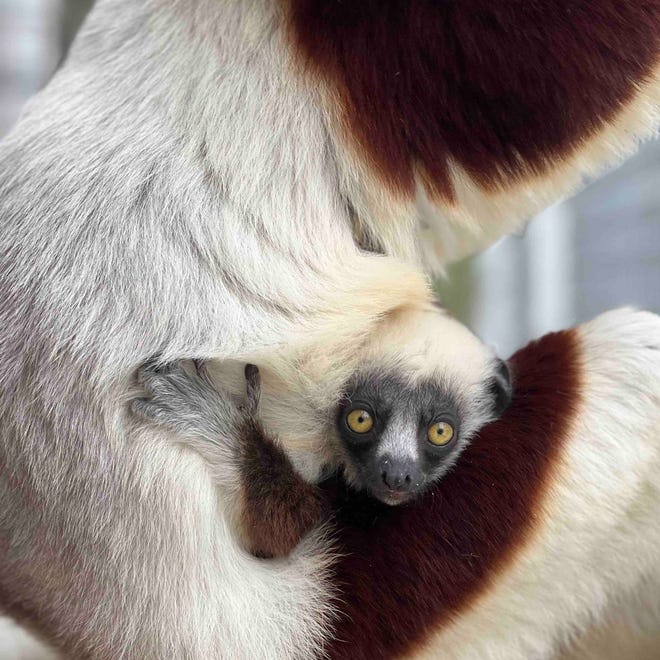
One of my biggest hopes for this trip was to spot the Critically Endangered Perrier’s Sifaka lemur in the northern section of the park. These lemurs, with their distinctive white fur and black faces, are found only in this region, and their survival is threatened by deforestation. Classified as critically endangered by the IUCN, seeing one in the wild would be a truly special experience.
While I wasn't lucky enough to spot a Perrier’s Sifaka (also referred to as Decken's Sifaka), I did encounter other incredible wildlife. I saw several brown lemurs leaping through the trees and a variety of colorful birds flitting amongst the spiky rocks. This makes the area a dream to have a Perrier's Sifaka photography tour. Always be sure to use a zoom lense to keep your distance from the wildlife. Seeing endemic species Madagascar in person is worth the cost of the trip.
The park is a biodiversity hotspot Madagascar, and the chance to see its unique inhabitants is a major draw.
Manambolo River Trip: Spotting the Madagascar Fish Eagle
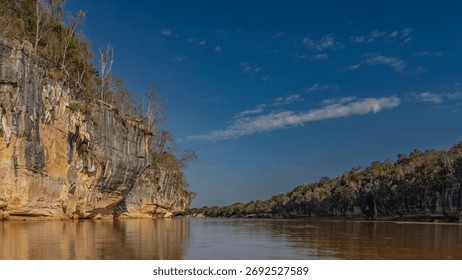
Another highlight was a boat trip on the Manambolo River. The river winds through dramatic gorges, offering stunning views of the Tsingy from a different perspective. The boat journey on the Manambolo River runs though a landscape of great interest, particularly the Bemaraha Strict Nature Reserve, which borders the National Park.
More excitingly, this river is a habitat for the endangered Madagascar Fish Eagle. With its distinct dark brown plumage and white head, this majestic raptor is a sight to behold. Sadly, habitat loss threatens this incredible bird. I kept my eyes peeled and, after a while, managed to spot one perched high on a cliff, surveying its domain. I saw a variety of other birds including those of Madagascar spiny forest as well. This experience really drove home the importance of conservation efforts in the region.
The majestic Madagascar Fish Eagle perched on a cliff along the Manambolo River.
The Sweet Smell of Vanilla: Local Culture and Cuisine
No trip to this region of Madagascar is complete without experiencing the local culture and cuisine. Vanilla is a key part of the region’s identity. Historically, vanilla was a flavoring reserved for royalty. Today, the cultivation of vanilla near the Tsingy is a major source of income for local communities.
I highly recommend visiting a local vanilla farm to learn about the process, from bean to bottle. And of course, don't miss the opportunity to try the local vanilla-infused rum! If you are a chef, then you know vanilla tasting Madagascar is a great and unique experience.
Fresh vanilla beans drying in the sun at a local farm near the Tsingy de Bemaraha.
How difficult is the RN9 Madagascar?
The RN9 road is very difficult and should not be underestimated. It requires a 4x4 vehicle in good condition and experience with off-road driving. Expect long travel times and potential for delays due to breakdowns or road conditions.
What is the best time to visit Tsingy de Bemaraha?
The best time to visit the Tsingy de Bemaraha is during the dry season, from May to October. The weather is generally sunny, and the roads are more passable.
Do I need a 4x4 for the RN9?
Yes, a 4x4 is essential for traveling on the RN9. The road is unpaved and full of potholes, making it impassable for regular vehicles. If you do not have a 4x4, consider hiring a local driver with a suitable vehicle.
Is Tsingy de Bemaraha safe to visit?
Tsingy de Bemaraha is generally safe for tourists. However, it's important to be aware of your surroundings and take precautions against petty theft. It's also advisable to travel with a reputable tour operator.
How much does it cost to visit Tsingy de Bemaraha?
The cost of visiting Tsingy de Bemaraha varies depending on your travel style and preferences. Expect to pay for transportation, accommodation, park entrance fees, and guide services. Budget travelers can expect to spend around $50-100 per day, while luxury travelers can easily spend several hundred dollars per day. Here is a breakdown:
- Transportation: $100 - $300
- Accomodations: $50-$200
- Entrance fees: $25-$50
- Guide services: $20-$40
Where to stay near Tsingy de Bemaraha?
The closest town to Tsingy de Bemaraha is Bekopaka, where you can find a range of accommodation options, from budget guesthouses to more luxurious hotels. Some of the popular options include:
- Hotel Orchidee de Bemaraha
- Soleil des Tsingy
- Vakona Forest Lodge
What wildlife can I see in Tsingy de Bemaraha?
Tsingy de Bemaraha is home to a variety of wildlife, including lemurs, birds, reptiles, and amphibians. Some of the most notable species include:
- Perrier's Sifaka (Critically Endangered)
- Decken's Sifaka
- Madagascar Fish Eagle (Endangered)
- Brown Lemurs
- Various bird species
- The Lesser Hedgehog Tenrec
How long should I spend in Tsingy de Bemaraha?
I recommend spending at least 3-4 days in Tsingy de Bemaraha to fully experience the park. This will allow you time to explore the different sections of the park, including the Grand Tsingy, the Petit Tsingy, and the Manambolo River.
What is Tsingy de Bemaraha famous for?
Tsingy de Bemaraha is famous for its unique and dramatic limestone formations, which have been sculpted by millennia of wind and rain. It is also a biodiversity hotspot, home to a variety of endemic species.
Why is Tsingy de Bemaraha a UNESCO site?
Tsingy de Bemaraha was designated a UNESCO World Heritage Site in 1990 due to its exceptional natural beauty and biodiversity.
What is the Tsingy Conservation Fund?
The Tsingy Conservation Fund is a fictional non-profit organization dedicated to protecting the Tsingy de Bemaraha National Park and supporting local communities.
How to get to Tsingy de Bemaraha?
To get to Tsingy de Bemaraha:
- Fly to Morondava.
- Rent a 4x4 vehicle.
- Drive to Bekopaka via the RN9 highway.
- Arrange park entrance and guide services in Bekopaka.
Responsible Tourism: Protecting this Spiky Paradise
I came for the Tsingy, but I stayed because I realized that this magical landscape will disappear, unless we act! (EMOTION, SURPRISE)
The long drive on RN9 and the limited tourism have left me feeling like Madagascar's Vanilla Farming has not been given the global stage that is has earned. It is so great to see vanilla cultivation being the economic engine in the Tsingy area.
We have a responsibility to protect this natural wonder for future generations. This means supporting sustainable tourism practices, choosing eco-friendly accommodation, and respecting the local culture. I urge you to consider donating to the fictional Tsingy Conservation Fund, which supports reforestation projects and community education initiatives in the Bemaraha region. Your contribution, no matter how small, can make a difference. Tsingy Conservation Fund
Visiting the Tsingy de Bemaraha is more than just a trip; it's a chance to connect with nature, challenge yourself, and contribute to the preservation of a truly unique and precious landscape. So, are you ready to embark on this incredible adventure? Remember, that you have the option of booking Tsingy de Bemaraha tour online. I hope you choose to come!