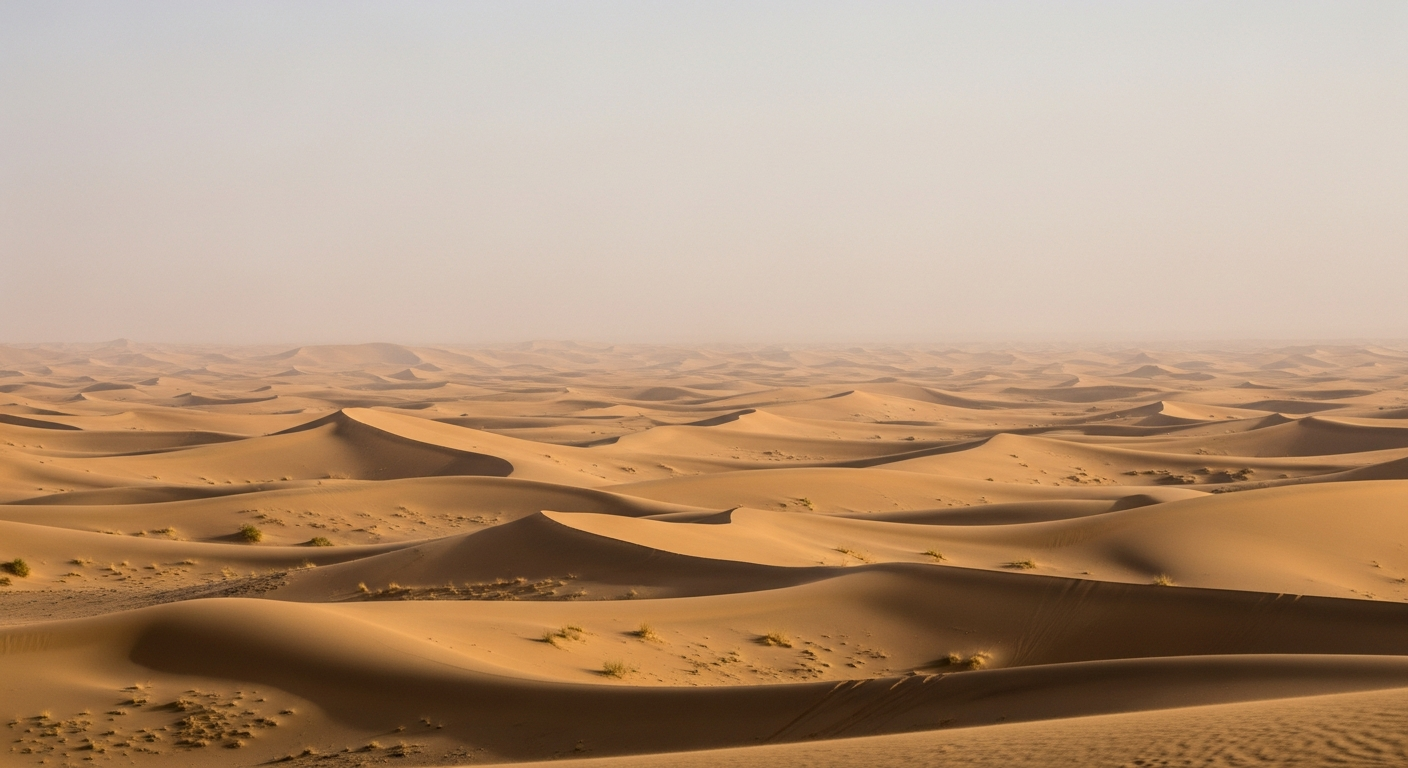
The Desert Within: Hallucinations, Sensory Depri...
The desert. A vast, unforgiving expanse that stretches the limits of human endurance. But beyond its harsh beauty lies a profound psychological landscape, one that can strip away the familiar and plunge us into the depths of our own minds. Think of deserts as sensory deprivation chambers, natural laboratories where the mind, starved of its usual input, begins to conjure its own reality. This phenomenon is rooted in psychological principles like the Ganzfeld effect, where uniform stimulation (or lack thereof) can lead to hallucinations. VistaLocation invites you to explore this unique intersection of landscape and psychology, while always prioritizing safe and responsible travel. In this post, we'll delve into three distinct desert environments, each known for a particular type of mental challenge, and offer insights into how to navigate their psychological terrain.
Taklamakan Desert, China: The Whispers of the Sand

A sandstorm engulfs the Taklamakan Desert, blurring the line between reality and illusion.
The Taklamakan Desert, also known as "The Sea of Death," is a sprawling sea of sand in Northwest China. Its sheer size and monotony, exacerbated by frequent sandstorms, can be profoundly disorienting. The constant barrage of sand against skin, the limited visibility, and the oppressive silence broken only by the wind create a sensory vacuum that can play tricks on the mind. Many travelers report feelings of derealization, where the world feels dreamlike and unreal. Some experience hallucinations, often visual, such as phantom oases or shimmering mirages that dance on the horizon.
For a truly immersive and responsible experience, consider trekking with Silk Road Eco-Adventures (hypothetical name, research existing similar operators), an eco-tour operator specializing in minimalist, carbon-offsetting treks through the Taklamakan. They prioritize minimal environmental impact and work with local communities to ensure sustainable tourism practices.
Accommodation: Experience the breathtaking night sky in Star Gazer Tents [stargazertents.com] (hypothetical link). These minimalist, canvas tents are designed for unobstructed night sky viewing, allowing you to connect with the cosmos while immersed in the desert's solitude.
The Psychological Challenges of the Taklamakan
The vastness and monotony of the Taklamakan landscape are key contributors to its psychological impact. The lack of landmarks and the shifting sands create a disorienting environment where the sense of direction and time can become blurred. Reports of hallucinations in this desert often involve seeing familiar shapes or objects in the distance, only to find them vanish upon closer inspection. The mind, deprived of stimulation, attempts to fill in the gaps, often creating illusions that reflect the traveler's hopes or fears.
Coping Strategies for the Taklamakan
- Maintain a Routine: Establishing a daily schedule can help anchor you in time and combat feelings of disorientation.
- Stay Hydrated: Dehydration exacerbates psychological distress. Drink plenty of water and electrolytes.
- Practice Mindfulness: Focus on your breath and the present moment to ground yourself in reality.
- Journal Your Experiences: Recording your thoughts and sensations can help you process the experience and identify any emerging patterns.
Atacama Desert, Chile: The Dryness of the Soul

The stark beauty of the Atacama Desert, where extreme aridity can challenge cognitive function.
The Atacama Desert in Chile is one of the driest places on Earth. This extreme aridity has a profound impact on both the body and the mind. Dehydration is a constant threat, and even mild dehydration can impair cognitive function, leading to anxiety, difficulty concentrating, and impaired decision-making. The lack of moisture in the air also amplifies the intensity of the sun, further contributing to physical and mental stress.
Embark on a journey beneath the stars with Atacama Stargazing Tours (hypothetical name, research existing similar operators), an operator committed to responsible tourism and carbon offsetting through reforestation programs. Experience the unparalleled clarity of the Atacama sky while supporting sustainable practices.
Accommodation: Immerse yourself in the Atacama's unique environment at Antay Eco Lodge (hypothetical name; research existing similar locations). These minimalist eco-lodges are built into the landscape, constructed of sustainable materials, and designed to minimize their environmental impact.
The Psychological Challenges of the Atacama
The extreme dryness of the Atacama Desert presents unique psychological challenges. Dehydration can lead to a range of symptoms, including:
- Anxiety and Irritability: Even mild dehydration can trigger feelings of anxiety and irritability.
- Difficulty Concentrating: Cognitive function is impaired, making it difficult to focus and make decisions.
- Sensory Distortions: Dehydration can alter sensory perception, leading to visual disturbances or auditory hallucinations.
Managing the Mental Impact of Aridity
- Prioritize Hydration: Drink plenty of water and electrolytes throughout the day. Monitor your urine color to ensure you are adequately hydrated.
- Protect Yourself from the Sun: Wear sunscreen, a hat, and sunglasses to minimize sun exposure.
- Limit Physical Exertion: Avoid strenuous activity, especially during the hottest part of the day.
- Practice Relaxation Techniques: Meditation and deep breathing can help manage anxiety and stress.
Sahara Desert, Morocco: Heat, Isolation, and the Mirage of the Mind

A camel trek in the Sahara Desert, where extreme heat and social isolation can test the limits of the mind.
The Sahara Desert in Morocco presents a different set of psychological challenges. The combination of extreme heat, social isolation, and sleep deprivation can create a potent cocktail of stress that can lead to hallucinations, paranoia, and even heatstroke. The relentless sun beats down on the landscape, radiating heat that seeps into the body and mind. The vastness of the desert can create a sense of isolation, particularly for those traveling alone or in small groups.
Find inner peace amidst the dunes with Sahara Mindful Treks (hypothetical name, research existing similar operators), which offers small-group, carbon-offsetting camel treks with a focus on meditation and mindfulness practices. These treks provide an opportunity to connect with the desert landscape on a deeper level while minimizing your environmental impact.
Accommodation: Experience the traditional Berber way of life in a desert camp. While many camps are available, seeking locations outside the typical tourist trails can offer more isolated opportunities for introspection.
The Psychological Challenges of the Sahara
The Sahara's unique environment can induce a range of psychological effects:
- Sleep Deprivation: The extreme heat can make it difficult to sleep, leading to fatigue and impaired cognitive function.
- Heatstroke: A life-threatening condition that can cause hallucinations, confusion, and seizures.
- Paranoia: Social isolation and sleep deprivation can trigger feelings of paranoia and suspicion.
Mitigating the Risks of Heat and Isolation
- Stay Cool: Wear loose-fitting, light-colored clothing and seek shade whenever possible.
- Pace Yourself: Avoid strenuous activity and take frequent breaks.
- Stay Connected: Maintain contact with the outside world through satellite communication devices.
- Practice Meditation: Engage in mindfulness practices to cultivate resilience to mental strain.
The Desert Mind Archive: A Citizen Science Initiative
We invite you to contribute to our understanding of the desert mind through the Desert Mind Archive ([email protected]). This citizen science initiative aims to collect phenomenological reports documenting the subjective experiences of travelers in desert environments. If you have experienced time distortion, hallucinations, or altered perceptions in any desert, we encourage you to submit your report.
To contribute meaningfully to the Desert Mind Archive:
- Keep a Detailed Journal: During your trip, note specific sensations, thoughts, and emotional states at regular intervals.
- Record Environmental Conditions: Document the temperature, humidity, wind speed, and other relevant environmental factors.
- Submit Your Report: Send your journal entries and environmental data to [email protected].
Conclusion: The Desert as a Catalyst for Self-Discovery
The desert is a powerful and transformative landscape that can challenge our perceptions of reality. Prolonged exposure to its harsh conditions can induce hallucinations, sensory deprivation, and altered states of consciousness. However, with careful planning, responsible travel, and a willingness to embrace the unknown, the desert can also be a profound catalyst for self-discovery and introspection. By understanding the psychological challenges of these environments, we can navigate them safely and unlock their potential for personal growth. Remember to travel responsibly, respect the environment, and prioritize your mental and physical well-being. The desert awaits, offering not just a journey across its sands, but a journey within.