Stargazing on a Salt Sea: My Astrophotography Ad...
The thin air bit at my lungs as I stepped out of the tiny Uyuni airport. Altitude sickness, my old friend, was back with a vengeance. Thankfully, a steaming mug of coca tea awaited me at my hotel, its earthy aroma promising relief. As the taxi rattled towards town, I could see it in the distance: the vast, shimmering expanse of Salar de Uyuni. Excitement warred with nausea as I caught my first glimpse of what promised to be the most surreal astrophotography experience of my life. Little did I know I was about to witness the Bolivian Altiplano transform into a giant mirror reflecting the cosmos.
The Mirror Effect: Daytime Surrealism
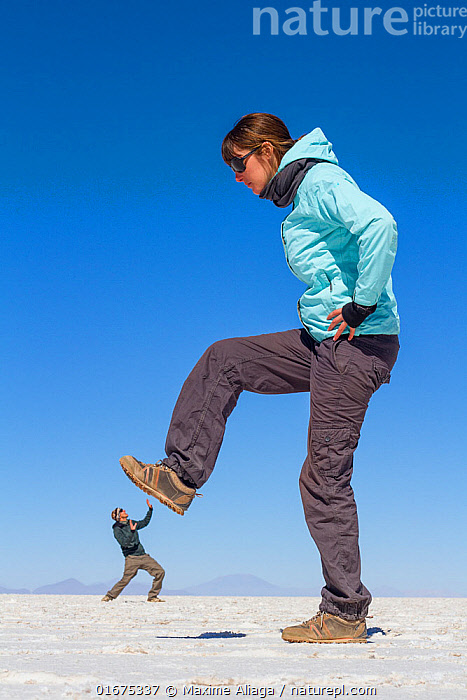
The rainy season (January) transforms Salar de Uyuni into an otherworldly landscape. A thin layer of water covers the vast salt flats, creating the famed "mirror effect." The sky and clouds reflect perfectly on the surface, blurring the line between earth and sky. It’s a photographer’s dream – a chance to capture images that defy reality. This Salar de Uyuni mirror effect photography makes for one of the most sought-after travel photos on Earth.
Of course, I couldn't resist the classic forced perspective shots. You know, the ones where you hold a dinosaur toy in your hand, making it look like it's about to devour your travel companions? These optical illusions Salar de Uyuni photography opportunities are plentiful. For these kinds of images, I used my trusty Sony a7III with a wide-angle 16-35mm lens. A wide angle is crucial for exaggerating the distance and making those perspective tricks work.
Tips for Forced Perspective Photography:
- Wide-angle lens: Essential for creating the illusion of depth.
- Foreground objects: Bring small props to play with scale.
- Patience: It takes time to find the right angle and composition.
- Communication: Clearly instruct your subjects on positioning.
- Have fun! Don't take it too seriously and embrace the silliness. The key for photographing optical illusions safely on Salar de Uyuni is to never venture too far from your group, and always remain oriented to your vehicle.
Starlight Expeditions: Two Nights Under a Billion Stars
For the main event – astrophotography – I booked a two-day tour with Starlight Expeditions. They offered a night sky photography workshop, which was perfect for brushing up on my technique. Their experience is in helping people plan the perfect Bolivia stargazing experience.
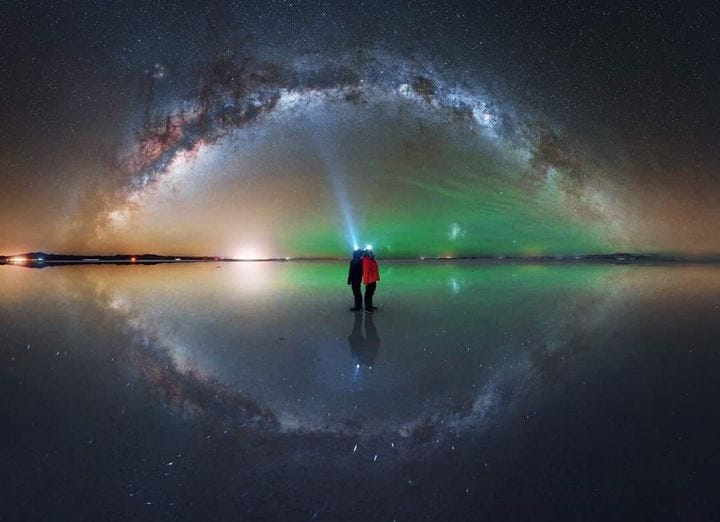
The first night was breathtaking. As darkness fell, the Milky Way emerged, a river of stars arching across the sky. And then, the reflection. The entire galaxy mirrored perfectly on the salt flats, creating an illusion of being suspended in space. It was truly a celestial wonderland.
Photographing the Milky Way reflecting perfectly was a technical challenge. The extreme cold at night, with temperatures dropping to -5°C, made handling equipment difficult. Long exposure shots were necessary to capture the faint starlight, requiring a rock-solid tripod.
Essential Gear for Astrophotography in Salar de Uyuni:
- Full-frame camera: For optimal low-light performance.
- Fast lens (f/2.8 or wider): To capture as much light as possible.
- Sturdy tripod: Absolutely essential for long exposures.
- Remote shutter release: To avoid camera shake.
- Extra batteries: Cold temperatures drain batteries quickly.
- Headlamp with a red light: To preserve your night vision.
- Warm clothing: Layers are key to staying comfortable in the cold.
- Hand and foot warmers: Lifesavers for keeping extremities warm.
Bringing backup batteries is a must. Due to the Salar de Uyuni astrophotography during wet season logistics, you must make sure everything has multiple layers of waterproof protection.
Quinoa Cuisine of the Altiplano
The food in the Altiplano was surprisingly delicious. Quinoa is a staple here, thanks to its ability to thrive in the harsh climate and high altitude. I stopped by La Llama Loca in Uyuni and highly recommend it.
I particularly enjoyed the quinoa soup – hearty and flavorful, perfect for warming up after a cold night of shooting. The quinoa burgers were also surprisingly good.
Why Quinoa is King in the Altiplano:
- Hardy crop: Thrives in high-altitude and harsh climates.
- Nutritious: Packed with protein and essential nutrients.
- Versatile: Can be used in soups, stews, burgers, and more.
- Sustainable: Supports local farmers and reduces reliance on imported foods.
When to Visit: Weather and Timing
The rainy season has a unique appeal for photographers seeking the mirror effect. However, it also comes with potential disruptions. Heavy rain can flood the flats, making some areas inaccessible. Also, while the mirror effect is beautiful, cloud cover can obscure the stars. For clearer skies, the shoulder seasons (April-May and September-October) are generally considered the best time for Salar de Uyuni astrophotography. However, this can depend on the weather conditions that year. Keep an eye on weather reports.
A Celestial Wonderland
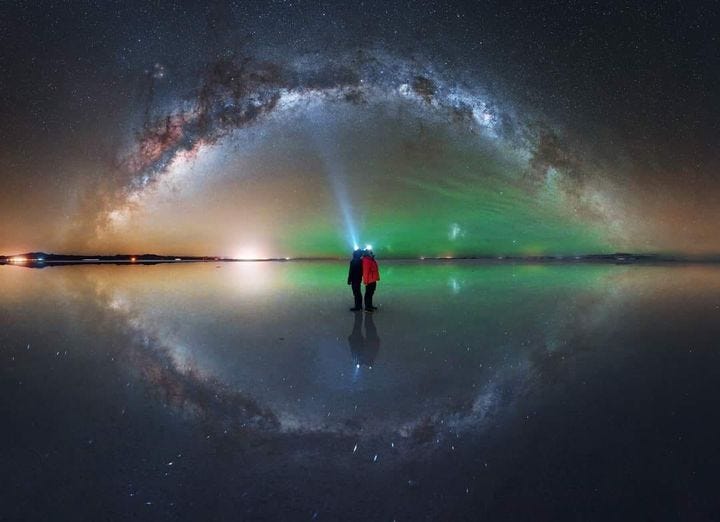
My week in Salar de Uyuni was a transformative experience. Witnessing the Milky Way reflected on the salt flats was a moment I'll never forget. It was a reminder of the vastness of the universe and our place within it. The feeling of being immersed in a celestial wonderland, surrounded by stars in every direction, was truly awe-inspiring.
If you're planning your own Salar de Uyuni astrophotography tour, I highly recommend it. Be sure to book your tour in advance, especially during peak season. Prepare for the altitude with coca tea and acclimatization. And most importantly, pack warm clothes!
Ready to Explore the Stars?
Salar de Uyuni is waiting. Book your tour, pack your camera, and prepare to be amazed. This is an astrophotography Salar de Uyuni rainy season trip you'll never forget. Find resources for Bolivia travel planning on Vistalocation.com.
Altitude Sickness in the Altiplano: Additional Tips
Altitude sickness can be a serious concern when visiting Salar de Uyuni, as the salt flats are located at an elevation of approximately 3,656 meters (11,995 feet) above sea level. Here are some additional tips to help you prevent and manage altitude sickness:
- Acclimatize gradually: If possible, spend a few days at a lower altitude before traveling to Uyuni. La Paz, while still high, is lower than Uyuni and can serve as an acclimatization point.
- Drink plenty of water: Staying hydrated is crucial for acclimatization. Avoid alcohol and caffeine, as they can dehydrate you.
- Eat light meals: Avoid heavy, greasy foods, as they can be difficult to digest at high altitude. Stick to simple, carbohydrate-rich meals.
- Avoid strenuous activity: Take it easy on your first few days in Uyuni. Avoid strenuous exercise and activities that could exacerbate altitude sickness.
- Consider medication: If you are prone to altitude sickness, talk to your doctor about medication such as acetazolamide (Diamox).
Viral Video Concept: Salar de Uyuni: A Night Under a Billion Stars
HOOK: (0-3 seconds) Start IN MEDIAS RES with a time-lapse sequence: the Milky Way suddenly bursting into view, reflected on the salt flats, sped up to show hours compressed into seconds.
SCENE: (3-10 seconds) Wide shot, cinematic 4K, shot on RED. Slow, deliberate orbit around a single subject (Anya silhouetted against the stars), golden hour fading into deep blue night. Dramatic lighting emphasizing the reflection of the stars in the water. The shot should give the feel of a vast, never-ending dream.
TWIST: (10-15 seconds) Rapidly zoom in on a single star that suddenly expands to reveal a distant galaxy, illustrating the vastness of the universe and the unique perspective offered by Salar de Uyuni.