Stargazing Amidst the Moai: An Astrophysicist's...
Konnichiwa! (Hello!) My name is Kenji Tanaka, and I am an astrophysicist from Japan with a lifelong passion for the stars. Rapa Nui (Easter Island) has always held a special allure, a place where ancient Polynesian cosmology meets the vast expanse of the cosmos. I recently had the privilege of visiting this enigmatic island, and the experience was even more profound than I imagined. From the vibrant culture to the breathtaking landscapes and, of course, the stunning night sky, Rapa Nui is a truly unique destination for anyone interested in cultural astronomy and astrophotography.
Immersed in the Tapati Rapa Nui Festival
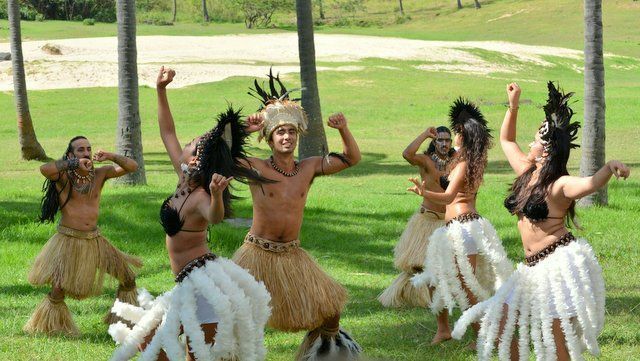
My trip coincided with the Tapati Rapa Nui festival, a two-week celebration of Rapa Nui culture. The energy was palpable, a constant hum of excitement and tradition. I was particularly captivated by the Hoko dance. The powerful chanting, the rhythmic movements, the sheer intensity of the performers – it was initially a cultural shock. Growing up in Japan, I'm used to more reserved displays of emotion. But as I watched, I began to appreciate the raw energy and deep cultural significance of the dance. It was a visceral connection to the island's history and the spirit of its people.
Then there was the Haka Pei, the banana trunk sledding competition. Young men (and women!) hurl themselves down a steep slope on banana trunks. The sheer daring of the Haka Pei was breathtaking, a true testament to the Rapa Nui spirit. I confess, a part of me was in awe, and another part slightly trepidatious at the thought of attempting such a feat!
Celestial Navigation and the Tahai Stargazing Tour
One of the highlights of my trip was a guided stargazing tour at the Tahai ceremonial complex. The night sky over Rapa Nui is incredibly dark, a canvas dusted with countless stars. The Southern Cross (Crux) blazed brightly, a constellation invisible from Japan. I also marveled at the Magellanic Clouds, satellite galaxies of our own Milky Way, shimmering like celestial jewels.
It was fascinating to compare these sights to constellations familiar from Japan, like Ursa Major (Big Dipper) and the Pleiades (Subaru in Japanese). The Polynesians, masters of celestial navigation, used these stars to navigate across vast stretches of ocean. Their shipbuilding expertise, combined with their understanding of the stars, allowed them to settle remote islands like Rapa Nui. The Southern Cross, invisible from Japan, served as a celestial compass for these intrepid voyagers. Ancient Japanese seafarers also relied on the stars, but often navigated closer to coastlines, using landmarks and currents in addition to celestial cues. Understanding how both cultures used the night sky to guide them across the ocean was inspiring.
Deciphering the Mysteries of Orongo
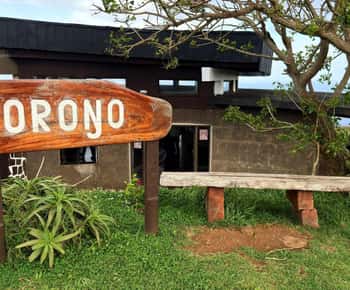
My visit to the Orongo ceremonial village, perched on the edge of the Rano Kau volcano, was particularly thought-provoking. I spent time studying the petroglyphs, especially the Tangata Manu (Birdman) figure. From an astrophysicist's perspective, I couldn't help but wonder if the elongated beak of the Birdman might represent careful observation of the sunset point during specific times of the year, particularly in relation to the horizon. Perhaps it also represents a depiction of a solar eclipse or the alignment of specific constellations during the Birdman competition period, serving as a celestial calendar. While these are just my interpretations, it highlights the potential intersection of astronomical observation and cultural beliefs in ancient Rapa Nui society.
Capturing the Cosmos: Astrophotography at Ahu Tongariki
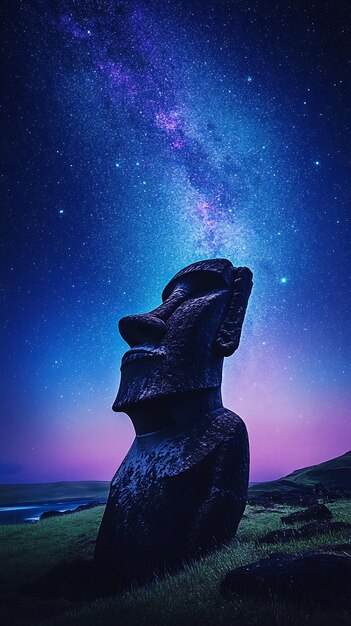
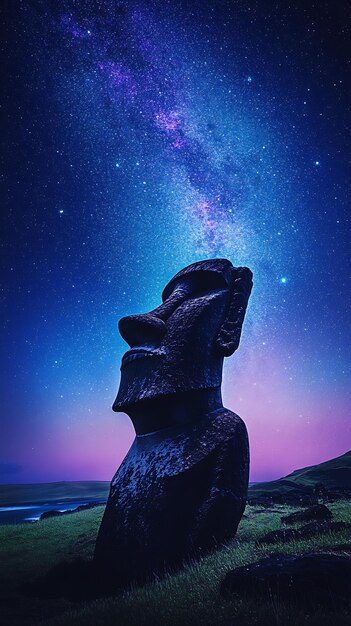
The iconic image of the Moai statues silhouetted against the Milky Way is what drew me to Rapa Nui in the first place. Photographing the Moai at Ahu Tongariki under the Milky Way was both challenging and incredibly rewarding.
I used my Sony a7S III camera with a 24mm f/1.4 GM lens. My settings were typically ISO 6400, 20-second exposure. The biggest challenge was light pollution from Hanga Roa, the island's main town. To minimize its impact, I used a light pollution filter, and carefully positioned myself to block direct light sources.
To see the Moai silhouetted against the swirling arm of the Milky Way...it was a moment that transcended scientific observation. It was a spiritual experience, a feeling of connection to the ancient past and the vastness of the cosmos. How to photograph the Moai statues under the Milky Way Galaxy is a technique that requires patience, skill, and the right gear.
A Taste of Rapa Nui: Umu and Po'e
No trip to Rapa Nui is complete without experiencing the local cuisine. I had the pleasure of enjoying Umu Rapa Nui, a traditional feast cooked in an underground oven. The volcanic stones used in the Umu are primarily basalt with olivine inclusions. These specific stones retain heat efficiently, allowing for even cooking. This reminded me of the Kamado cooking style in Japan, which also relies on retained heat within a clay oven. Rapa Nui cultural tours focused on Polynesian astronomy can provide opportunities to sample local cuisine.
I also sampled Po'e, a delicious pudding made from banana and pumpkin. The Mahoe banana variety has a distinct sweetness and slightly tangy flavor. The Andean pumpkin (Cucurbita moschata) added a nutty, earthy taste. I even learned a simplified Po'e recipe from a local cook. Here's my attempt to recreate it:
- Grate the Mahoe banana and Andean pumpkin.
- Mix them with coconut milk and flour.
- Bake in a traditional oven until golden brown.
Volcanoes, Statues, and Ancient Mysteries
Rano Kau, the volcanic crater, is a sight to behold. The diversity of plant life and bird species thriving in its microclimate is remarkable, thanks to the protected environment and high moisture content. Rano Raraku, the quarry for the Moai, is another fascinating site. Seeing the unfinished statues still embedded in the hillside gave me a new appreciation for the scale of the Rapa Nui people's ambition.
The location and orientation of Ahu Tongariki are particularly interesting. It's aligned with the summer solstice sunrise, suggesting its possible significance in ancient Rapa Nui culture. There are also controversial theories, such as those of Erich von Däniken, suggesting extraterrestrial intervention in the creation of the Moai. However, there is no scientific evidence to support these claims. The ingenuity and resourcefulness of the Rapa Nui people in creating and transporting the Moai are far more compelling explanations. Orongo Tangata Manu cosmology provides an insight into ancient cultural beliefs.
Sustainable Tourism and Responsible Travel
The impact of tourism on Rapa Nui is undeniable. However, I was impressed by the efforts of the local community to promote sustainable tourism practices. Best Time to Visit Easter Island for Stargazing is during the dry season, when the skies are clearest.
Here are some practical tips for visitors who want to travel more responsibly:
- Respect the tapu (sacred areas).
- Minimize light pollution by using red-light flashlights for astrophotography.
- Support local businesses.
- Consider taking astrophotography workshops on Easter Island with local guides.
Rapa Nui is a place where you can connect with the past, contemplate the present, and gaze into the future. I encourage you to visit Rapa Nui responsibly and appreciate its unique blend of culture, history, and cosmic beauty. Remember that the best camera settings for Milky Way photography on Rapa Nui will vary depending on the equipment. But always prioritize low light performance and wide aperture lenses.
Sayōnara (Goodbye), and may your own journey to Rapa Nui be filled with wonder.