Salar de Uyuni Photography Tour: A Minimalist's...
Salar de Uyuni. The name itself conjures images of boundless white, of skies mirroring the earth, and of perspectives that defy reality. As a travel photographer known for minimalist landscapes and a deep commitment to ethical travel, I, Anya Petrova, recently embarked on a journey to this extraordinary corner of Bolivia. My mission? To capture the surreal beauty of the world's largest salt flat, while advocating for its preservation. Join me as I share my experiences, from chasing sunrises to savoring local flavors, all while navigating the unique challenges and ethical considerations of this otherworldly destination. This isn’t just a photography trip; it's a call to responsible adventure.
Chasing the Sunrise: A Photographer's Dreamscape
Waking before dawn at this altitude is never easy. The air is thin, and every movement feels like a monumental effort. But the promise of capturing sunrise on the Salar de Uyuni is an irresistible lure. The sunrise photography Salar de Uyuni tour began well before the first hint of light kissed the horizon. Bouncing along the salt flats in a 4x4, the anticipation grew with each passing mile. I had my trusty Sony Alpha 7R IV paired with the Sony FE 16-35mm f/2.8 GM lens ready. This lens is my go-to for vast landscapes, allowing me to capture the immense scale of the salt flats.
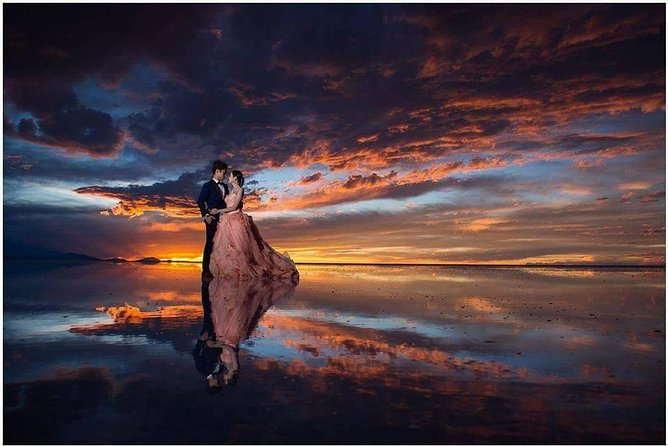
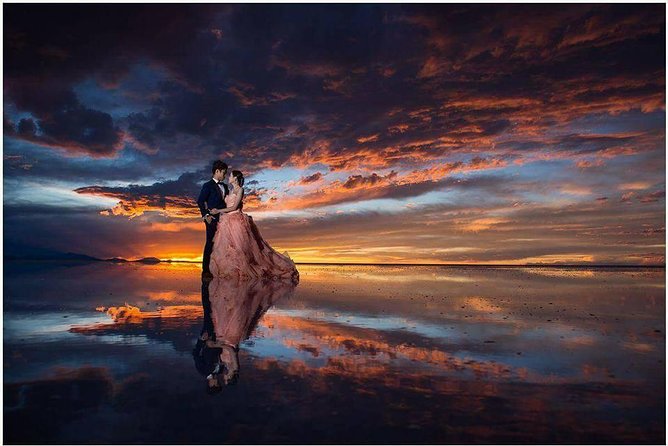
As the first rays of sunlight pierced the darkness, the landscape transformed. The distant Andean volcanoes, normally shrouded in shadow, were silhouetted against the fiery dawn. The polygon patterns in the salt, stretching as far as the eye could see, became more defined, their geometric precision both fascinating and mesmerizing. But the real magic happened after a light rainfall. The salt flats transformed into a giant mirror, reflecting the vibrant colors of the sky with breathtaking clarity.
The Altitude Challenge: Gear and Technique
Photographing at 12,000 feet presents unique challenges. The extreme altitude affected both my camera gear and my own physical capabilities. I noticed my camera batteries draining faster than usual, and condensation forming on the lens was a constant battle. To combat this, I kept spare batteries warm inside my jacket and used lens cloths religiously.
Technically, I had to be extra mindful of my exposure settings. The bright, reflective surface of the salt demanded careful metering to avoid overexposure. Focusing could also be tricky in the intense light, often requiring manual adjustments.
However, the biggest challenge was the altitude sickness. Shortness of breath and a persistent headache made even simple tasks feel arduous. I made sure to acclimatize properly for a few days before heading out onto the salt flats and drank plenty of water. Slow and steady movements were key.
Minimalist Composition: Capturing the Essence
My aim was to capture the essence of the Salar de Uyuni using minimalist photography Bolivia techniques. I focused on the vastness of the landscape, emphasizing the interplay of light and shadow. The stark white expanse provided a perfect canvas for minimalist composition. I looked for simple lines, geometric shapes, and the juxtaposition of elements to create visually striking images. Often, this meant finding a single object, like a lone cactus or a distant vehicle, to emphasize the scale and solitude of the landscape.
A Night in Salt: Hotel de Sal Luna Salada Review
The Salar de Uyuni Salt Hotel experience is unlike any other. I stayed at the Hotel de Sal Luna Salada, a structure constructed entirely of salt blocks. From the walls and floors to the furniture, everything was made of salt. It’s a surreal experience, sleeping within the very landscape you came to explore.
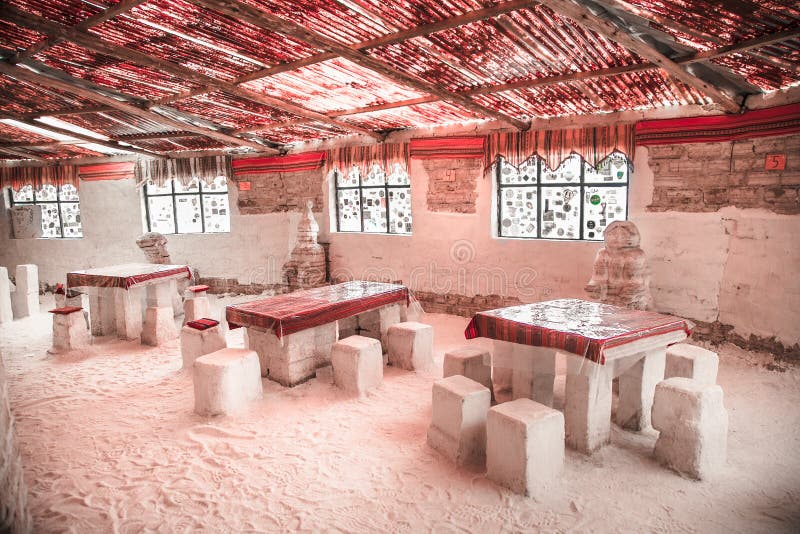
The architecture is surprisingly charming, with rounded walls and cozy interiors. However, staying in a salt hotel also presents some practical challenges. The air is dry, and salt dust is pervasive. It's crucial to keep your belongings protected and avoid licking the walls (tempting as it might be!). The hotel does provide humidifiers and plenty of blankets to combat the dry air and cold nights. Overall, the experience was unique and memorable, adding another layer of surrealism to my Salar de Uyuni adventure. The Hotel de Sal Luna Salada review is overwhelmingly positive. It's an unforgettable experience.
Isla Incahuasi: A Cactus Oasis
A stark contrast to the surrounding salt flats, Isla Incahuasi (Fish Island) is a rocky outcrop dotted with giant cacti. This island offers a unique perspective on the vastness of the Salar de Uyuni.
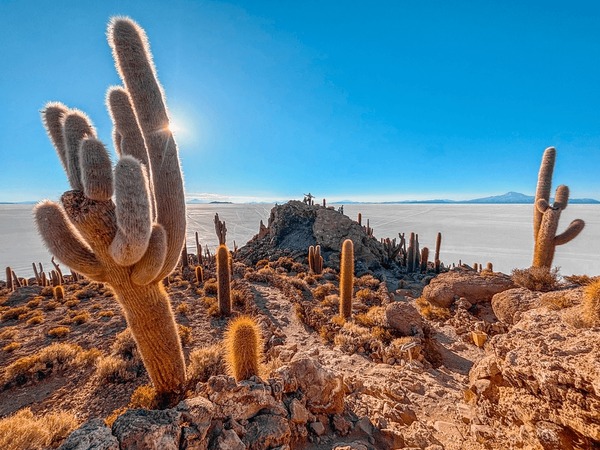
The visual contrast between the spiky cacti and the endless white expanse is striking. I used wide-angle shots to capture the scale of the landscape, emphasizing the island's isolation. The island is a photographer's paradise, and serves as a popular stop for many Salar de Uyuni tours. In particular, the Isla Incahuasi travel guide will point you towards the best vantage points on the island.
Capturing the Contrast: Perspective and Composition
The key to photographing Isla Incahuasi is to emphasize the scale and the contrast. I experimented with different perspectives, often using low-angle shots to make the cacti appear even larger and more imposing. I also used leading lines, such as the edge of the salt flats, to draw the viewer's eye towards the island. The play of light and shadow on the cacti added another layer of depth to the images.
A Taste of Bolivia: Salteñas and Quinua Real
No trip is complete without experiencing the local cuisine. In the Salar de Uyuni region, two dishes stand out: Salteñas and Quinua Real.
Salteñas are savory Bolivian pastries, similar to empanadas, filled with meat, vegetables, and a delicious, slightly spicy sauce. The first bite is an explosion of flavor. Be warned: the sauce can be quite runny, so it’s best to eat them upright! Quinua Real is a locally sourced quinoa dish, often prepared with vegetables and herbs. It's a nutritious and delicious way to experience the local flavors.
Dining at Altitude: A Delicate Balance
Dining at high altitude can be a challenge. Many people experience a loss of appetite and digestive issues. I found that eating light, easily digestible meals and drinking plenty of coca tea helped. It's also important to avoid overeating, as this can exacerbate altitude sickness symptoms. I actively sought out restaurants and vendors that supported local producers of the Quinua Real, embodying my commitment to sustainable travel.
Ethical Considerations: Preserving a Fragile Ecosystem
The ethical travel Salar de Uyuni is beautiful, but its fragile ecosystem faces significant threats. The lithium mining Salar de Uyuni impact is a major concern. Lithium, a key component in batteries, is abundant in the salt flats. The increased demand for lithium has led to large-scale mining operations, which can have devastating environmental consequences, including water contamination and habitat destruction.
Responsible Tourism: A Call to Action
As travelers, we have a responsibility to minimize our environmental footprint and support sustainable tourism practices. I recommend choosing tour operators with sustainability certifications, such as "Sustainable Bolivia" and "Responsible Travel Bolivia". These operators are committed to protecting the environment and supporting local communities. It's also important to minimize your own environmental impact by using reusable water bottles, avoiding single-use plastics, and respecting local customs. By making conscious choices, we can help preserve this incredible landscape for future generations.
When considering Salar de Uyuni tours ethical and responsible operators should be your priority. Here's how you can contribute to sustainable tourism in Bolivia:
- Choose certified tour operators: Look for certifications like "Sustainable Bolivia" or "Responsible Travel Bolivia."
- Support local communities: Buy souvenirs and goods from local artisans.
- Minimize your waste: Use reusable water bottles and avoid single-use plastics.
- Respect the environment: Stay on marked trails and avoid disturbing wildlife.
- Educate yourself: Learn about the environmental challenges facing the Salar de Uyuni and spread awareness.
My journey to the Salar de Uyuni was an unforgettable experience. It was a chance to witness the raw beauty of nature, to challenge myself as a photographer, and to reflect on the importance of responsible travel. By embracing ethical practices, we can help protect this fragile ecosystem and ensure that future generations can experience the magic of the world's largest salt flat. The allure of the Salar de Uyuni photography tour is undeniable, but remember, we are guests in this extraordinary place. Let's treat it with the respect it deserves.
Viral Video Script
HOOK (0-3 seconds):
- Visuals: Close-up slow-motion shot of a Salteña being split open, steam rising dramatically to reveal the savory filling, filmed with a macro lens at golden hour lighting.
- Action: Steam bursts, filling spills.
- Sound: Sizzling sound effect mixed with Bolivian music.
- Surprise: A tiny figure, Anya, is reflected in the pastry as if in a mirror.
SCENE (3-12 seconds):
- Visuals: Wide, cinematic 4K drone shot of Anya standing alone on the vast salt flats, dwarfed by the landscape, creating a sense of awe and isolation. Slow, orbiting camera movements showcase the polygon patterns and the reflections of the sky.
- Camera Work: Slow-motion, orbit, wide shot.
- Lighting: Golden hour, vibrant oversaturated colors.
- Composition: Low-angle shots emphasizing the scale, leading lines, negative space.
TWIST (12-15 seconds):
- Visuals: Anya kneels down and begins meticulously picking up litter with exaggerated gestures of frustration and care.
- Action: Anya cleaning up rubbish.
- Super: Appears: "Leave Only Footprints."
- Call to Action: "Book sustainable tours with Sustainable Bolivia".