Salar de Uyuni Astrophotography Tour: A Freelanc...
The Salar de Uyuni. Just the name conjures images of endless white, surreal landscapes, and skies teeming with stars. As a freelance astrophotographer, the Uyuni Salt Flats Night Sky Photography has been on my bucket list for years. I finally made the journey to Bolivia, and let me tell you, the experience exceeded every expectation. Forget what you think you know about landscapes; this place is on another level. I embarked on a multi-day 4x4 Altiplano tour rainy season photography adventure to capture the Milky Way's reflection on the world's largest salt flat. This isn't just a trip; it's a journey to the edge of the world, and perhaps, to the edge of the universe itself.
The Surreal Drive Across the Salar de Uyuni
Imagine driving across a seemingly endless expanse of blinding white. That's the Salar de Uyuni in the dry season. Now, picture that same landscape transformed into a giant mirror, reflecting the sky with perfect clarity. That's the magic of the rainy season.
Our trusty 4x4 was our home for several days as we traversed the Altiplano. The vastness of the Salar is hard to describe. It feels like driving on another planet. Each day brought new photo opportunities, from whimsical perspective shots using the endless horizon to capturing the stark beauty of the salt formations.
But the true magic happened after sunset.
Photographing the Milky Way Over the Uyuni Salt Flats
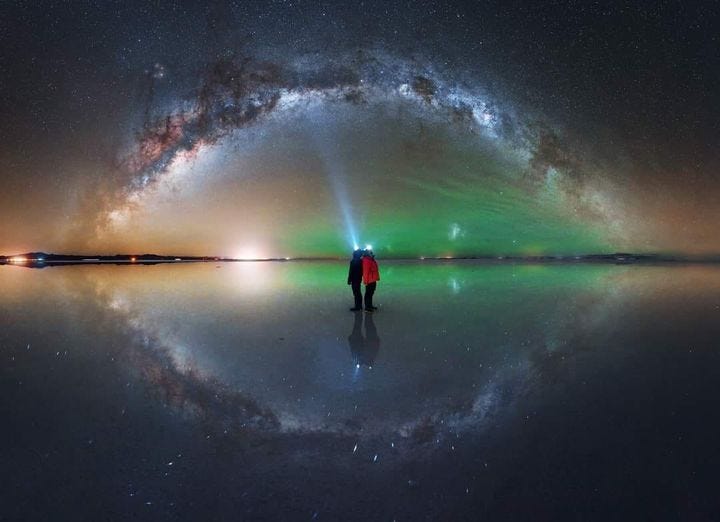
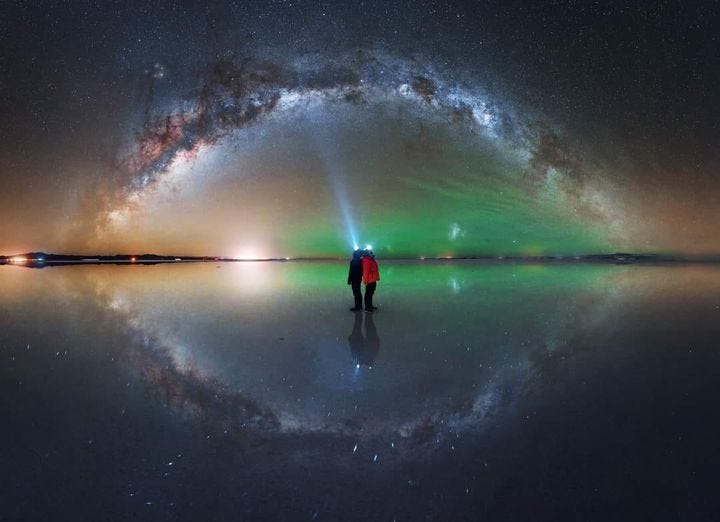
My primary goal was to photograph the Milky Way reflecting off the Salar de Uyuni. I had seen countless images, but nothing prepares you for witnessing it in person. The rainy season is crucial for this phenomenon, as a thin layer of water covers the salt flats, creating a perfect mirror.
The challenges of high-altitude photography in Bolivia are considerable. At 12,000 feet, the air is thin, making even simple tasks exhausting. My camera gear felt heavier, my lungs burned with each breath, and the cold seeped into my bones despite layers of clothing.
But the sheer awe of the night sky made it all worthwhile. The Milky Way blazed across the heavens, an impossibly bright river of stars. And below, the Salar mirrored its glory perfectly. It was as if I were floating in space, surrounded by an infinite expanse of stars.
I created a time-lapse to capture the surreal transformation of the landscape. You have to see it to believe it.
<iframe width="560" height="315" src="https://www.youtube.com/embed/YOUR_YOUTUBE_VIDEO_ID" title="Salar de Uyuni Time-Lapse" frameborder="0" allow="accelerometer; autoplay; clipboard-write; encrypted-media; gyroscope; picture-in-picture; web-share" allowfullscreen></iframe>
(Replace YOUR_YOUTUBE_VIDEO_ID with the actual ID of the time-lapse video)
This video demonstrates the incredible beauty of the Salar de Uyuni. Starting with a rapid time-lapse showing how rainfall suddenly transforms a dry, stark white landscape into a mirror image of the sky above in seconds. Captured with cinematic 4K quality footage, the drone slowly orbits around a 4x4 vehicle as it drives across the salt flats. Golden hour lighting emphasizes the vibrant colors of the sky and their reflection. And then, the twist: As the 4x4 drives away, the reflection in the salt transforms to show the reflection of the Milky Way Galaxy.
Eduardo Avaroa Andean Fauna National Reserve
The Salar de Uyuni is just the beginning. Our 4x4 tour took us deep into the Eduardo Avaroa Andean Fauna National Reserve, a landscape of vibrant colors and otherworldly formations.
Laguna Colorada was a highlight, its intense red hues caused by algae thriving in the mineral-rich water. Hundreds of James's flamingos waded in the shallow waters, their pink plumage a striking contrast to the crimson lake.

The Sol de Mañana geysers were another unforgettable sight. The Earth groaned and hissed as boiling mud and steam erupted from the ground. The smell of sulfur filled the air, a reminder of the raw, untamed power of nature. The early morning light made the experience even more surreal.
Surviving and Thriving at Altitude: Quinoa and Coca Tea
The altitude in the Altiplano is no joke. I experienced my fair share of altitude sickness symptoms, including a pounding headache and nausea. Our guide immediately offered coca tea, a local remedy made from coca leaves. While it tastes a bit like green tea, the effects were noticeable. It helped alleviate my headache and settle my stomach.
The cuisine of the region is also unique, largely based on quinoa, a staple crop of the Andes mountains. I enjoyed hearty quinoa soup and llama meat stews, both perfect for warming up after a long day in the cold. Bolivian cuisine incorporates api and salteñas regularly.
Remember, it's crucial to acclimatize to the altitude before undertaking any strenuous activities. Spend a few days in a city like La Paz or Sucre before heading to the Altiplano. Take it easy on your first day, drink plenty of water, and listen to your body.
Photography Tips for the Salar de Uyuni
If you're planning a photography trip to the Salar de Uyuni, here are a few practical tips:
- Bring lens filters: A polarizing filter will help reduce glare and enhance the colors of the sky. A neutral density filter will allow you to use longer exposures in bright light.
- Invest in a sturdy tripod: The wind can be strong, so a robust tripod is essential for sharp images, especially for astrophotography and astrolapse tutorials.
- Pack warm clothing: Temperatures can drop dramatically at night, even during the rainy season. Layers are key. Don't forget gloves, a hat, and a warm jacket. Consider bringing shoes specifically for walking on the salt flats.
- Protect your gear: Salt dust can be corrosive, so protect your camera and lenses with waterproof bags or covers.
- Consider renting gear: Instead of traveling with expensive equipment you might not often use, consider renting specialized astrophotography lenses or camera bodies to capture the night sky in the best possible way. What is the best lens for Salar de Uyuni astrophotography? A wide-angle lens with a large aperture (f/2.8 or faster) is ideal.
- Learn to shoot in manual mode: Understanding exposure settings is crucial for capturing the night sky.
Colors of the Altiplano
The Altiplano is a canvas painted with nature's most vibrant hues. Besides the red of Laguna Colorada and the reflecting mirror of the Salar, there are other unmissable tones. Laguna Verde, nestled at the foot of the Licancabur volcano, boasts a deep emerald green color. The Desert of Salvador Dalí is a landscape of bizarre, wind-sculpted rock formations that seem to have been plucked straight from a surrealist painting. The stark contrasts and vibrant colors make this region a photographer's dream.

Book Your Bolivia Astrophotography Adventure
My journey to the Salar de Uyuni was more than just a photography trip; it was a transformative experience. The sheer beauty and surreal nature of the landscape, combined with the challenges of high-altitude photography, pushed me to my limits and rewarded me with images I will cherish forever. Photographing Milky Way Salar Uyuni rainy season is an experience every astrophotographer should have.
If you're looking for an adventure that will challenge and inspire you, I wholeheartedly recommend a Bolivia Astrophotography Adventure. Salar de Uyuni astrophotography tour prices vary, but the memories are priceless.
Ready to chase the stars? Contact Vistalocation today to book your Salar de Uyuni Astrophotography Tour!