Paro Valley: A Landscape Architect's Journey int...
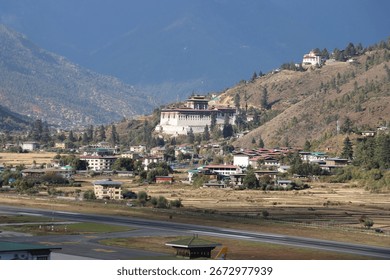
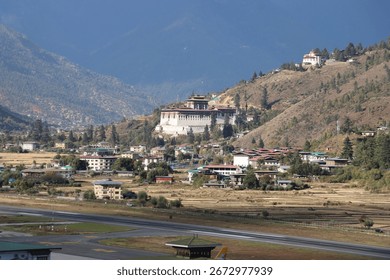
Bhutan. The Land of the Thunder Dragon. Even its nickname hums with an ancient magic, a promise of something utterly unique. My recent two-week research trip to the Paro Valley completely exceeded my expectations, revealing a profound connection between architecture, nature, and the very soul of the Bhutanese people. As a landscape architect specializing in permaculture design, I’ve always been fascinated by sustainable practices. But nothing could have prepared me for the harmonious blend I witnessed in Bhutan, a living testament to generations of wisdom woven into the landscape. The Paro Valley isn’t just a beautiful place; it’s a masterclass in sustainable living.
Building with the Earth: A Traditional Farmhouse Workshop
One of the highlights of my trip was participating in a traditional Bhutanese farmhouse construction workshop near Paro. I was eager to learn firsthand how these stunning structures, seemingly born from the land itself, were built. Forget concrete and steel; we were working with rammed earth, locally sourced Blue Pine, and Himalayan Cypress. The low environmental impact was immediately apparent.
The workshop was led by a master craftsman and several experienced builders, all radiating a quiet pride in their work. There was a fantastic camaraderie among them, a shared understanding of the importance of preserving these traditional techniques. The rammed earth wall construction was particularly fascinating. We mixed earth, clay, and straw, then compacted it in layers within wooden forms. It was hard work, but incredibly satisfying to see the walls slowly rise, sturdy and strong.
The use of Blue Pine and Himalayan Cypress for the timber framing was another key element. These woods are readily available in Bhutan and naturally resistant to pests and decay. I spent hours sketching and taking technical notes on the intricate joinery details. Mortise and tenon joints, secured with wooden pegs, were the standard, a testament to centuries of refinement. I was particularly impressed by the Khema system, a type of interlocking beam construction that provides exceptional structural integrity.
The Golden Fields: Permaculture in Action
Leaving the workshop, I ventured into the heart of the Paro Valley, to a local organic farm growing red rice, chilies, and potatoes. This wasn’t just farming; it was permaculture in action. The terraced fields, bathed in the early morning light, were a golden spectacle. The farmer, a kind and knowledgeable woman named Tshering, explained her practices. Crop rotation was essential, ensuring the soil remained fertile. Companion planting, such as marigolds interspersed with vegetables, helped deter pests naturally. Water conservation methods were also impressive, with carefully designed irrigation channels directing water efficiently across the terraces.
The highlight was undoubtedly tasting freshly harvested Ema Datshi, the national dish of Bhutan. Made with the farm's own red chilies, which have a unique, slightly smoky flavor, and creamy Bhutanese cheese, it was a culinary revelation. The comforting warmth of the stew was the perfect complement to the crisp mountain air.
The Dance of Deities: Paro Tshechu Festival
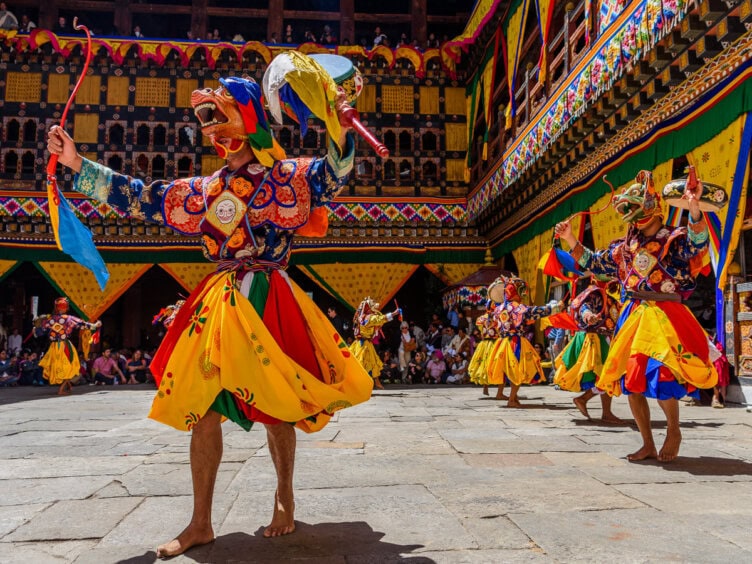
My trip coincided with the Paro Tshechu, a vibrant religious festival. While the public performances were mesmerizing, I was more interested in the behind-the-scenes preparations. The intricate craftsmanship of the costumes and masks was astounding. The silk brocades shimmered with vibrant colors – deep reds, blues, and golds – each shade holding symbolic meaning.
I had the privilege of speaking with a monk who explained the festival's role in preserving Bhutanese cultural identity. The dances, he said, were not mere entertainment but sacred rituals, meant to purify the land and bless the people. Each mask and costume represented a different deity or demon, their stories passed down through generations.
Embracing the Bhutanese Way
Beyond the architecture and agriculture, I immersed myself in the Bhutanese way of life. I took an archery lesson from a local instructor, marveling at the physics of the bow and arrow. It's not just about strength; it's about precision, focus, and understanding the trajectory.
The most profound experience was undoubtedly my meditation session at Tiger's Nest Monastery (Taktsang). Reaching the monastery requires a challenging hike, but the view overlooking the Paro Valley at dawn was worth every step. The feeling of tranquility was palpable, the air filled with the scent of incense and the distant chanting of monks.
I also visited a paper-making workshop, where I learned the traditional Daphne bark techniques. From harvesting the bark to creating the finished paper, the process was entirely natural and sustainable. The paper, strong and textured, is used for religious texts and traditional art.
A Taste of Bhutan: Kewa Datshi and Red Rice
Food is an integral part of any culture, and Bhutan is no exception. I savored every bite of Kewa Datshi, a potato cheese stew made with the wonderfully earthy local potatoes. Its comforting warmth was especially welcome on chilly evenings. Red rice, a staple of the Bhutanese diet, was present at every meal. It has a nutty flavor and a satisfying chewiness. More importantly, it's incredibly nutritious and requires less water to cultivate than white rice, making it a sustainable choice.
Responsible Drone Operation: Capturing the Valley from Above
As a landscape architect, I wanted to capture the beauty of the Paro Valley from above. I brought my DJI Mavic 3 Pro drone with a 24mm lens, but I was extremely mindful of operating it responsibly. I made sure to respect monastery airspace and wildlife habitats, adhering to all local regulations.
One of my most rewarding flights was at golden hour, capturing the Tiger’s Nest Monastery bathed in warm light and long shadows. The integration of the monastery into the cliffside was breathtaking. Using a setting of f/2.8, ISO 100, and a 1/60 shutter speed, I was able to showcase the detail and texture of the rock face.
I also used the drone to capture the patterns of terraced farming, collecting GPS data to create orthomosaic images. This allowed me to analyze the sustainable water management systems in detail, providing valuable insights for my research.
A Model for Sustainable Tourism
The Paro Valley is more than just a beautiful destination; it's a living model for sustainable tourism and architecture. The Bhutanese people have managed to preserve their cultural heritage and natural environment while embracing progress. Their commitment to Gross National Happiness (GNH) over Gross Domestic Product (GDP) speaks volumes.
As I left the Paro Valley, I carried with me a renewed sense of hope. Bhutan proves that it is possible to create a harmonious balance between humans and nature, a balance that we desperately need to rediscover in our increasingly unsustainable world. The key is to respect local traditions, embrace sustainable practices, and prioritize cultural preservation over unchecked development. The Paro Valley isn't just a place to visit; it's a place to learn from. Vistalocation.com can help you plan your own transformative journey to Bhutan.