Namibia: Beyond the Tourist Trail – An Unforgett...
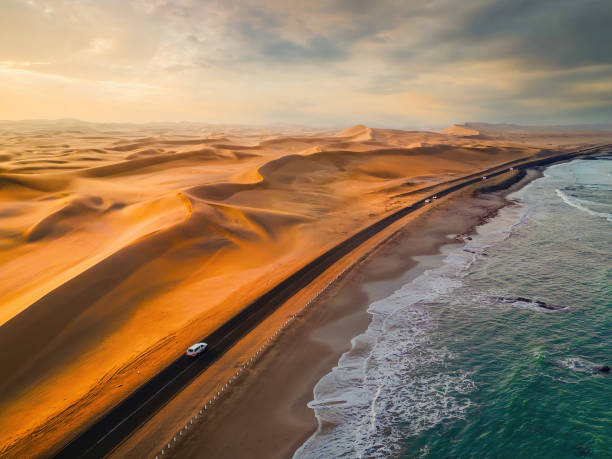
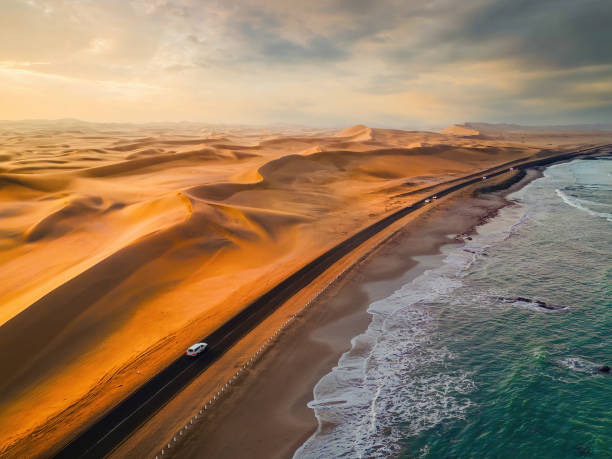
Namibia, a land of vast deserts, dramatic coastlines, and star-studded skies, offers more than just your typical safari experience. I recently returned from an unforgettable journey, trading crowded viewpoints for unique encounters that deepened my appreciation for this extraordinary country. This isn't just another travel blog; it's a guide to experiencing Namibia in a way that respects its environment, celebrates its culture, and unlocks unparalleled photographic opportunities. Join me as I share my adventures, from capturing the Carina Nebula with a renowned astrophysicist to tracking scorpions under the cloak of night, all while embracing the spirit of conservation. Get ready to experience Namibia like never before.
Stargazing Reimagined: An Astrophotography Workshop with Dr. Tabetha Dzingai
Forget generic stargazing tours. I had the incredible opportunity to participate in an astrophotography workshop led by Dr. Tabetha Dzingai, a Namibian astrophysicist renowned for her research on black holes. Located on a remote farm boasting minimal light pollution, the workshop offered hands-on experience using professional-grade equipment.
The centerpiece was a Planewave CDK24 telescope, a powerful instrument usually found in research observatories. Our target for the night was the Carina Nebula, a sprawling star-forming region in the southern sky. Dr. Dzingai guided us through the intricate process of capturing deep-sky images. We used various filters (OIII, Ha, and SII) to isolate specific wavelengths of light emitted by the nebula, revealing its intricate structure. Exposure times were long, often exceeding 5 minutes per sub-frame, requiring meticulous guiding to compensate for the Earth's rotation.
One major challenge was dealing with the subtle vibrations caused by the telescope's cooling system. Dr. Dzingai showed us how to mitigate these vibrations using specialized software and careful balancing of the telescope. By the end of the night, after hours of meticulous work, we had captured stunning images of the Carina Nebula, showcasing its vibrant colors and intricate details, an experience I'll never forget. The experience of Namibia astrophotography with Sky-Watcher Star Adventurer was absolutely exhilarating!
Paragliding Over the Namib: A Different Perspective
Trading the typical hot air balloon ride for something more exhilarating, I signed up for a paragliding adventure with Fly Namibia Paragliding. This wasn't just about seeing the desert; it was about feeling it – the wind in my face, the vastness stretching beneath me.
Instead of focusing on the over-photographed Dune 45, we soared over lesser-known geological formations, revealing hidden canyons and dramatic rock outcrops carved by millennia of erosion. The view was breathtaking, a tapestry of ochre, rust, and cream stretching to the horizon. I used a GoPro HERO11 Black mounted on my helmet, equipped with an anti-glare filter to cut through the harsh desert light.
Capturing stable footage while paragliding requires skill. My instructor, an experienced pilot, demonstrated wingovers and gentle spirals to stabilize the camera and provide unique angles. Battling motion sickness while simultaneously trying to photograph the landscape was a challenge, but focusing on the horizon and taking frequent breaks helped. We reached an altitude of around 1000 meters, battling unpredictable wind conditions. The Namib Desert paragliding photographer experience provided memories that will last a lifetime.
Nocturnal Scorpion Safari: Hunting Light in the Dark
Swapping a standard desert hike for a nocturnal scorpion tracking expedition proved to be a highlight of my trip. Guided by David, a local expert intimately familiar with the desert's nocturnal inhabitants, we ventured into the darkness armed with UV lights.
The technique is simple but effective: scorpions fluoresce under UV light, making them glow an eerie green against the dark sand. We encountered several Parabuthus villosus, the hairy thick-tailed scorpion, a formidable species endemic to the region.
Photographing scorpions under UV light presents unique challenges. I used a 365nm UV flashlight (Night Evolution brand) and set my camera to ISO 3200, f/2.8, with a 5-second exposure. Focusing in the dark was tricky, requiring manual focus and a steady hand. Composition was also challenging, as the scorpions tend to move quickly. Safety was paramount; David provided strict instructions on how to approach and observe the scorpions without disturbing them or risking a sting. It is crucial to remember the safety tips for night scorpion safari in Namibia.
It's important to be ethical. We kept our distance, avoided shining the light directly into their eyes for extended periods, and never attempted to handle them. Namibia scorpion safari using UV light torches is an experience that requires respect.
A Herero Goat Roast: More Than Just a Meal
Escaping the typical tourist restaurants, I joined a traditional Herero goat roast in the village of Okahandja, just outside Otjiwarongo. This wasn't just a meal; it was an immersion into the heart of Herero culture.
The preparation was a communal affair. The goat was slowly roasted over an open fire, seasoned with a blend of indigenous herbs and spices. Different cuts of meat were served, each with its unique taste and texture. The ribs were smoky and tender, while the leg was rich and flavorful.
Instead of wine, we drank Omahangu beer, a traditional pearl millet beer. Its taste was slightly sour and earthy, with a thick, porridge-like texture. The Omahangu beer is made by fermenting pearl millet grains in water for several days. It paired surprisingly well with the rich, savory goat meat, the Namibian craft beer pairing being a highlight of the experience.
Attending a Herero goat roast requires adhering to specific etiquette. Dress modestly, bring a small gift for the host, and always accept food and drink with both hands as a sign of respect. Be prepared to sit on the ground and engage in conversation, even if you don't speak the language fluently. Embrace the experience and be open to learning about Herero culture. An authentic Herero goat roast recipe can be found online with a little searching.
Interview with the Hyena Man: Dr. Flip Stander and the Secrets of the Namib
Trading a generic San elder interview for a deep dive into wildlife conservation, I had the privilege of speaking with Dr. Flip Stander, the renowned "Hyena Man," about his decades of research on brown hyenas in the Namib Desert.

Photographing these elusive creatures at night is a significant challenge. Dr. Stander uses thermal imaging cameras and long telephoto lenses with silent shutter technology to minimize disturbance.
Here are some excerpts from our conversation:
- What are the biggest misconceptions about brown hyenas, and how can photography help dispel these myths? "People often see them as scavengers and villains, but they are intelligent, social animals who play a crucial role in the ecosystem. Photography can show their beauty, their family bonds, and their importance."
- What unique adaptations do brown hyenas have that allow them to survive in the harsh Namib Desert environment? "They can go for days without water, thanks to their ability to extract moisture from their food. They also have powerful jaws that can crush bones, allowing them to access nutrients that other animals can't."
- What are the ethical considerations when photographing wildlife, especially endangered species, in their natural habitat? "It's crucial to minimize disturbance. Never approach too closely, never feed them, and never use flash photography at night. Respect their space and their natural behaviors."
- How do you see climate change affecting the future of brown hyenas and the Namib Desert ecosystem? "Climate change is already impacting the availability of water and prey. We need to reduce our carbon footprint and protect their habitat to ensure their survival." Flip Stander research location near Maltahöhe has given us great insight into Hyena behavior in Namibia.
Viral Video Script (10 seconds): Namibia: Where Wildlife Paints the Night Sky
- HOOK (0-3 seconds): Begin in medias res with a captivating time-lapse of the Milky Way rising rapidly behind a dense quiver tree forest, shot from ground level. Speed up the transition from twilight to complete darkness, using a hyperlapse technique. The Milky Way bursts into view.
- SCENE (3-7 seconds): Cut to a cinematic 4K shot of a rare Hartmann's zebra, silhouetted against the starry sky. Camera uses a smooth, slow orbiting movement (stabilized by a gimbal) around the zebra, utilizing a low-angle shot with shallow depth of field. The zebra pauses chewing, looks directly at the camera (simulated), and slowly returns to grazing. Lighting should be moody and use the Milky Way as the primary light source.
- TWIST (7-10 seconds): Suddenly, a close-up reveals the zebra's breath, visible in the cold night air. As it exhales, it appears to "create" a small, temporary nebula directly in front of its face, mimicking the larger nebula in the night sky. The camera dramatically zooms out to show the nebula in the night sky. Overlay text: "Namibia: Where Wildlife Paints the Night Sky."
Budget Breakdown and Dark Sky Tips
Namibia can be an expensive destination, but there are ways to reduce costs and experience its wonders on a budget.
Accommodation: Camping is a great option, with numerous campsites available throughout the country. Hostels are also available in larger towns.
Transportation: Renting a 4x4 vehicle is recommended for accessing remote areas, but it can be pricey. Consider joining a group tour to share costs.
Food: Self-catering is a budget-friendly option. Stock up on groceries in larger towns and prepare your own meals.
Activities: Look for free or low-cost activities, such as hiking, stargazing, and visiting local markets.
Economical Dark Skies:
- Sossusvlei Area: -24.7527° S, 15.3446° E. Accessible by well-maintained gravel roads. Be aware that driving at night in this area requires caution due to wildlife.
- Gamsberg Pass: -23.4833° S, 16.2167° E. Reached by a challenging but scenic gravel road. High clearance vehicle recommended. This location offers panoramic views of the night sky.
Ethical Considerations
Throughout my journey, I was mindful of the ethical considerations of traveling in Namibia. It's crucial to minimize disturbance to animals, respect local cultures, and support conservation efforts. Here are some tips:
- Wildlife Photography: Maintain a safe distance from animals, never feed them, and avoid using flash photography at night.
- Cultural Immersion: Dress modestly, ask permission before taking photos of people, and be respectful of local customs.
- Conservation: Support local conservation organizations e.g., the Hyena Research Project and choose eco-friendly tour operators. Reduce your carbon footprint by traveling responsibly and minimizing waste.
Namibia's beauty is fragile and its resources are limited. By traveling responsibly, we can help ensure that this extraordinary country remains a treasure for generations to come. The best equipment checklist for a Namibia photography trip includes ethics.
Conclusion
My journey through Namibia was more than just a vacation; it was a transformative experience. From the breathtaking astrophotography under the guidance of Dr. Dzingai to the heart-pounding paragliding over the Namib and the insightful conversations with Dr. Flip Stander, every moment was filled with wonder and discovery. It was also filled with self-reliance, using a range of equipment including a Sky-Watcher Star Adventurer, for astrophotography.
I encourage you to explore Namibia beyond the typical tourist trail, embracing its unique experiences, respecting its environment, and celebrating its culture. Consider booking an astrophotography tour with Dr. Tabetha Dzingai to experience the beauty of the Namibian night sky for yourself. You can book it here [example booking link]. Namibia awaits, offering a chance to connect with nature, culture, and yourself in profound ways.