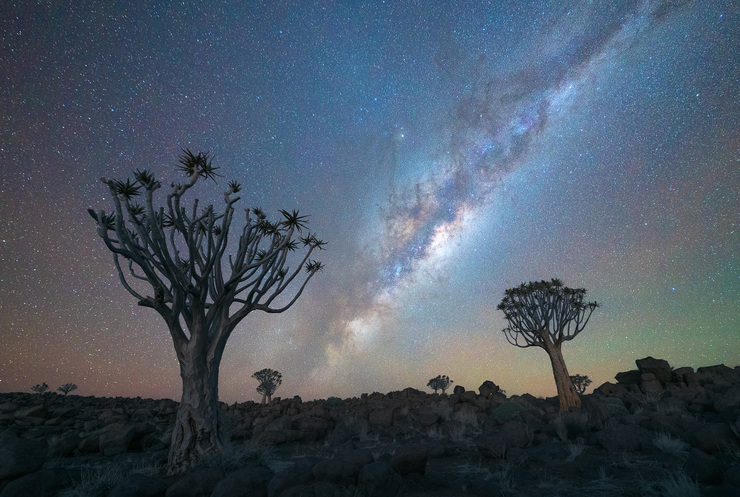
Namibia: A Technically Detailed Adventure Under...
Namibia, a land of stark beauty and sweeping vistas, offers an unparalleled adventure for the scientifically-minded traveller. Forget the standard tourist traps; this is a journey for those who crave in-depth experiences and a connection to the natural world at its most extreme. From peering into the abyss of a supermassive black hole to uncovering the secrets of desert fairy circles, prepare for a Namibia adventure travel experience unlike any other. This isn’t just a holiday; it’s an exploration.
Stargazing Reimagined at the HESS Observatory
The HESS (High Energy Stereoscopic System) Observatory is already a marvel, but attending a stargazing workshop led by an expert like Dr. Dzingai elevated the experience to another level. Dr. Dzingai’s research focus is on the supermassive black hole at the center of the Milky Way, Sagittarius A*, and his passion was infectious.
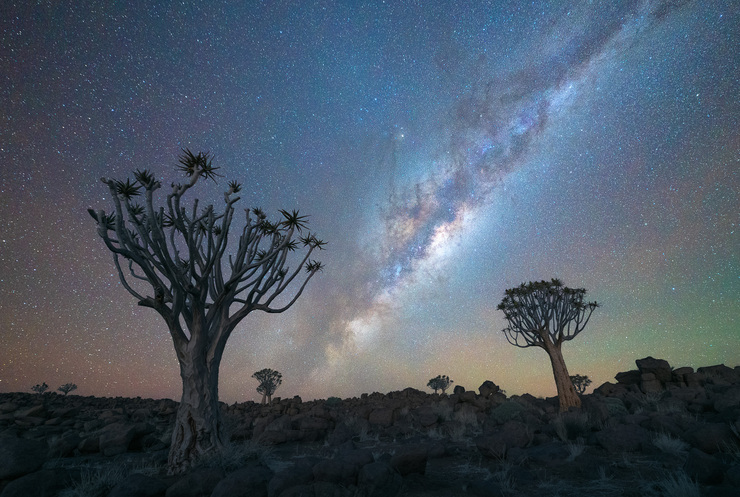
The highlight of the workshop was undoubtedly observing Sagittarius A* itself using the observatory's impressive CDK24 telescope. We focused on capturing Hydrogen-alpha emissions, a specific wavelength of light emitted by hydrogen atoms, which required meticulous setup. We used 60-second exposures with a narrowband filter targeting Hydrogen-alpha emissions at 656.3 nm. The challenge, as is often the case in astrophotography, was dealing with the subtle yet persistent enemy: dew. Slight dew formation began to appear on the telescope lens, threatening to blur our images. Thankfully, the observatory had a dew heater – essentially a heated band that gently warms the lens – which, coupled with careful monitoring, kept the lens clear and allowed us to continue our observations.
Camera Gear Recommendation: For those inspired to try their hand at astrophotography, I'd recommend the Sky-Watcher EQ6-R Pro mount for its stability and precise tracking, the ZWO ASI294MM Pro camera for its excellent sensitivity, and the Optolong H-alpha 7nm filter to isolate those crucial hydrogen-alpha emissions. These are essential for milky way photography in Namibia.
Paragliding Over the Namib: A Fairy Circle Perspective
Taking to the skies above the Namib Desert via paragliding was an experience I won't soon forget. The sensation of floating silently over the vast landscape is truly breathtaking. The primary goal, besides the sheer thrill, was to capture the enigmatic fairy circles from a unique aerial perspective. To stabilize the camera rig in flight, my guide expertly employed the "big ears" technique, a paragliding maneuver that increases drag and reduces speed, offering a steadier platform for filming and photography. I reached an altitude of 1200 meters above ground level.
From above, the fairy circles present a truly mesmerizing pattern. These barren patches of land, surrounded by rings of vegetation, have baffled scientists for years. Two primary theories dominate the discussion: termite activity and allelopathy. The termite theory posits that subterranean termites create the circles by consuming vegetation, while the allelopathy theory suggests that plants release chemicals that inhibit growth in the center of the circles. Seeing them stretch out across the Namib landscape only deepens the mystery.
Recommended Camera Gear: For capturing the experience, I recommend a DJI Mavic 3 Pro drone for its excellent image quality and stability, a GoPro HERO12 Black with PolarPro Peter McKinnon Edition Variable ND Filter to manage glare, and a Freefly Movi Pro gimbal for incredibly smooth footage. These anti glare filters are crucial for photographing and filming in the desert.
Nocturnal Scorpion Safari with Gideon
Forget typical wildlife drives; the real magic happens after dark. Embarking on a nocturnal scorpion safari with Gideon, a local expert, was a truly eye-opening experience. Gideon uses a Tank007 UV flashlight to locate the scorpions, which fluoresce under ultraviolet light. The technique is simple, yet effective: the UV light makes the scorpions glow with an ethereal green hue against the dark sand.
Photographing these creatures presented a unique challenge. I opted for high ISO settings (ISO 6400) and a wide aperture (f/2.8) to capture as much light as possible. Bulb mode with a remote shutter release allowed for exposures of up to 30 seconds. However, ethical considerations are paramount. Prolonged exposure to UV light can potentially harm the scorpions' eyes. Gideon emphasized the importance of minimizing UV light exposure time.
Recommended Camera Gear: For capturing these elusive creatures, I recommend a Nikon D850 for its excellent low-light performance, an AF-S Nikkor 24-70mm f/2.8E ED VR lens for its versatility, and a Manfrotto BeFree GT carbon fiber tripod for stability in the dark.
A Herero Goat Roast in Okahandja
Immerse yourself in the culture by attending a Herero goat roast in Okahandja. The cooking style is a slow and deliberate process: the goat is slowly roasted over mopane wood coals, imparting a distinct smoky flavor. The spices included dried Epazote, adding a slightly citrusy and earthy note to the meat.
The meal itself was a lesson in Herero tradition. The elders were served the ribs, considered the most prized cut, while the youth received the shoulder. Accompanying the roast was Omahangu beer, a traditional beverage made by women during harvest season. The beer, with its slightly sour and earthy notes, paired surprisingly well with the fatty goat meat, cutting through the richness. Remember to accept food and drink with both hands, a sign of respect in Herero culture.
Recommended Filming Gear: To document this cultural experience, I recommend a Sony a7S III for its exceptional low-light capabilities, a Sony FE 24-70mm f/2.8 GM lens for its versatility, and a Rode Wireless GO II microphone for clear audio.
Interview with the Hyena Man (Dr. Stander)
Meeting Dr. Stander, known as "The Hyena Man," was a true privilege. His decades of research on brown hyenas have made him a leading authority on these fascinating creatures. He utilizes a FLIR Scout TK thermal vision monocular to track the hyenas at night, allowing him to observe their behaviour in the dark.
During the interview, I asked Dr. Stander questions such as:
- "How does the presence of jackals affect the behavior of brown hyenas?"
- "Can you describe a time when your research led to a significant conservation outcome for brown hyenas?"
- "What are the main threats to brown hyenas besides diamond mining (e.g., vehicle collisions, human encroachment)?"
His answers offered invaluable insights into the lives of these often-misunderstood animals and the challenges they face.
He explained that jackals can sometimes scavenge from hyena kills, leading to competition and altered hunting strategies. He also recounted a specific instance where his research on hyena movement patterns led to the establishment of protected corridors, reducing vehicle collisions. Besides diamond mining, he emphasized that habitat loss due to human encroachment and vehicle collisions pose significant threats to brown hyena populations.
Recommended Gear: For observation, I used the Canon EF 600mm f/4L IS III USM lens, which allowed for capturing distant wildlife images. For recording the interview, I recommend a Zoom H6 recorder, a Sennheiser MKH 416 shotgun microphone, and a Gitzo GT5543LS tripod for stable audio.
Viral Video Script (10 seconds): Namibia's Celestial Zebras
- HOOK (0-2 seconds): Rapid zoom on a Hartmann's zebra's eye in golden hour lighting. The zebra exhales.
- SCENE (2-7 seconds): Hyperlapse (twilight to full darkness in 2 seconds) to a wide shot of the zebra illuminated by starlight and a cyan LED panel. Slow orbital movement.
- TWIST (7-10 seconds): The zebra's breath (enhanced with a vaporiser) transforms into a swirling nebula effect. Text: "NAMIBIA: Where Even Zebras Reach for the Stars."
Budget Breakdown and Dark Sky Tips
A trip like this doesn't have to break the bank.
- Flights: $1500 - $2500
- 4x4 Rental with Camping Gear: $1000 - $1500 (for 10 days)
- HESS Observatory Workshop: $200 - $300
- Paragliding: $150 - $250
- Scorpion Safari: $80 - $120
- Herero Goat Roast (Donation): $50 - $100
- Food and Supplies: $500 - $800
- Park Fees and Permits: $200 - $300
Total: $3680 - $5870 (excluding camera gear)
Tip: Renting a 4x4 vehicle with camping gear is significantly cheaper than staying in lodges. It also allows for greater flexibility and access to remote areas.
For unparalleled stargazing, head to Spitzkoppe: -21.8544° S, 15.0772° E. Its dramatic rock formations provide a stunning foreground for astrophotography.
Ethical Considerations
Namibia's delicate ecosystems require responsible tourism. It is important to adhere to these principles:
- Stay on designated trails.
- Never use bright lights near wildlife.
- Pack out all trash.
- Support local communities and businesses.
For more information, visit the Namibian Chamber of Environment: https://www.ncie.org.na/
Conclusion
Namibia offers a scientifically-minded traveller a rewarding journey filled with unique experiences and unparalleled photographic opportunities. From stargazing at the HESS Observatory to exploring the mysteries of the fairy circles, this is an adventure that will challenge your perspective and ignite your curiosity. Plan your Namibia photography guide adventure today and share your experiences!