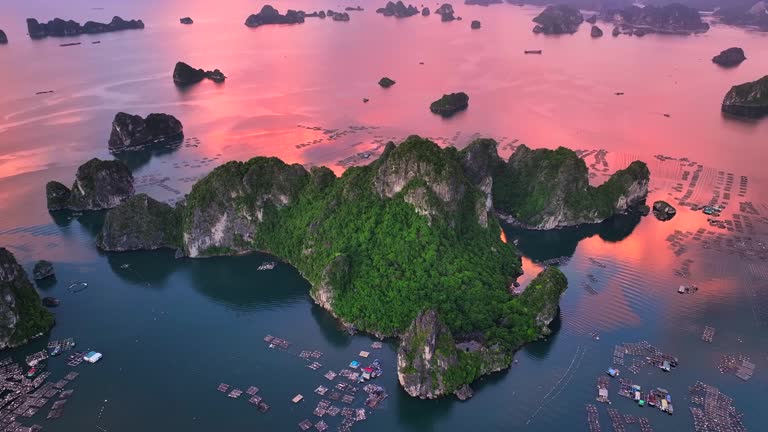
Ha Long Bay: A Marine Biologist's Perspective on...
For years, I've poured over research papers, watched documentaries, and dreamt of experiencing Ha Long Bay firsthand. As a marine biologist specializing in coral reef ecosystems, its unique biodiversity and the increasing threats it faces have been a constant focus of my work. Finally, that dream became a reality. I recently spent a week exploring this UNESCO World Heritage site, and what I found was a breathtaking, yet deeply concerning, reality.
My journey began before sunrise, scaling Bai Tho Mountain to witness the dawn break over the bay. Even with all my prior research, nothing could have prepared me for the sheer majesty of that moment.
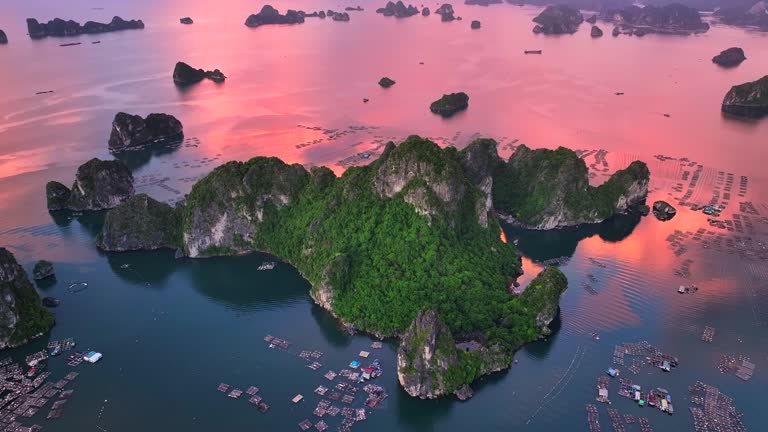
The towering limestone karsts, shrouded in ethereal mist, pierced the sky as the golden light painted the landscape. The emerald waters reflected the vibrant colors, creating a scene of unparalleled scale and serenity. This image, captured with my DJI Mavic 3 Pro (24mm lens, f/2.8, 1/200 second, ISO 100), attempts to convey the feeling, but the true experience is something you have to witness yourself.
Exploring the Wonders Within
My expedition wasn’t just about admiring the scenery; it was about understanding the delicate ecosystems that thrive within it. I wanted to get up close and personal with the marine life, assess the health of the coral reefs, and witness the impact of human activity.
Kayaking Through Sung Sot Cave
One of my first adventures was kayaking through Sung Sot Cave, also known as the Amazing Cave.

Equipped with a wetsuit and headlamp, I paddled into the depths of the cave. The play of light on the cave walls was mesmerizing, revealing hidden grottos and stunning formations. What surprised me most was the diversity of marine life clinging to the rocks. Algae of various colors and textures, along with clusters of barnacles, created a vibrant underwater tapestry. This photo, a grab from my GoPro Hero 11 (underwater housing, wide-angle lens, 1080p/60fps), captures just a small glimpse of the cave's surprising biodiversity.
Rock Climbing on Cat Ba Island
For a different perspective, I ventured to Cat Ba Island for some rock climbing. My goal was to scale a cliff overlooking Lan Ha Bay, a sister bay to Ha Long Bay. The climb was challenging, testing my physical and mental endurance.
But the reward was well worth the effort. From the summit, I gazed upon a breathtaking panorama of scattered islands, their limestone peaks rising dramatically from the emerald waters. This photo, taken with my Sony a7IV (50mm lens, f/5.6, 1/500 second, ISO 200), tries to capture the sheer scale of the landscape and the steepness of the climb, with me clinging to the rock face.
Tranquility at Sunrise: Tai Chi on a Junk Boat
Seeking a moment of peace amidst the exploration, I participated in a sunrise Tai Chi session on a traditional junk boat. The gentle movements, combined with the serene backdrop of the rising sun and the surrounding karsts, created an atmosphere of profound tranquility. This iPhone 14 Pro shot (ultra-wide lens, sunrise mode) captures the silhouette of my practice, emphasizing the beauty and calmness of the moment.
Unveiling Ha Long Bay's Underwater World
The highlight of my expedition was undoubtedly the underwater survey I conducted near a coral reef. As a marine biologist, I was eager to witness the biodiversity of Ha Long Bay's marine ecosystems firsthand. I was also sadly ready to observe the degradation.
Using my SeaLife DC2000 camera with a macro lens and underwater flash, I documented the incredible diversity of marine life. I observed vibrant coral colonies teeming with small reef fish, colorful nudibranchs, and intricate invertebrates.
However, I also witnessed signs of stress and damage to the coral reefs. Coral bleaching, a phenomenon caused by rising water temperatures, was evident in several areas.
A Taste of Vietnam: Culinary Delights
Beyond the natural wonders, I also immersed myself in the local culture, particularly through its cuisine. My taste buds were delighted by the flavors of Ha Long Bay.
Cha Muc at Ha Long City Market
One evening, I visited the bustling Ha Long City market, where I sampled Cha Muc, grilled squid patties. The smoky flavor and the lively atmosphere of the market made for an unforgettable culinary experience.
Seafood BBQ on Ti Top Island
Another memorable meal was a fresh seafood BBQ on Ti Top Island beach. The grilled shrimp and squid were incredibly delicious, especially when enjoyed with the sand between my toes and the sound of the waves in the background.
Banh Cuon with a View
Finally, I savored Banh Cuon, steamed rice rolls, at a local restaurant overlooking the bay. The delicate texture of the rolls, combined with the panoramic view, made for a truly special dining experience.
The Dark Side: Environmental Challenges
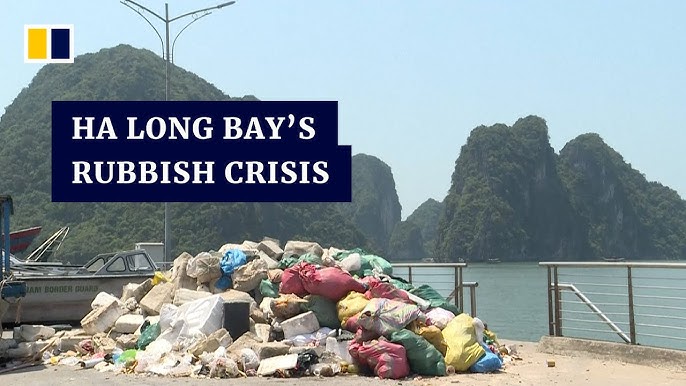
Unfortunately, my expedition also revealed the harsh reality of the environmental challenges facing Ha Long Bay. Plastic pollution and unsustainable tourism practices are taking a significant toll on its delicate ecosystem.
During a beach cleanup on a smaller, less-visited island, I collected a staggering amount of plastic waste. Bottles, bags, wrappers, and countless other items littered the shoreline, starkly contrasting with the natural beauty of the bay. This photo, taken with my Canon EOS R6 (35mm lens, f/8, 1/125 second, ISO 400), shows just a small portion of the plastic waste we collected.
I also observed damage to coral reefs caused by boat anchors and careless tourists. The increasing number of visitors is putting immense pressure on the bay's fragile ecosystems, threatening its long-term survival.
A Call to Action: Protect This Fragile Paradise
My week in Ha Long Bay was a transformative experience. I witnessed its breathtaking beauty, explored its hidden wonders, and gained a deeper understanding of its delicate ecosystems. But I also saw the devastating impact of pollution and unsustainable tourism.
It is our collective responsibility to protect this fragile paradise for future generations. I urge you to visit Ha Long Bay responsibly, supporting eco-friendly tour operators and minimizing your environmental impact. Here are some actions you can take:
- Choose sustainable tour operators: Opt for companies committed to responsible tourism practices, such as minimizing waste, respecting marine life, and supporting local communities.
- Reduce your plastic consumption: Avoid single-use plastics and bring your own reusable water bottle, shopping bag, and utensils.
- Dispose of waste properly: Never litter and always dispose of your waste in designated bins.
- Respect marine life: Avoid touching or disturbing coral reefs and other marine organisms.
- Support conservation efforts: Donate to or volunteer with organizations working to protect Ha Long Bay's environment.
Here are some organizations working tirelessly to conserve Ha Long Bay's natural beauty:
- UNESCO - Oversees world heritage sites and promotes sustainable tourism.
- International Union for Conservation of Nature (IUCN) - Provides expertise on biodiversity and conservation.
Ha Long Bay is a treasure worth protecting. By making conscious choices and supporting conservation efforts, we can ensure that this fragile paradise continues to inspire awe and wonder for generations to come. Let's work together to preserve its beauty and biodiversity, ensuring a sustainable future for this remarkable place.