Grandiose Canyonlands: A Retired Professor's Ast...
As a newly retired geology professor, Howard Finch, I've finally had the opportunity to dedicate myself to my passions: astrophotography and exploring the fascinating landscapes of our planet. My recent trip to Big Bend Ranch State Park in Texas, specifically the remote Grandiose Canyonlands primitive camping area (29.6433° N, 103.4501° W), was an experience I won’t soon forget. This review will provide insights into planning your own remote Texas camping trip, focusing on the unique opportunities for astrophotography Texas and geological exploration. Be warned, this isn’t for the faint of heart, Grandiose Canyonlands requires self-sufficiency and careful planning, but the rewards are well worth the effort.
The Journey to Grandiose Canyonlands: Remoteness Defined
Reaching Grandiose Canyonlands is an adventure in itself. Located deep within Big Bend Ranch State Park, it truly embodies the meaning of "remote." The drive from park headquarters involved miles of unpaved roads that became increasingly challenging. A 4WD vehicle with high clearance is absolutely essential; attempting this drive in anything less would be ill-advised. Even with the right vehicle, expect slow going and be prepared for washouts and rocky terrain.
Setting up camp in this primitive camping area required a good deal of effort. Hauling water, setting up my tent, positioning my Celestron NexStar 8SE telescope, and preparing my astrophotography equipment (including my Sony a7S III camera) took a significant amount of time and energy. But the feeling of accomplishment, and the anticipation of the night sky, made it all worthwhile.
Rules and Regulations: Respecting the Desert
Big Bend Ranch State Park has strict rules and regulations to protect its fragile desert environment, especially at Grandiose Canyonlands. These regulations are not optional, they are critical for preserving the area for future visitors. Here are some key points to remember:
- Fire Restrictions: Open fires are often prohibited due to the high risk of wildfires. Check current fire conditions and adhere to all restrictions. I used a portable propane stove for cooking.
- Water Usage: Water is extremely limited. You must bring all the water you'll need for drinking, cooking, and hygiene. Plan on at least one gallon per person per day, if not more. There are no water sources at the campsite.
- Leave No Trace: This is paramount. Pack out everything you pack in, including all trash. Dispose of human waste properly by burying it in a cathole at least 6 inches deep and 200 feet away from any water source or campsite.
- Permits: Obtain necessary permits and reservations online before your trip at the Texas Parks and Wildlife Department website. These are essential for ensuring access and managing the number of visitors.
No Frills: Bathrooms and Showers
Let's be clear: Grandiose Canyonlands is a primitive camping area. This means there are no bathroom or shower facilities. You are entirely responsible for your own hygiene and waste disposal. I brought a portable camping toilet and biodegradable toilet paper. Wet wipes and hand sanitizer were also essential. Plan accordingly and be prepared to be self-sufficient.
Capturing the Cosmos: Astrophotography in a Dark Sky Paradise
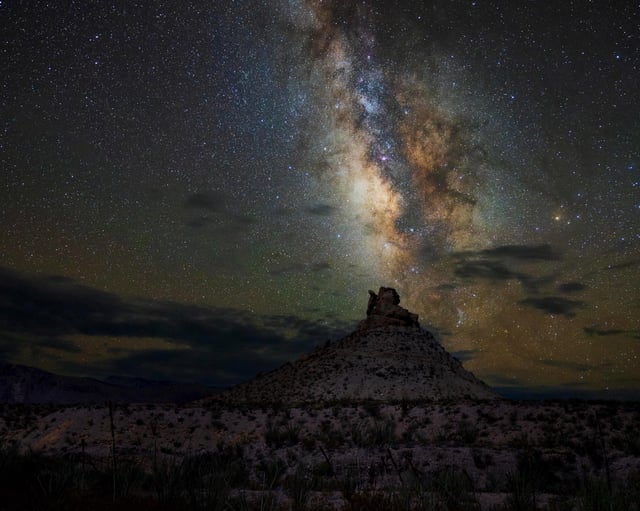
One of the primary reasons I chose Grandiose Canyonlands was for its incredibly dark skies, perfect for astrophotography. Using the PhotoPills app, I pinpointed nights with minimal moonlight and optimal Milky Way visibility. The Texas dark sky camping experience here is simply unparalleled.
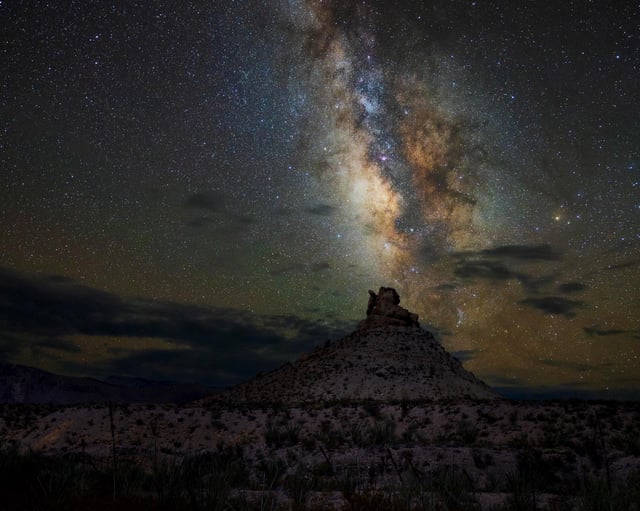
With my Celestron NexStar 8SE telescope, I was able to observe deep-sky objects with remarkable clarity. I also used my Sony a7S III camera, mounted on a Sky-Watcher Star Adventurer mount, for long-exposure photography. Some of my settings included:
- ISO: 6400
- Aperture: f/2.8
- Exposure Time: 180 seconds
- Lens: 24mm
I captured stunning images of the Milky Way arching across the desert landscape, the Andromeda Galaxy, and various nebulae. The sheer brilliance of the night sky in this location is truly breathtaking.
Desert Flora: Identifying the Resilient Plants of Big Bend
During the day, I focused on exploring the desert flora around the campsite. Using my field guide, "Trees and Shrubs of the Trans-Pecos," I was able to identify several fascinating plant species, including ocotillo, sotol, and agave.
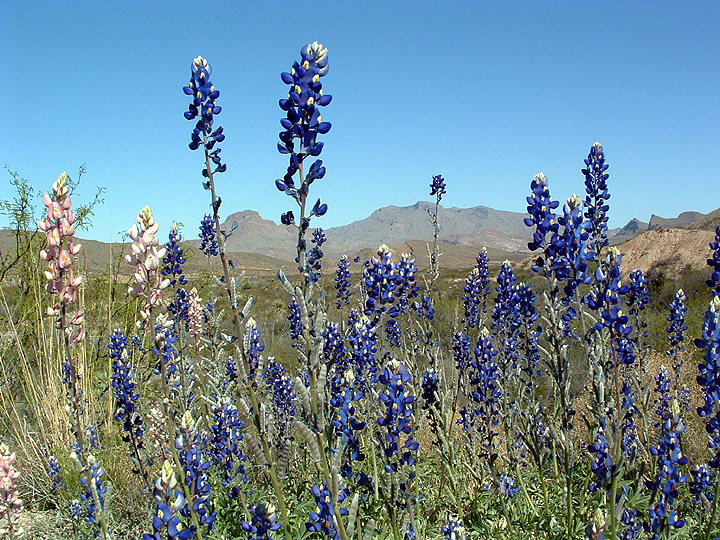
Ocotillo ( Fouquieria splendens ) is particularly striking, with its thorny, whip-like stems that leaf out quickly after rain. Sotol (Dasylirion leiophyllum) is a succulent with long, spiky leaves radiating from a central rosette. And Agave (Agave havardiana), another succulent, is adapted to the arid environment with thick, fleshy leaves.
These plants have evolved remarkable adaptations to survive in the harsh desert climate. Waxy leaves reduce water loss, deep root systems access groundwater, and spines deter herbivores. Understanding these adaptations deepened my appreciation for the resilience of life in the desert.
Geological Wonders: Witnessing Earth's History
As a geology professor, I couldn't resist exploring the geology Texas has to offer. From Grandiose Canyonlands, I had a clear view of several prominent geological formations, including volcanic dikes and mesas. I hiked the Closed Canyon Trail, a short but rewarding slot canyon hike not far from the campsite, which provided even more opportunities to observe the area’s geology.
![Photograph of a specific geological feature (e.g., a volcanic dike) along the Closed Canyon Trail.]
The region's geological history is complex, involving volcanic activity, erosion, and uplift over millions of years. The volcanic dikes are evidence of past volcanic eruptions, where magma intruded into cracks in the surrounding rock and solidified. The mesas are flat-topped hills formed by erosion, with resistant layers of rock protecting the underlying softer layers. In layman's terms, imagine layers of cake; some are hard, others soft. The wind and rain wear away the soft layers faster, leaving the hard layers as the "tabletop" of the mesa. The canyon itself reveals layered sedimentary rocks, each layer telling a story of a different time and environment.
Desert Hazards: Staying Safe in the Wild
Desert camping Texas presents several potential hazards. It's crucial to be aware of these risks and take appropriate precautions.
- Scorpions: Scorpions are common in the desert. Always check your boots and sleeping bag before use. Wear closed-toe shoes, especially at night.
- Snakes: Rattlesnakes are prevalent in Big Bend. Be aware of your surroundings and watch where you step. Never attempt to handle or approach a snake.
- Extreme Temperatures: Desert temperatures can fluctuate dramatically between day and night. Be prepared for both extreme heat and cold. Dress in layers and carry plenty of water. I recommend a wide-brimmed hat for sun protection.
- Dehydration: Drink plenty of water throughout the day, even if you don't feel thirsty. Dehydration can quickly lead to heat exhaustion or heat stroke.
I carried a first-aid kit, a snakebite kit (though I hope never to use it), and a personal locator beacon (PLB) for emergencies. Proper planning and awareness are key to a safe and enjoyable desert camping experience.
Final Thoughts: Solitude and Connection
My camping experience at Grandiose Canyonlands in Big Bend Ranch State Park was truly unforgettable. The challenges of primitive camping were offset by the stunning beauty of the night sky, the fascinating desert flora, and the awe-inspiring geological formations. The feeling of solitude and connection to nature in such a remote location was profound.
![Dr. Finch's campsite setup at Grandiose Canyonlands, showcasing the Celestron telescope and camping gear.]
While not for everyone, Grandiose Canyonlands offers a unique opportunity to experience the raw beauty and solitude of the Texas desert. If you're an experienced camper, a passionate astrophotographer, or a geology enthusiast, I highly recommend considering a trip to this hidden gem. Just remember to be prepared, respect the environment, and leave no trace. I am already planning my return trip next year! Why not start planning your adventure today?