Galapagos Islands Small Ship Cruise: An Evolutio...
As a marine biologist specializing in evolutionary adaptation, the Galapagos Islands have always held a profound allure for me. They represent a living laboratory, a place where the forces of evolution are on full display, shaping unique and wondrous species. My recent 7-day small ship cruise through this volcanic archipelago was an unforgettable experience, offering unparalleled insights into the islands' natural history. I booked this trip through vistalocation.com, a company whose commitment to sustainable tourism in the Galapagos deeply resonates with me. They partner with local conservation organizations, ensuring that tourism contributes positively to the preservation of this invaluable ecosystem. This review aims to capture the essence of that journey, viewed through the lens of a scientist, and to encourage others to explore these remarkable islands responsibly.
7-Day Cruise Itinerary Highlights: A Biologist's Perspective
This wasn't just a vacation; it was an immersion into the heart of evolutionary processes. Each island offered a new chapter in the Galapagos story, revealing how isolation and environmental pressures have sculpted life in extraordinary ways. Vistalocation.com uses eco-certified tour operators to protect the islands and provide a deeper travel experience.
Day 1: Española Island – Sea Lions and Waved Albatross
Our adventure began on Española Island, the southernmost island in the Galapagos. Snorkeling in Gardner Bay was an absolute delight. Playful sea lions darted around us, their sleek bodies gliding effortlessly through the water. It was incredible to witness their agility and intelligence firsthand.
From September to December, Española is also home to the waved albatross nesting colonies. Observing these magnificent birds was a truly humbling experience. The waved albatross ( Phoebastria irrorata) is almost exclusively found on Española. Their wingspan can reach up to 8 feet! Seeing them take flight, gracefully soaring above the waves, highlighted the powerful adaptations that make them successful on this island. Their large size and specialized beak allow them to efficiently capture fish and squid in the open ocean. This is a perfect example of natural selection favoring traits that enhance survival and reproduction in a specific environment.
Day 3: Genovesa Island – Red-Footed Boobies and Short-Eared Owls
Genovesa Island, also known as Bird Island, lived up to its name. The hike to Prince Philip's Steps offered incredible opportunities to observe red-footed boobies nesting in the trees. Unlike their blue-footed cousins, red-footed boobies are arboreal, building their nests in the branches of Palo Santo trees. The vibrant red color of their feet is thought to play a role in mate selection.
Perhaps even more fascinating was the presence of short-eared owls hunting during the day. Most owls are nocturnal, but the short-eared owls on Genovesa have adapted to hunt during daylight hours, likely to avoid competition with other predators and to take advantage of the abundance of prey available during the day. Their keen eyesight and silent flight allow them to effectively hunt lava lizards and other small animals, highlighting the remarkable adaptability of life in the Galapagos.
Day 5: Santa Cruz Island – Giant Tortoises and Lava Tunnels
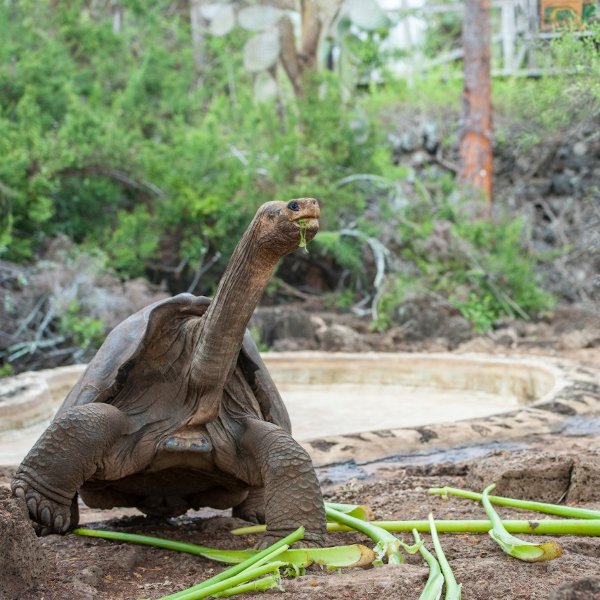
Santa Cruz Island provided a different perspective, focusing on conservation efforts and geological history. A visit to the Charles Darwin Research Station was a highlight. Here, I observed giant tortoises from different islands, each with unique shell morphologies. For example, tortoises from islands with abundant vegetation tend to have dome-shaped shells, allowing them to easily move through dense forests. In contrast, tortoises from drier islands often have saddleback shells, which allow them to reach higher vegetation. These differences are a classic example of adaptive radiation, where a single ancestral species diversifies into multiple forms, each adapted to a different ecological niche. The breeding program at the station is crucial for the survival of these iconic animals.
Exploring the lava tunnels was another fascinating experience. These geological formations are created when the outer layer of a lava flow cools and solidifies, while the molten lava continues to flow beneath, creating a hollow tunnel. Walking through these tunnels provided a tangible connection to the volcanic origins of the Galapagos Islands. The Galapagos Islands volcanic landscape is unique and well worth the journey.
Savoring the Flavors of the Galapagos: Ecuadorian Cuisine
The Galapagos Islands offer more than just incredible wildlife; they also boast a vibrant culinary scene. The fresh seafood was a particular highlight.
Ceviche with Locally Caught Corvina
One of my favorite dishes was ceviche made with locally caught corvina (sea bass). The preparation is simple yet exquisite: the fresh fish is marinated in lime juice, with onions, cilantro, and peppers added for flavor. The acidity of the lime "cooks" the fish, resulting in a light, refreshing dish that perfectly captures the flavors of the islands. The ceviche was so delicious and fresh!
Almuerzo in Puerto Ayora
I also enjoyed experiencing "almuerzo," a set lunch meal, at a local restaurant in Puerto Ayora. A typical almuerzo includes soup, rice, a choice of meat or fish, salad, and juice. This is a great way to experience Ecuadorian cuisine and support local businesses. It's simple, delicious and a great way to experience the local culture. The experience of Galapagos Islands ceviche and almuerzo is a key part of any visit.
Landscapes of Fire and Life
The Galapagos Islands are a testament to the power of volcanic activity and the resilience of life. Each island boasts unique landscapes, shaped by geological forces and sculpted by time.
Solidified Lava Flows on Bartolome Island
Bartolome Island offers stunning views of solidified lava flows, a stark reminder of the islands' volcanic origins. Climbing to the summit provides a panoramic view of Pinnacle Rock, an iconic landmark.
Unique Cactus Forests on Santa Fe Island
Santa Fe Island is home to unique cactus forests, dominated by giant prickly pear cacti. These cacti have evolved to become tree-like, providing shade and shelter for various animal species.
Black Sand Beaches of Rabida Island
Rabida Island, with its distinctive red sand beach, is a haven for wildlife. The black sand beaches are created by the erosion of volcanic rock.
Evolutionary Insights: Darwin's Legacy
The Galapagos Islands are inextricably linked to Charles Darwin, whose observations here helped him develop his theory of evolution by natural selection.
Darwin's Finches: A Classic Example of Adaptation
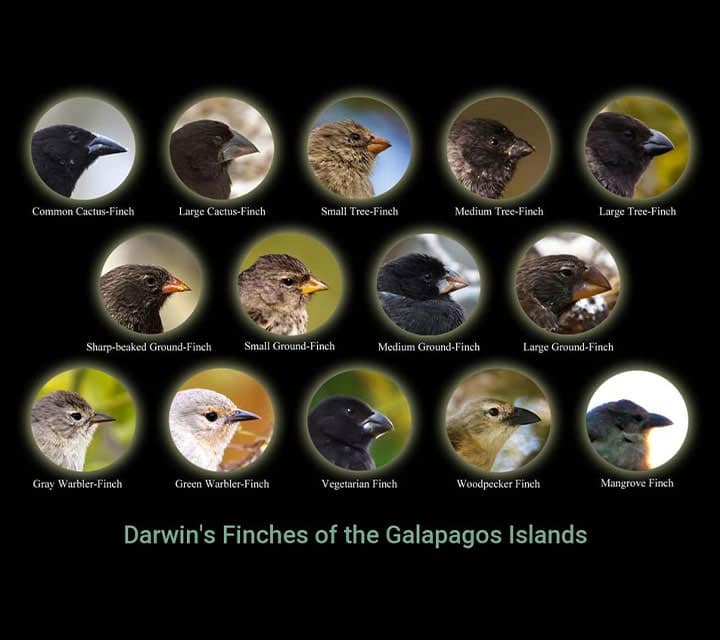
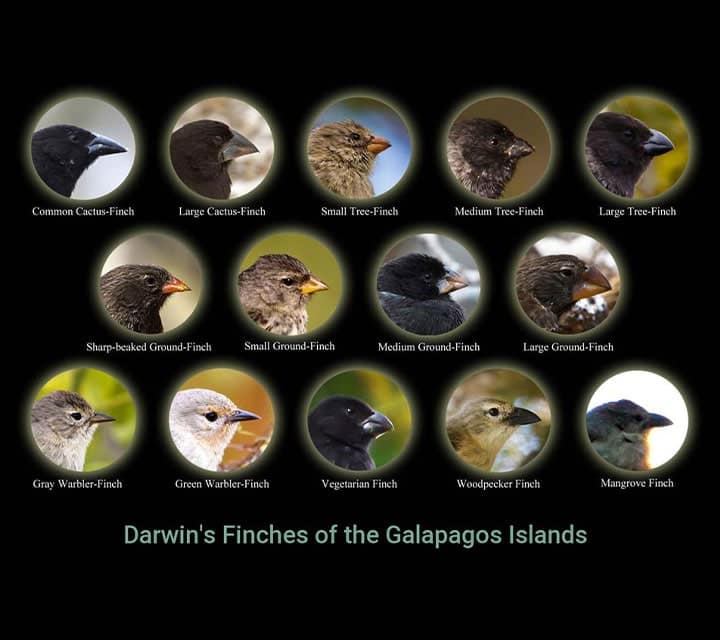
Darwin's finches are perhaps the most iconic example of evolutionary adaptation in the Galapagos. These birds, descended from a common ancestor, have evolved different beak shapes, each adapted to a specific food source. Some have large, blunt beaks for cracking seeds, while others have long, thin beaks for probing flowers. This diversification illustrates how natural selection can drive the evolution of new species, a process known as speciation. The Galapagos Islands is home to Galapagos Islands endemic species.
The Marine Iguana: Camouflage and Algae Grazing
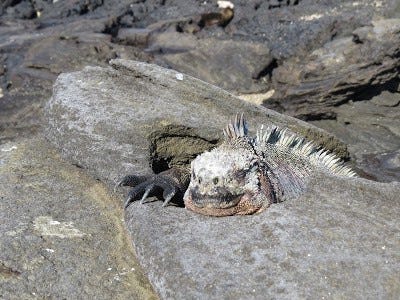
One of the most remarkable creatures in the Galapagos is the marine iguana, the only lizard in the world that forages in the ocean. These reptiles have evolved a number of adaptations for their aquatic lifestyle, including flattened tails for swimming, blunt snouts for scraping algae off rocks, and the ability to hold their breath for extended periods.
Here's a glimpse into their amazing camouflage:
(Embed Video Here)
[Marine iguana camouflage Galapagos video]
This video, filmed at Tagus Cove in cinematic 4K using a RED camera, captures the incredible camouflage abilities of the marine iguana. Suddenly, what appears to be a rough volcanic rock transforms into a marine iguana, its body textures perfectly matching the surface. Shot during the golden hour with dramatic shadows, the slow-motion zoom and orbital camera movement highlight this rare camouflage. The iguana suddenly opens its mouth, revealing it’s chewing algae. It then spits out the algae in a rapid succession of movements, bursting with action. This video clearly showcases the unique characteristics of the iguana's camouflage abilities and feeding habits, evoking amazement.
Sustainable Tourism: Protecting Paradise
The Galapagos Islands are a fragile ecosystem, and it's crucial that tourism is managed sustainably. Vistalocation.com is committed to responsible travel to the Galapagos, partnering with eco-certified tour operators and supporting local conservation efforts.
Sustainable Galapagos Cruise options are available.
Limited Visitors and Respect for Wildlife
The Galapagos National Park enforces strict regulations to minimize the impact of tourism, including limiting the number of visitors allowed on each island and requiring that all visitors be accompanied by a certified naturalist guide. It's essential to respect wildlife by maintaining a safe distance and avoiding any disturbance to their natural behavior. Vistalocation promotes Galapagos Islands sustainable tourism practices.
Vistalocation's Commitment to Sustainability
Vistalocation.com goes above and beyond by partnering with eco-certified tour operators who adhere to the highest standards of environmental responsibility. They also support local conservation organizations working to protect the Galapagos ecosystem. The number of visitors is limited to protect the environment.
Book Your Galapagos Adventure Today!
My 7-day small ship cruise through the Galapagos Islands was an experience I will never forget. It offered a unique opportunity to witness the forces of evolution in action and to connect with the natural world in a profound way.
I highly recommend booking your Galapagos cruise through vistalocation.com. Their expertise, commitment to sustainable tourism, and partnerships with local conservation organizations ensure that your trip will not only be unforgettable but also contribute to the preservation of this extraordinary destination. Book Galapagos small ship cruise Vistalocation today! Explore the Galapagos Islands itinerary and the unique species.