Galapagos: A Marine Biologist's Lens on Volcanic...
The moment I stepped onto Baltra Island, the gateway to the Galapagos, I was struck by a paradox. Stark, volcanic landscapes, seemingly barren and desolate, met vibrant, turquoise waters teeming with an explosion of life. It was an immediate immersion into a world of contrasts, a place where evolution has painted a masterpiece on a canvas of fire and water. This trip, a blend of research and photography, offered a unique opportunity to examine the delicate balance of these islands through the eyes of a marine biologist. The Galapagos Islands ecotourism is unlike any other, a place where you can witness unique endemic species found nowhere else on Earth. I hope to share my insights with you and inspire responsible Galapagos Islands sustainable travel.
Snorkeling with Marine Iguanas: A Dance with Evolution
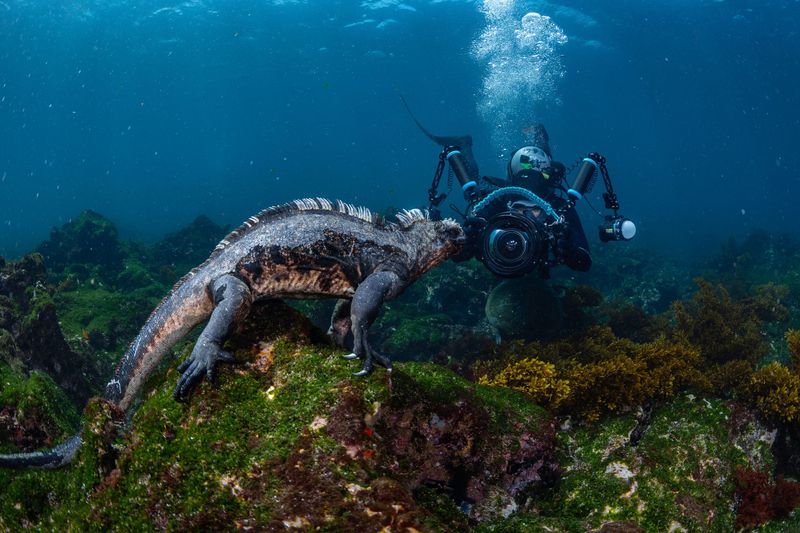
My snorkeling excursion off the coasts of Isabela and Santa Cruz was nothing short of magical. The Galapagos Islands snorkeling marine iguanas experience is something you simply can’t replicate anywhere else. These ancient-looking reptiles, the only lizard species in the world that forages in the ocean, gracefully navigate the underwater world. On Isabela Island, I spent hours observing them grazing on algae, their flattened tails propelling them effortlessly through the currents. Their dark, almost prehistoric appearance against the vibrant coral reefs created a surreal, breathtaking scene.
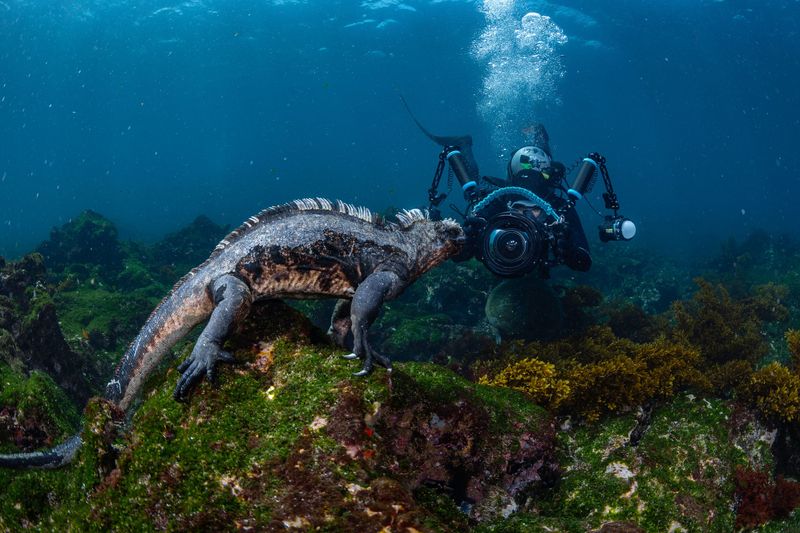
A marine iguana gracefully navigates the underwater world near Isabela Island. These unique reptiles are a testament to evolution, but their future is threatened by climate change and habitat degradation.
Swimming alongside these creatures felt like stepping back in time. I also had the privilege of observing several sea turtles, their shells adorned with algae, gliding through the water with serene elegance. However, the stark reality of their struggles hit home when I spotted a juvenile turtle entangled in plastic debris. It served as a powerful reminder of the urgent need to address plastic pollution and its devastating impact on marine life. The Galapagos Islands climate change impact is readily apparent, and the increasing ocean temperatures are affecting the algae that marine iguanas depend on.
Hiking Sierra Negra: A Journey into Volcanic Majesty
The hike to Sierra Negra volcano on Isabela Island was a completely different, yet equally awe-inspiring experience. Sierra Negra volcano hike Isabela Island offers an incredible opportunity to witness the immense power of geological forces. The caldera, one of the largest in the world, stretches for miles, a testament to the volcanic activity that shaped these islands.
The immense caldera of Sierra Negra volcano showcases the raw power of geological forces. Responsible hiking practices are essential to protect this fragile ecosystem.
The landscape transformed as we ascended, transitioning from arid coastal vegetation to lush, cloud-forest ecosystems. The geological formations were fascinating, layers of volcanic rock sculpted by time and the elements. Responsible hiking is paramount here; sticking to marked trails and avoiding disturbance to the fragile vegetation are crucial for preserving this unique environment. Remember to pack out everything you pack in and leave no trace of your visit.
Conservation in Action: The Charles Darwin Research Station
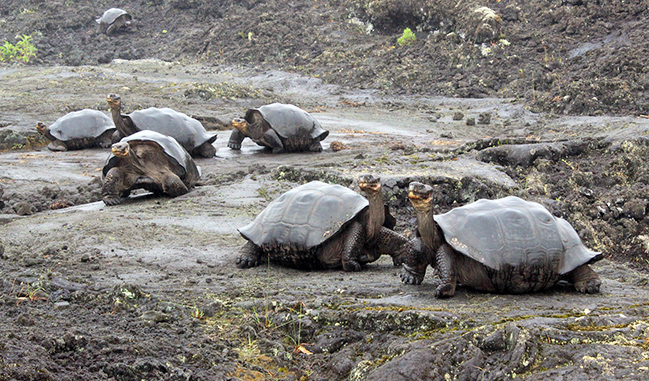
A visit to the Charles Darwin Research Station on Santa Cruz Island is a must for anyone interested in the conservation efforts underway in the Galapagos. The Charles Darwin Research Station Galapagos conservation efforts are truly inspiring. I was particularly drawn to the giant tortoise breeding program. Seeing these magnificent creatures, including individuals of the iconic Chelonoidis nigra species, was a humbling experience.
The station plays a vital role in protecting these endangered species, raising hatchlings in a controlled environment before reintroducing them to their native islands. The scientists and researchers at the station are dedicated to understanding the complex ecosystems of the Galapagos and developing effective conservation strategies. Their work underscores the importance of scientific research in preserving this unique archipelago for future generations. The Charles Darwin Research Station Galapagos entrance fee helps to support their important work.
A Taste of the Galapagos: Sustainable Seafood and Local Flavors
Beyond the incredible wildlife and landscapes, the Galapagos Islands also offer a unique culinary experience. I particularly enjoyed the ceviche de canchalagua (black clam ceviche), a local delicacy prepared with incredibly fresh ingredients. The briny flavor of the clams, combined with the citrusy marinade, was an explosion of taste.
Another dish I savored was arroz marinero (seafood rice), a hearty and flavorful dish brimming with locally sourced seafood. The emphasis on fresh, local ingredients and sustainable fishing practices is commendable. Supporting local fishermen and choosing restaurants that prioritize sustainable seafood is a great way to contribute to the preservation of the Galapagos ecosystem. Where to eat local sustainable food Galapagos Islands? Many restaurants in Puerto Ayora and Puerto Baquerizo Moreno offer these dishes.
Protecting Paradise: A Call to Action
The Galapagos Islands are a treasure, a fragile ecosystem that requires our collective effort to protect. I urge you to visit these islands responsibly, embracing sustainable tourism practices and supporting local conservation initiatives. Here are a few tips for minimizing your environmental impact:
- Choose eco-friendly tour operators: Look for companies with ecotourism certification and a commitment to sustainable practices.
- Reduce plastic consumption: Bring your own reusable water bottle, shopping bags, and toiletries.
- Respect wildlife: Maintain a safe distance from animals and avoid disturbing their natural behavior.
- Support local businesses: Choose locally owned hotels, restaurants, and shops.
- Educate yourself: Learn about the Galapagos ecosystem and the challenges it faces.
The Galapagos Islands sustainable travel options are more accessible than ever. By making conscious choices, we can ensure that this extraordinary place remains a wonder for generations to come.
What makes the Galapagos Islands unique? Their isolation has allowed unique species to evolve. How can I travel to the Galapagos Islands responsibly? Choose eco-friendly tours and respect wildlife. Let's work together to preserve this paradise.