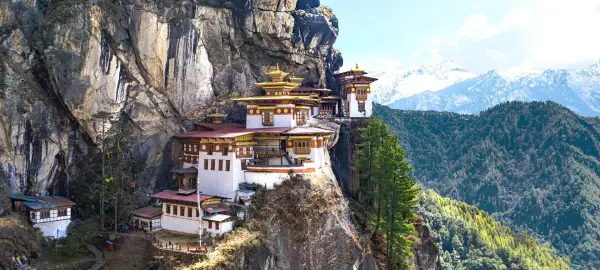
Finding 'Enoughness' in the Land of the Thunder...
Bhutan. The name itself conjured images of snow-capped mountains, ancient monasteries, and a people deeply connected to their culture and the land. As a travel photographer, I was drawn to capture its beauty, to document its unique way of life. I was also, I have to admit, drawn by the Instagrammable allure of a country famed for its commitment to Gross National Happiness (GNH). Little did I know that this journey to Bhutan would not just be about capturing images, but about capturing a different way of being. In my first few days, I was a woman possessed. Shooting sunrise at Punakha Dzong, racing to capture monks at prayer, driven to fill memory cards with as many stunning images as humanly possible. Driven by a frantic need to 'capture' everything, I was paradoxically capturing nothing. I felt disconnected, stressed, and far from happy. Something had to change. My photography in Bhutan felt like a frantic race, and I knew, if it continued, I would never truly experience the land’s soul.
Bhutanese Textile Photography in Jakar: Slowing Down to See
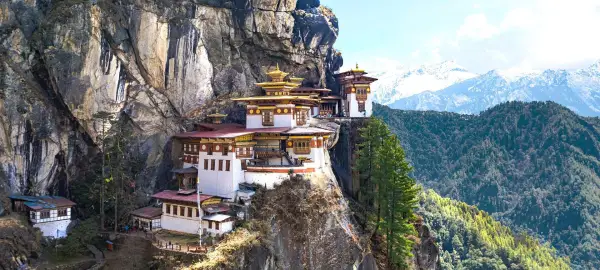
My first real lesson in 'enoughness' came in Jakar, in the Bumthang Valley. I'd arranged to photograph a local weaver, Dema, at her home. I planned an hour, tops, to get a few 'good' shots. Dema, however, had other plans. She invited me in, offered me butter tea, and then, with a gentle smile, showed me the raw silk, buray, she used to weave her textiles. She explained the painstaking process of creating dyes from plants and minerals. The textile she was working on was a riot of color, intricate patterns telling a story. I set up my Canon EOS 5D Mark IV with my trusty 50mm lens and a small reflector to bounce natural light. I planned to move quickly, but Dema patiently explained the symbolism woven into the design – the endless knot representing interconnectedness, the lotus symbolizing purity. She spoke of the hours, days, even weeks of meditative work poured into each piece. I spent the entire afternoon there, photographing one textile. Not a hundred angles, not a thousand clicks. Just one textile, in its full glory. I watched the patient rhythm of her loom, the subtle shifts in light across the silk threads. I realized "enoughness" wasn't about quantity, but about capturing the essence of a moment, understanding the soul woven into the fabric. Photographing Bhutanese textiles requires cultural sensitivity; approach each artisan with respect and genuine interest in their craft.
Tangka Art Thimphu Encounter: Each Brushstroke a Prayer
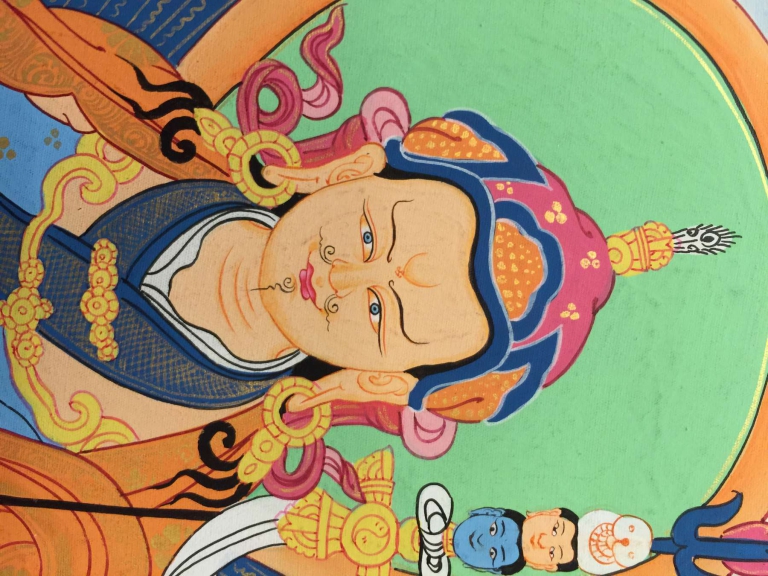
Thimphu, the capital, is a vibrant hub of culture and art. While generic travel guides might lead you to capture the famous Buddha Dordenma, I sought something deeper. I wanted to understand the sacred art of Tangka painting. I had the incredible opportunity to meet a Lopon (teacher) and Tangka artist named Tenzin. He welcomed me into his studio, a sanctuary filled with the scent of natural pigments and the hushed energy of focused creation.
Tenzin patiently explained the symbolism of the Wheel of Life (Srid pa'i 'khor lo), meticulously pointing out the realms of existence and the causes of suffering. He showed me how he grinds pigments from natural minerals like lapis lazuli (for blue), malachite (for green), and gold (for yellow). Each mineral, he explained, is associated with specific deities and energies. "Each brushstroke is a prayer, a meditation," Tenzin told me. "We don't rush. We breathe life into these sacred images."
Photographing the Tangka felt different from anything I’d done before. It wasn’t about capturing a pretty picture; it was about capturing the devotion, the centuries of tradition, the very essence of Buddhist philosophy. Understanding the spiritual significance of Tangka art is crucial before even thinking about photography, ensuring reverence and respect. Meeting Tangka artist in Thimphu requires patience to establish a trust and the willingness to hear their story.
Paro Valley Bioluminescent Fungi Photography: Finding Magic in the Dark
Forget the generic Instagram shots of Tiger's Nest Monastery (though it's breathtaking). I wanted to find something truly unique, something hidden. And I did. On a night hike in the Paro Valley, far from any artificial light, I stumbled upon a patch of bioluminescent fungi, Mycena chlorophos. It was like stepping into another world. The tiny mushrooms glowed with an otherworldly light against the dark forest floor, creating a magical, almost spiritual experience. Photographing bioluminescent fungi requires the best camera gear. I used my Sony a7S III with a 24-70mm f/2.8 GM lens. The conditions were difficult. It was near-total darkness. I shot at ISO 12800 and a shutter speed of 30 seconds. Focusing was a major challenge! I had to rely on manual focus and a headlamp to find even the faintest edges.
It wasn't just about the technical challenge. It was about witnessing something so rare, so delicate, so profoundly beautiful. It was a reminder that even in the darkest of times, there is always light, always magic to be found if you take the time to look. Discovering this hidden magic of the Paro Valley was one of the highlights of my trip. The best time to photograph bioluminescent fungi is during the monsoon season.
Reforestation Pledge: Giving Back to the Land
My journey to Bhutan was incredible, but I was always conscious of the impact my travels had on the environment. Flying across the world, staying in hotels, and consuming resources all contribute to my carbon footprint. I wanted to do something to offset that impact.
I researched various reforestation projects and chose to support Bhutan’s Forest for Life Project. I selected this project because of its transparent reporting and measurable impact. They are working to protect Bhutan's forests for generations to come. I believe that as travelers, we have a responsibility to give back to the places we visit. Supporting projects like this is a small but meaningful way to do that. I encourage you to learn more about the project and consider making a contribution: Bhutan Forest for Life Project. Sustainable travel Bhutan is essential for the preservation of the landscape and local communities.
Paro Tshechu: Looking with the Heart, Not the Eye
The Paro Tshechu is a vibrant, colorful festival that draws thousands of people. The masked dances are mesmerizing, the costumes dazzling. But it was the Atsara (clowns) who truly captured my attention. Unlike clowns in Western culture, the Atsara serve a vital purpose: they use humor to convey Buddhist teachings and social commentary. They are mischievous, irreverent, and often push boundaries, but always with a purpose. Documenting cultural festivals responsibly is very important to me.
I was snapping photos of the crowd when an Atsara, spotting me with my camera, playfully grabbed my lens cap. He gestured for me to put the camera down. He said, in broken English, "Look with heart, not eye! Festival is experience, not picture!"
He was right. I lowered my camera and simply watched. I laughed with the crowd, felt the energy of the music, and allowed myself to be fully present in the moment. It was a powerful reminder that some experiences are best lived, not just photographed. The Atsara clowns are also very revered for their ability to guide the festival.
TikTok Video: Real Play vs. Virtual Escape
Here’s a glimpse of Bhutanese happiness I captured in a TikTok that truly shifted my perspective. I wanted to visually contrast the simplicity of joy with modern digital distraction.
(Video description as requested)
Objective: Showcase the stark contrast between simplistic joy and digital distraction, aligning with Bhutan's GNH philosophy and contrasting it with a modern Western society.
MANDATORY FRAMEWORK - HOOK + SCENE + TWIST:
- HOOK (0-3 seconds): A child in Bhutan, dressed in a Gho, giggling while chasing a handmade wooden yak. The child is brightly lit and appears to be laughing genuinely.
- SCENE (3-7 seconds): Split-screen. LEFT: The Bhutanese child continues playing with the yak. RIGHT: A child (Western-dressed, modern setting) lies on their stomach, face illuminated by a tablet screen, glazed over and silent. The lighting in this scene is cold and blue. Pan the split screen to reveal more of both sides.
- TWIST (7-10 seconds): The Bhutanese child trips and falls, but immediately bursts into even louder laughter, holding up the yak. The Western child swipes at the tablet with a dull expression, seemingly untouched by the content on the screen. The twist: despite a small setback, the Bhutanese child's joy persists, juxtaposed against the Western child's emotionless engagement.
VIRAL ELEMENTS:
- SURPRISE: The abrupt cut from one child to the other, and the unexpected fall.
- CLARITY: The contrast is immediate and unmistakable; no text is needed for viewers to "get" the idea.
- EMOTION: Evokes a sense of nostalgia (for simpler play) and a questioning of modern digital habits. Also, the Bhutanese child's unadulterated joy.
- VISUAL STYLE: High-contrast color grading to emphasize the difference in emotional tone. The Bhutan scene should have warm tones, the Western scene should have cool tones.
TECHNICAL SPECIFICATIONS:
- CAMERA WORK: Slow-motion shot of the Bhutanese child tripping (captures the joy even in the fall). Rapid zoom-in on the Western child’s vacant eyes.
- LIGHTING: Golden hour lighting for the Bhutan scene (warm, inviting). Cool, blue light emanating from the tablet for the Western scene (clinical, sterile).
- COMPOSITION: Close-up on the Bhutanese child's face, capturing the pure joy in their eyes. Wide shot of the Western child, emphasizing the isolation even in a populated room.
- QUALITY: Cinematic 4K, shot on RED camera to create a hyper-realistic effect.
PACING & STRUCTURE:
- Start IN MEDIAS RES: Immediately with the Bhutanese child playing.
- Pack the punch early: Clear contrast within the first 3 seconds.
SOUND:
- Authentic giggling sound of the Bhutanese child. Silence or ambient electronic noise in the Western child's scene. Subtle use of Bhutanese folk music fading in and out.
TEXT OVERLAY (appears between 7-10 seconds):
- LEFT SIDE: "Real Play"
- RIGHT SIDE: "Virtual Escape"
Anya's Voiceover (subtle, reflective): "Are we truly connected, or just endlessly scrolling?"
Finding Enoughness: A New Perspective
My trip to Bhutan wasn't just about beautiful landscapes and exotic cultures. It was a journey inward, a confrontation with my own obsession with capturing, consuming, and constantly seeking "more." It taught me the value of slowing down, of appreciating the present moment, and of prioritizing genuine connections over fleeting digital distractions. Meeting a Tangka artist helped me to appreciate the slow and mindful nature of art.
Finding creative fulfillment during this trip also reminded me what is important to me. It's a lesson I carry with me now, both in my photography and in my daily life. I encourage you to consider incorporating the principles of GNH into your own lives, even in small ways. Put down your phone, connect with nature, have a mindful conversation, support a cause you believe in. Perhaps that is the real secret of finding happiness.
Kuzuzangpo la to Bhutan, for showing me what really matters.