Emilia-Romagna: A Culinary Pilgrimage to the Lan...
For the discerning food lover, there are destinations and then there are pilgrimages. Emilia-Romagna, a region nestled in the heart of Italy, transcends the former and firmly establishes itself as the latter. More than just a place, it's a sacred ground where culinary traditions are not just maintained, but revered. Here, ancient methods passed down through generations are the lifeblood of world-renowned delicacies. Prepare to embark on a sensory journey through the heart of this gastronomic paradise, as we explore the creation of three iconic foods: Parmigiano Reggiano, Prosciutto di Parma, and Balsamic Vinegar of Modena.
Parmigiano Reggiano: The King of Cheese
The experience begins before dawn. A visit to a caseificio, a cheese dairy, is a rite of passage for any serious food enthusiast. Stepping inside, the chill morning air is immediately replaced by a wave of warmth and the distinct, almost primal, scent of whey and fresh milk. Enormous copper vats dominate the space, milky steam rising from their depths like a mystical fog.
The rhythmic sounds of the casari (cheesemakers) fill the air. Their movements are practiced, almost balletic, honed over years of dedicated work. They stir, lift, and cut the curd with tools that seem unchanged for centuries. There’s a tangible connection to history in every action.
The process itself is a testament to tradition. Raw milk from local cows, fed only on local grasses, is heated in the copper vats. Natural whey starter, rich in native bacteria, is added to begin the fermentation process. Then, calf rennet is introduced to coagulate the milk, forming the curd. This curd is then broken down into smaller pieces, cooked, and allowed to settle at the bottom of the vat. The resulting mass, a precursor to the "King of Cheese," is then carefully lifted and wrapped in cheesecloth.
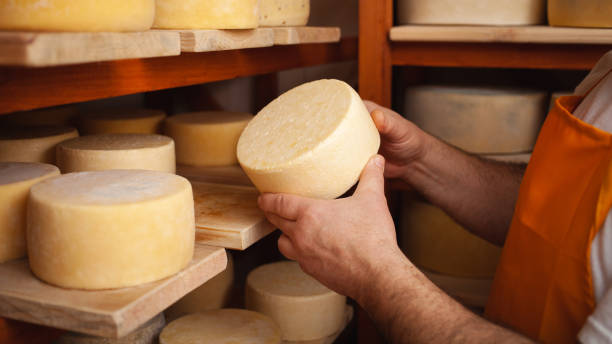
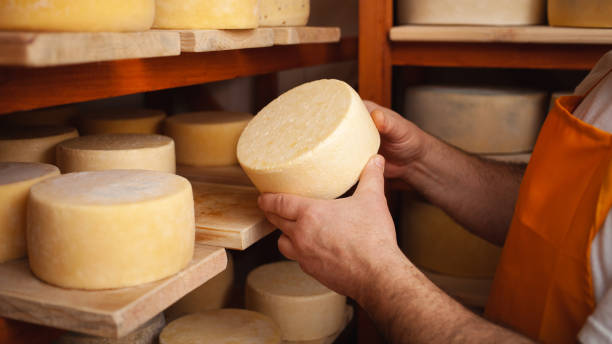
But the real magic happens in the aging rooms. Row upon row, stretching as far as the eye can see, are stacked high with wheels of Parmigiano Reggiano. Light filters through the windows, illuminating dust motes dancing in the air, creating an almost ethereal atmosphere. Each wheel bears the marks of its origin, a testament to its authenticity. These wheels will sit here for months, even years, developing the complex flavors that make Parmigiano Reggiano so unique.
The weight of the cheese in your hands is substantial, a physical manifestation of the time and dedication that goes into its creation. Finally, the moment arrives: the tasting. A wedge is cracked from a 36-month aged wheel. The aroma is intense – nutty, slightly grassy, with a hint of barnyard. The taste? An explosion of flavor. A sharp, crystalline bite gives way to a lingering, umami-rich finish. It's a taste that encapsulates the history and terroir of Emilia-Romagna.
Prosciutto di Parma: A Symphony of Salt and Sweet
From the dairy, we journey to the rolling hills surrounding Parma, where the air transforms, taking on a new character. Here, nestled amongst the verdant landscape, lies a prosciuttificio, a ham factory. The air is cool and damp, heavy with the salty, slightly sweet aroma of curing pork – a scent that speaks of time, patience, and the magic of transformation.
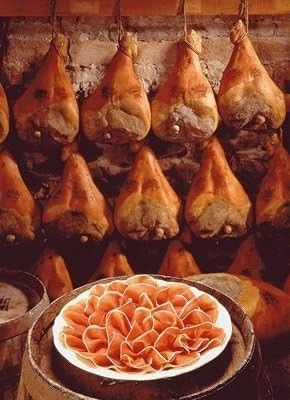
The sight is breathtaking: thousands upon thousands of hams hanging from rafters, their surfaces dusted with a fine layer of mold – a natural and essential part of the curing process. A soft breeze whispers through the open windows, carrying the scent of salt and pork throughout the facility. The sound of the scalpellino, the ham tester, is distinct. Using a horse bone needle, he pierces the hams, drawing it back out to assess the aroma. His nose is his most important tool, able to detect even the subtlest imperfections.
The process of dry-curing is simple in its ingredients – pork and sea salt – but complex in its execution. The unique microclimate of the Parma region, with its cool, humid winters and warm, dry summers, plays a critical role. The hams are salted, rested, washed, and then hung to dry-cure for a minimum of 12 months. During this time, the salt draws out moisture, concentrating the flavors and creating the distinctive texture and taste of Prosciutto di Parma.
The moment of truth arrives with a paper-thin slice. The color is a deep, rosy pink, marbled with streaks of white fat. The aroma is intoxicating. The taste is a revelation – a delicate balance of saltiness and sweetness, a melt-in-your-mouth texture that lingers long after the last bite. It's a testament to the power of simple ingredients and the importance of time-honored techniques.
Balsamic Vinegar of Modena: Liquid Gold
Our culinary pilgrimage culminates in Modena, the heartland of Aceto Balsamico Tradizionale. Here, we enter a traditional acetaia, a vinegar cellar, often located in the attic of a family home. The air is thick, almost palpable, with the pungent, sweet, and sour fragrance of aging balsamic vinegar – a scent that both tickles the nose and waters the eyes.
The sight is captivating: rows upon rows of wooden barrels, each made of a different type of wood – chestnut, cherry, oak, mulberry – stacked in descending order of size. These barrels, known as a batteria, are the heart of the balsamic vinegar-making process.
The process is a labor of love, requiring immense patience and dedication. It begins with the grape must – the freshly pressed juice of Trebbiano grapes. This must is cooked down to concentrate its sugars, then placed in the largest barrel of the batteria. Over the years, the vinegar is transferred to progressively smaller barrels, each imparting its unique flavor profile. The process can take decades, even centuries, to complete.
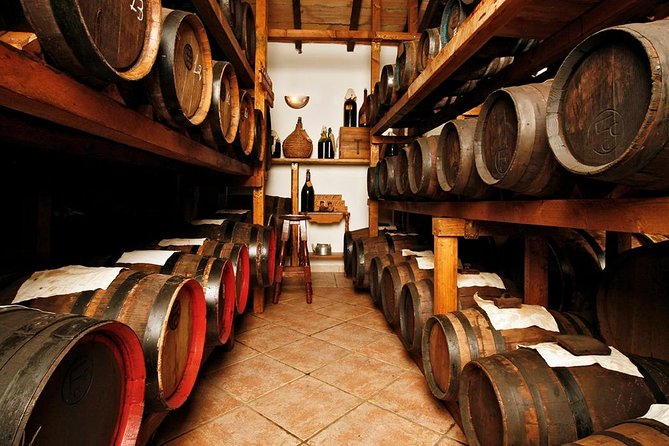
The mastro acetaio, the vinegar master, is the guardian of this tradition. He taps the barrels, listens to the sounds, and draws samples to evaluate the quality of the vinegar. His knowledge is encyclopedic, passed down through generations of his family.
The taste of a single drop of Aceto Balsamico Tradizionale di Modena is an experience unlike any other. The texture is syrupy, coating the tongue with a velvety smoothness. The flavor is a symphony of complexity – sweet, sour, and tangy, with hints of wood, fruit, and spice. It lingers on the palate for minutes, even hours, a reminder of the time, dedication, and passion that went into its creation. It truly is liquid gold.
Embark on Your Own Culinary Adventure
Emilia-Romagna is more than just a destination; it's an experience that will awaken your senses and deepen your appreciation for the art of food. To truly immerse yourself in this culinary paradise, consider booking a guided tour. Taste of Tradition Tours (fictional website: tasteoftraditiontours.com) offers immersive experiences that take you behind the scenes of Parmigiano Reggiano, Prosciutto di Parma, and Balsamic Vinegar production. Alternatively, Emilia Epicurean Experiences (fictional website: emiliaepicureanexperiences.com) provides luxury culinary tours with exclusive access to artisan producers.
Embark on your own culinary pilgrimage and witness these ancient traditions firsthand. Connect with the passionate artisans who are preserving Emilia-Romagna's culinary heritage, one delicious bite at a time. You won't just taste the food; you'll taste the history, the culture, and the soul of this extraordinary region.