Emerald Hills and Wax Palms: A Botanist's Pilgri...

For a botanist of my vintage, the Zona Cafetera in Colombia has always been a whispered legend. After decades spent poring over research papers and nurturing delicate specimens in controlled environments, I finally succumbed to the siren call of South America. Inspired by a recent Botanical Gazette article highlighting the region's unparalleled biodiversity, I, Dr. Eleanor Ainsworth, a newly retired 68-year-old botanist, embarked on a solo journey to Salento, a charming town nestled in the heart of the Coffee Region, to document its extraordinary plant life and experience this famed area. This trip promised not only an exploration of unique species, but also a deep dive into sustainable ecotourism, especially coffee farm stays. I hoped to see if the reality matched the botanical fantasies fueled by academic journals. What I discovered far exceeded my expectations, offering an enriching blend of breathtaking landscapes, vibrant culture, and a profound appreciation for the intricate web of life.
Awakening to the Symphony of the Birds: A Birdwatching Tour
The rooster's crow was my alarm clock, far earlier than any respectable botanist would normally stir. But this was no ordinary day. I was embarking on a birdwatching tour with Mateo, a local guide whose knowledge of the avian inhabitants of the Zona Cafetera was as extensive as my own library on plant taxonomy.

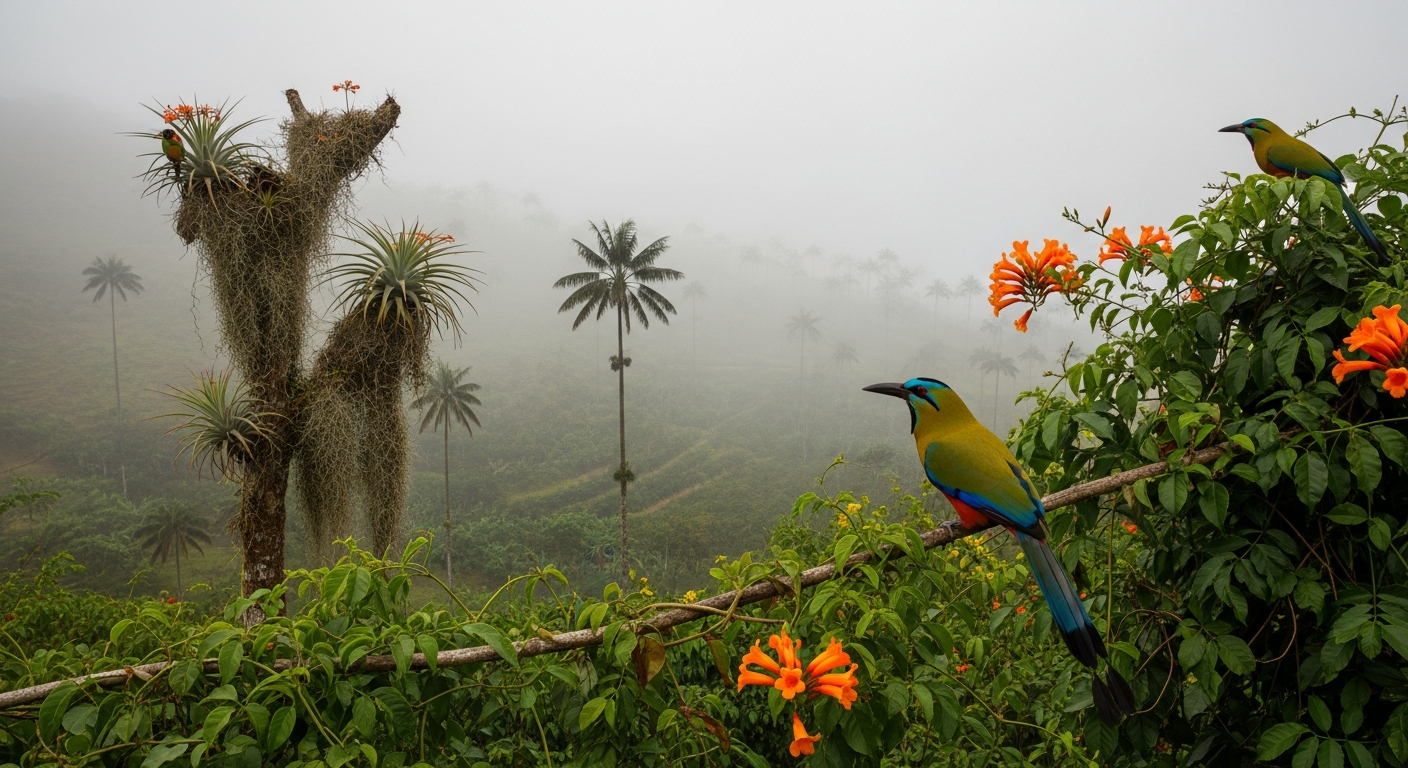
Our expedition began before sunrise, the air thick with the promise of rain. Mateo, a fountain of local wisdom, immediately pointed out the importance of the Guadua bamboo (Guadua angustifolia) thickets as nesting sites for many bird species. The first to grace us with its presence was the majestic Andean Motmot (Momotus aequatorialis), its turquoise plumage a dazzling contrast against the emerald foliage. Mateo explained that the motmot's diet consists largely of insects and small reptiles found amongst the undergrowth, a vital part of the local food chain. He also shared a local legend about the motmot's "racket" tail, which, according to folklore, the bird deliberately plucks its feathers to create. What vaccinations are needed before visiting the coffee region in Colombia? Mateo stressed the importance of respecting the birds' natural habitat and minimizing disturbance, as this is critical in their ecological niche. The experience provided a unique perspective on the interplay between flora and fauna, highlighting the region's biodiversity. Are there any guided birdwatching tours available in Salento Colombia? Absolutely, and I highly recommend seeking out local experts like Mateo to truly appreciate the region's avian diversity.
From Bean to Cup: Unveiling the Secrets of Finca El Ocaso
No visit to Salento is complete without immersing oneself in the world of coffee. I chose Finca El Ocaso, a coffee farm renowned for its sustainable practices and commitment to quality. My tour began in the vibrant coffee fields, where row upon row of coffee plants basked in the Andean sun. Mateo, who organized the tour, emphasized the careful spacing of the plants to allow for optimal sunlight penetration and airflow, crucial for preventing fungal diseases. The farm strategically intersperses shade trees that improve conditions for coffee growing, and provide homes for local wildlife. What are the most accessible coffee farms near Salento? Finca El Ocaso is a good option, offering tours catered to visitors with varied mobility.

The aroma of roasting coffee beans filled the air as I progressed through the process, from the meticulous hand-picking of the cherries to the drying and sorting stages. Finally, the moment arrived for the cata, the coffee tasting. We sampled several varietals, each with its distinct flavor profile. I particularly favored the Caturra, its subtle acidity and bright, clean taste a testament to the meticulous cultivation and processing methods. I pondered how the Coffea arabica impacts the surrounding landscape. The tour revealed that the farm's organic approach minimizes the impact, ensuring the health of the surrounding ecosystem. The best coffee farm tour Salento Colombia organic options emphasize sustainable methods, preserving the natural environment.
Wax Palms in the Mist: Hiking Through Cocora Valley
The Cocora Valley is dominated by the iconic wax palm (Ceroxylon quindiuense), Colombia's national tree and the tallest palm species in the world. Hiking through this valley, especially during the rainy season, is an experience that borders on the surreal. The best time to visit Salento Colombia coffee harvest occurs during drier months, but even in the rainy season, the views are breathtaking. What to pack for hiking Cocora Valley rainy season? Waterproof gear is essential.

As I ascended into the valley, the wax palms emerged from the mist like silent sentinels, their towering trunks disappearing into the clouds. The challenge of hiking in wet conditions was considerable, the trails slick with mud. Yet, the unique adaptations of the flora to this high-altitude environment were captivating. Amongst the understory, I spotted the vibrant blooms of Passiflora tripartita, the Banana Passionfruit, its pendulous flowers adding a splash of color to the somber landscape. Why is the Wax Palm important to Salento? Besides being a national symbol, these palms play a vital role in the ecosystem, providing habitat and contributing to the region's biodiversity. Cocora Valley accessibility senior travelers can be challenging, but shorter, less strenuous trails are available. Be sure to check trail conditions and difficulty before embarking on a hike.
Coffee with a Creative Twist: Artisan Workshop Visit
Salento is not only about coffee cultivation but also about creative repurposing. A visit to a local artisan workshop unveiled a fascinating world where coffee beans are transformed into unique crafts.

I marveled at the intricate jewelry fashioned from coffee beans, the charming keychains, and the surprisingly detailed sculptures carved from coffee wood. It was heartening to see how the community embraced the sustainable use of coffee byproducts, minimizing waste and creating economic opportunities. I purchased a small coffee wood carving, a tangible reminder of the ingenuity and resourcefulness of the local artisans. Dr. Eleanor Ainsworth Salento Colombia botanical experience included an unexpected appreciation for such sustainable practices. Best way to support local communities in Salento Colombia travel is through purchases of handicrafts and artisanal products.
A Culinary Journey: Flavors of Salento
Exploring the flavors of Salento was an integral part of my botanical pilgrimage. The local cuisine, fresh and vibrant, offered a delightful complement to the region's natural beauty.

One evening, I dined at Donde Laurita, a traditional restaurant renowned for its Trucha al Ajillo (garlic trout). The trout, sourced from local streams, was incredibly fresh, its delicate flavor enhanced by the fragrant garlic sauce and locally sourced herbs. While hiking, I often sipped Aguapanela, a refreshing drink made from unrefined sugar cane. Its sweetness provided an immediate energy boost, fueling my explorations of the valley. And of course, no visit to Salento is complete without sampling the Buñuelos from a street vendor, their light and crispy texture a perfect afternoon treat. Where can I find authentic Colombian cuisine in Salento? Many local restaurants offer traditional dishes like Bandeja Paisa and Ajiaco, showcasing the region's culinary heritage.
Reflections on a Botanical Adventure
My journey to Salento has been nothing short of transformative. Witnessing the region's biodiversity firsthand, from the towering wax palms to the smallest orchids clinging to the cloud forest trees, has deepened my understanding of South American flora. This trip has reinforced the importance of continued conservation efforts. Ethical considerations for tourism in the Zona Cafetera Colombia require a commitment to supporting local communities and minimizing environmental impact.

I hope that this humble account inspires others to embark on their own botanical pilgrimages, to discover the wonders of the natural world, and to contribute to its preservation. Safe travels!
Practical Tips for Visiting Salento:
- Best Time to Visit: The dry season (December to February and June to August) offers the most pleasant hiking conditions.
- Recommended Accommodations: Consider a coffee farm stay for an immersive experience. Finca Hotel Salento Real offers comfortable lodging and beautiful views.
- Appropriate Hiking Gear: Waterproof hiking boots, rain gear, and layers are essential, especially during the rainy season.
- Getting Around: The easiest way to get from Pereira airport to Salento independently is by taxi or bus.
- Safety Precautions: Is Salento Colombia safe for solo female traveler 60s? Like any travel destination, remain aware of your surroundings and take standard safety precautions.