Chasing Sunrise and History in Siem Reap: A Tal...
Stepping off the plane in Siem Reap is like walking into a warm, humid embrace. The air is thick, carrying the scent of grilling spices from nearby street vendors and the constant buzz of tuk-tuks vying for your attention. “Sua s'dei!” (pronounced "soo-a-sday"), the friendly Khmer greeting, welcomes you to a land of ancient wonders and vibrant culture. For me, Alex, a history enthusiast, it was the promise of unraveling the mysteries of a lost empire. For Jamie, my photography-obsessed partner, it was a playground of light, color, and breathtaking landscapes. This is our story of exploring Siem Reap through two very different, yet equally captivated, lenses.
Day 1: Angkor Wat Sunrise & Temple Fatigue
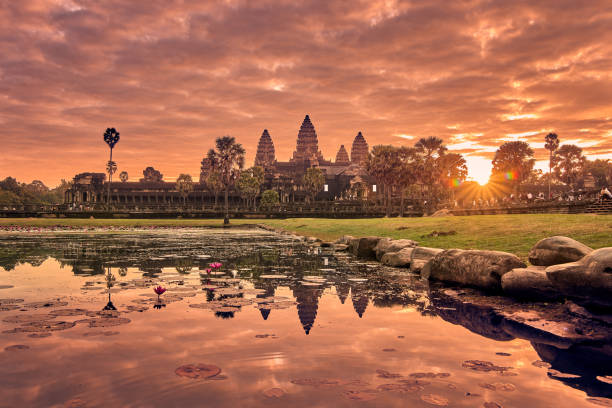
The 4:30 AM alarm is brutal, but the promise of witnessing the sunrise over Angkor Wat is enough to drag even the most sleep-deprived traveler out of bed. The anticipation was palpable as we joined the throngs of people making their way towards the iconic temple. Jamie, buzzing with excitement, was already strategizing the perfect shot. Me? I was just trying to wake up and avoid tripping over the uneven ground.
As the first rays of dawn painted the sky in hues of pink and orange, Angkor Wat began to materialize, its silhouette reflecting in the lotus pond. It was a truly magical sight.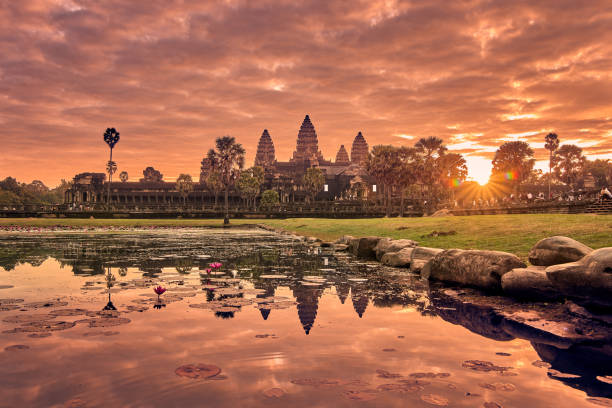
Angkor Wat reflecting in the lotus pond at sunrise. Jamie used a wide-angle lens (16-35mm), shooting in RAW format and bracketing exposures for HDR processing. Aspect ratio is 3:2, resolution is 300 DPI.
Jamie was in photographer heaven, wielding a wide-angle lens (16-35mm) to capture the entire temple complex with the sunrise. “Gotta shoot in RAW, Alex! And bracket exposures for HDR later. This is going to be epic!” For anyone trying to capture this iconic view, Jamie recommends an aspect ratio of 3:2 with a minimum resolution of 300 DPI for maximum detail.
For me, the historical significance was overwhelming. To stand before a structure built in the 12th century, a testament to human ingenuity and ambition, was truly humbling. It started as a Hindu temple dedicated to Vishnu and later transitioned into a Buddhist temple, reflecting the evolving religious landscape of the region.
The crowds were considerable, but we tried our best to be responsible tourists. We made sure to avoid touching the sandstone carvings and stayed within designated areas. Remember, these temples are fragile and sacred.
After soaking in the sunrise, we grabbed a quick lunch of Nom Banh Chok (Khmer noodles) from a street vendor near Angkor Wat. The flavorful broth, fresh herbs, and perfectly cooked noodles were a welcome treat. Eating it outside, surrounded by the sounds of the jungle and the hustle and bustle of tourists, was all part of the experience.
In the afternoon, we ventured to Angkor Thom, exploring the Bayon temple with its enigmatic smiling faces and the imposing Elephant Terrace. But by this point, “temple fatigue” had well and truly set in for me. Jamie, however, was still happily snapping away. Photographing Bayon’s smiling faces in the harsh midday sun presented a unique challenge, and Jamie suggests using a circular polarizer filter to cut through the glare.
As the day drew to a close, all I could muster was a heartfelt “Orkun chraen” (Thank you very much) to our tuk-tuk driver as we headed back to the hotel.
Day 2: Culinary Adventures & Insect Encounters
Day two was all about immersing ourselves in Khmer culture, starting with a Khmer cooking class at Lily’s Secret Garden Cooking Class. It was a hands-on experience, where we learned to prepare three classic dishes: Fish Amok, Lok Lak, and Mango Sticky Rice.
Learning to steam Fish Amok in banana leaves during a Khmer cooking class. This highlights the creamy coconut milk and turmeric paste used in the dish.
The Fish Amok, steamed in banana leaves, was a revelation. I was surprised at how easy it was to create the creamy coconut milk and turmeric paste that gave the dish its unique flavor. The Lok Lak, stir-fried beef with a smoky wok-hei, was another highlight. And of course, the Mango Sticky Rice, with its sweet mango and sticky rice drizzled with coconut milk, was the perfect ending.
That evening, we headed to the Angkor Night Market, a sensory overload of vibrant colors, enticing aromas, and the sounds of bartering. Jamie was captivated by the intricate handicrafts, taking close-up photos with a macro lens (100mm) and a shallow depth of field to isolate the details.
Then came the moment I was dreading – the bug market. Let’s just say I’m not the most adventurous eater. The sights and smells were…interesting. Jamie, on the other hand, was in their element. Fried crickets? Grasshoppers? Bring them on! I reluctantly tried a cricket. The texture was crunchy, and the taste…well, it tasted like fried bug. Jamie devoured a handful of grasshoppers, proclaiming them to be surprisingly nutty. “Ch'nganh” (Delicious), apparently. I'll take their word for it.
Day 3: Kulen Mountain & Landmine Awareness
A day trip to Kulen Mountain offered a welcome escape from the temple-filled plains of Siem Reap. The bumpy ride in a van was an adventure in itself, as the landscape transformed from flat rice paddies to lush jungle.
The highlight of Kulen Mountain was Preah Ang Thom, a massive reclining Buddha carved into the rock face. It was an awe-inspiring sight, a testament to the skill and artistry of the ancient Khmer people. Afterwards, we cooled off with a refreshing swim in the waterfall.
However, the day also brought a sobering reminder of Cambodia's recent history. The country is still grappling with the legacy of landmines. We visited a landmine museum (or considered supporting an organization like APOPO), learning about the ongoing demining efforts and the devastating impact these explosives have on local communities. It was a powerful and emotional experience, witnessing the resilience of the Cambodian people in the face of adversity.
Throughout the day, Jamie focused their camera on textures: the rough bark of the trees, the flowing water, and the intricate carvings.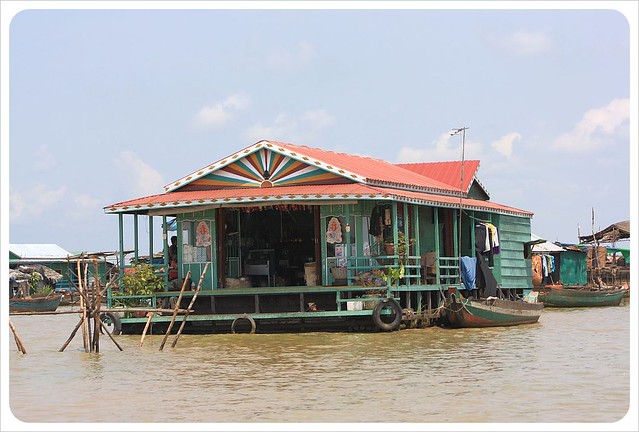
Kulen Mountain waterfall. Jamie captured the flowing water and surrounding foliage.
"Som toh" (Sorry/Excuse me) became a frequently used phrase as we navigated the crowded paths and interacted with locals.
Day 4: Tonle Sap Lake & Apsara Dance
Our fourth day took us to Tonle Sap Lake, Southeast Asia's largest freshwater lake. A boat trip on the lake offered a glimpse into a unique way of life, with entire villages built on stilts and adapted to the fluctuating water levels.
The vastness of the lake was truly impressive. Seeing the houses on stilts and witnessing how people have adapted to life on the water was both fascinating and humbling. However, it's important to be mindful of the impact of tourism on the lake’s ecosystem. Increased hotel and resort construction puts a strain on water resources, so responsible travel is crucial.
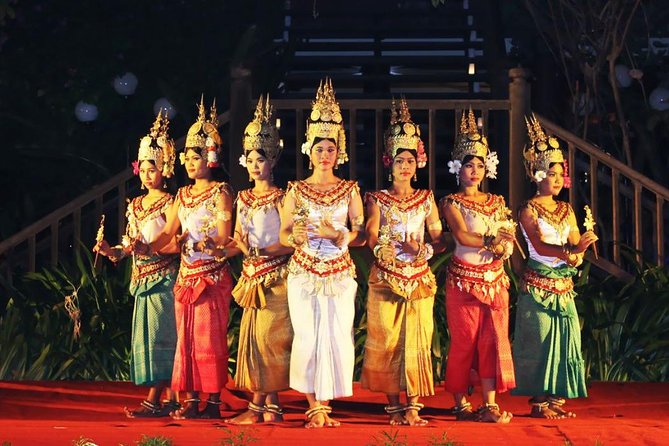
In the evening, we experienced the magic of Apsara dance, a traditional Khmer dance form, at a local restaurant. The dancers' elaborate costumes and graceful movements were mesmerizing.
Jamie, armed with a telephoto lens (70-200mm), captured the dancers’ expressions and costumes from a distance, skillfully using available light to maintain the intimate atmosphere.
Throughout the day, we heard "Srey" and "Bros" (Woman/Man) used frequently as friendly terms of address.
Day 5: Departure & Reflections
Leaving Siem Reap was bittersweet. Five days had flown by, filled with incredible experiences and unforgettable memories. We explored ancient temples, immersed ourselves in Khmer culture, and captured stunning photographs.
The trip was a perfect blend of historical exploration, cultural immersion, and photographic adventures. I marveled at the architectural wonders and the rich history, while Jamie captured the beauty and essence of Cambodia through their lens.
Most importantly, we were struck by the resilience and warmth of the Cambodian people. Despite facing immense challenges, they have maintained their spirit and their culture.
For aspiring photographers visiting Cambodia, remember to be respectful of the local culture, focus on the details, and embrace the light. It's also essential to refrain from photographing monks without their permission.
As we boarded our flight, we said "Léa haeuy" (Goodbye) to Siem Reap, promising to return someday.
Concluding Paragraph
Siem Reap is a destination that will stay with you long after you leave. It's a place of ancient wonders, vibrant culture, and resilient people. We encourage you to visit Siem Reap responsibly, supporting local businesses and respecting the environment. Do your research and choose responsible tourism operators who prioritize the well-being of local communities and the preservation of the environment. You won't regret it.
(All photos are in JPG format at 300 DPI, sized to 1200px wide, optimized for web viewing, and accompanied by concise captions providing context and photo details.)