Chasing Starlight: My Atacama Desert Astrophotog...
The Atacama Desert. Just the name conjures up images of vast, alien landscapes and, more importantly for me, unbelievably dark skies. As a 45-year-old astrophotographer from New York City, I've spent years honing my craft under light-polluted skies. But the Atacama? That was always a bucket-list destination, a place where I could truly test my skills and capture images I could only dream of back home. I finally made the pilgrimage, booking a 7-night stay through Vistalocation.com, and it was an experience that redefined my understanding of the cosmos. If you're looking for Chile astrophotography travel, this is a journey you need to make!
Finding My Desert Oasis: The Atacama Desert Lodge
Finding the right accommodation was paramount for this trip. I needed a place that understood the needs of an astrophotographer. After browsing Vistalocation.com, I settled on the 'Atacama Desert Lodge.' It was a modern desert retreat boasting dark-sky compliant outdoor lighting, optional telescope rentals, and, crucially, a high-altitude location. This high altitude location offered optimal views of the night sky. I found several similar properties with various stargazing packages, but the Atacama Desert Lodge's specific features and reviews clinched it for me. Waking up to those views every morning, knowing what the night held, was simply magical.
My Arsenal of Starlight-Hunting Equipment
Astrophotography equipment is fragile, so transporting it across the globe required meticulous planning. My primary weapon was my Celestron EdgeHD 11" telescope, enhanced with a Starizona HyperStar system. This combination gives me a ridiculously fast f/2 focal ratio, crucial for capturing faint deep-sky objects. I paired this with my trusty Canon EOS Ra camera, a mirrorless marvel specifically designed for astrophotography with enhanced hydrogen-alpha sensitivity. A variety of narrowband filters (Ha, OIII, SII) completed the setup, allowing me to isolate specific wavelengths of light emitted by nebulae. Everything was packed in padded, airline-approved cases and insured to the hilt. It's not cheap, but capturing light that has traveled across the universe? Priceless.
Conquering the Challenges of Astrophotography in the Atacama
The Atacama Desert is not for the faint of heart, or lungs! The extreme altitude (over 8,000 feet) hit me hard on the first day, causing shortness of breath and a persistent headache. Acclimatization is key – take it easy and drink plenty of water (a luxury in the driest desert on Earth!). Temperature fluctuations between day and night were also dramatic, requiring careful acclimatization of my equipment to prevent condensation on the optics. And then there’s the dust. It's everywhere! Protecting my gear was a constant battle, demanding meticulous cleaning and airtight storage. A dew heater was essential to prevent condensation on the telescope lens, and power banks to keep it running.
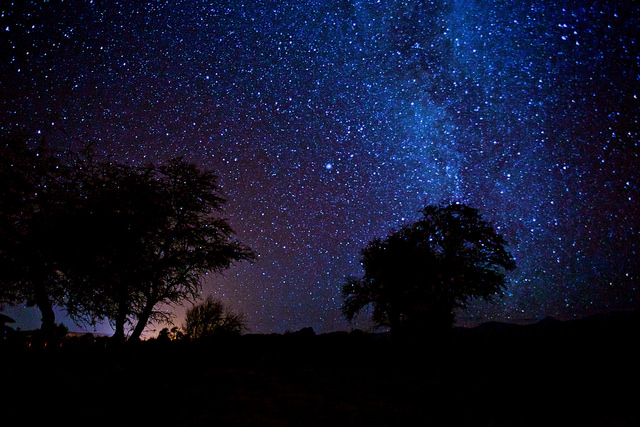
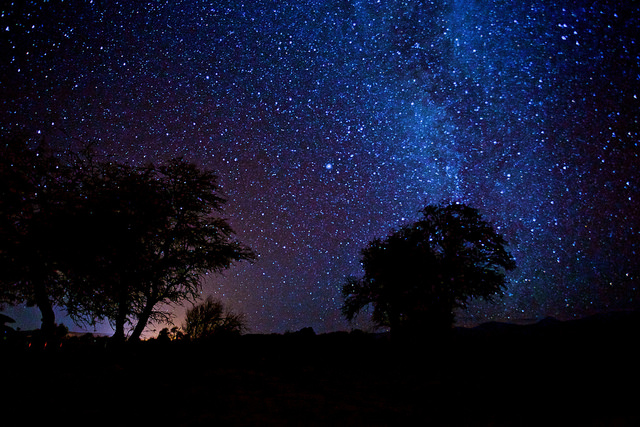
A wide-field shot of the Milky Way arcing over the Atacama Desert landscape, showcasing the pristine dark skies that make this region ideal for astrophotography. This image represents the kind of vistas I aimed to capture during my trip.
Andean Cosmology Under the Atacama Sky
One of the highlights of my trip was a guided Atacama Desert night sky tour led by Ayti, an indigenous astronomer. Ayti shared the traditional Andean cosmology, explaining how their ancestors interpreted the stars and constellations. For them, the Milky Way wasn’t just a band of light; it was a sacred river in the sky, connecting the earthly realm with the spiritual world. Ayti pointed out constellations significant to their culture, sharing stories passed down through generations. We even got to taste Charquican, a traditional Chilean stew, under the vast expanse of the cosmos. It was an incredibly humbling and enriching experience. I learned about the culture of the Atacama Desert in a way I hadn't imagined.
Sharing the Starlight: The Atacama Star Party
Attending a Star Party organized by a local astronomy club was a fantastic opportunity to connect with fellow stargazers. It was fascinating to see the diverse range of equipment people were using, from small refractors to massive Dobsonian telescopes. I shared some tips and techniques I've learned over the years, and, in turn, picked up some new tricks myself. The enthusiasm was infectious, and it was inspiring to be surrounded by people so passionate about the night sky.
Diving Deep: The Atacama Astrophotography Workshop
The core of my trip was a 3-day astrophotography workshop focused on capturing deep-sky objects. The workshop concentrated on capturing the Carina Nebula and the Magellanic Clouds, celestial wonders only visible from the Southern Hemisphere. We spent hours learning advanced image processing techniques and fine-tuning our equipment. My typical camera settings involved ISO 800-1600, exposures ranging from 3-5 minutes per subframe, and meticulous calibration using dark frames, flat frames, and bias frames. The results were astounding, revealing intricate details in these distant cosmic structures.
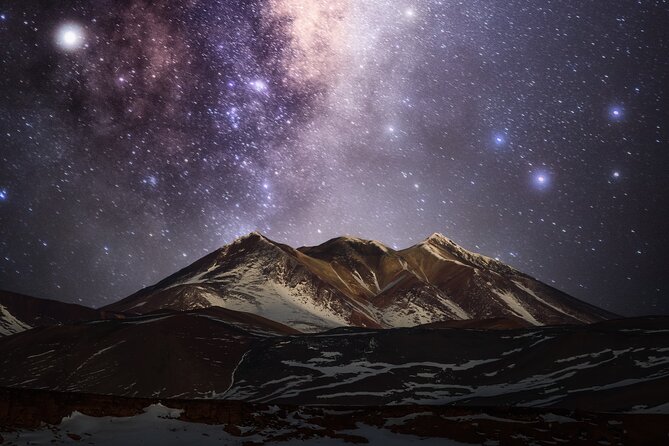
A close-up image of a nebula captured during the astrophotography workshop. The detail and vibrant colors in this image showcase the quality of the dark skies and the effectiveness of narrowband filters for capturing deep-sky objects.
Sandboarding and Sunrise Spectacles: Daytime Adventures in the Atacama
The Atacama isn't just about the night sky; the daytime landscapes are equally captivating. Sandboarding down the dunes at Valle de la Muerte (Death Valley) was an adrenaline rush, the surreal landscape making me feel like I was on another planet. And the early morning trip to the El Tatio geysers was breathtaking. Capturing the steam plumes rising against the backdrop of the Andes Mountains at sunrise was a photographic challenge, but the stunning results were well worth the effort.
A Taste of Atacama: Culinary Delights Under the Desert Sun
No trip is complete without indulging in the local cuisine. I savored Pastel de Choclo (corn pie) at a charming restaurant in San Pedro de Atacama, a hearty and flavorful dish that perfectly complemented the desert climate. I also couldn't resist purchasing rica-rica flavored sweets from a street vendor, a unique and delicious treat. And, of course, no evening was complete without enjoying a glass of Chilean Carmenere wine while watching the sunset paint the desert in fiery hues.
A Landscape Like No Other: The Arid Beauty of the Atacama
The Atacama Desert is a visual masterpiece. The extreme aridity has sculpted otherworldly geological formations, a testament to the power of time and the elements. The shades of red and orange in the Valle de la Luna (Moon Valley) at sunset are simply breathtaking. But the most striking aspect is the night sky. The Milky Way arching across the pristine darkness resembles a river of light, an awe-inspiring sight that I will never forget. Even the high-altitude lakes teeming with flamingos provide a stark contrast, proving that even in the driest place on Earth, life finds a way.
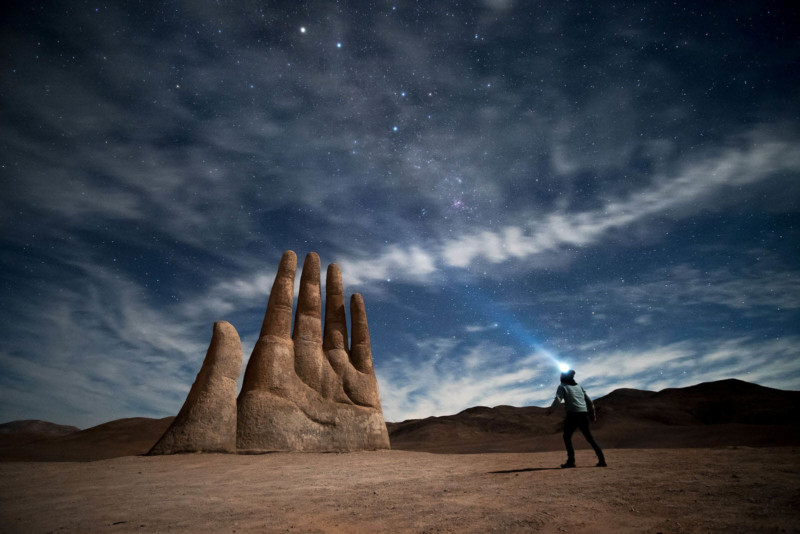
The El Tatio geysers at sunrise, showcasing the dramatic steam plumes against the backdrop of the Andes Mountains. This image captures one of the many stunning daytime landscapes the Atacama Desert has to offer.
Responsible Travel Tips for Dark Sky Enthusiasts
Preserving the darkness of the Atacama sky is crucial. Minimizing light pollution is essential: use red flashlights only, and shield electronic devices. Respect the delicate desert ecosystem by staying on marked trails and packing out all trash. Support local indigenous communities by purchasing handicrafts directly from artisans and using locally owned tour operators. By being mindful and responsible, we can ensure that future generations can experience the magic of the Atacama night sky.
Images of a Lifetime
I came to the Atacama to capture images, and I left with a portfolio I'm incredibly proud of. I managed to capture wide-field shots of the Milky Way stretching over the desert landscape, revealing its intricate details. My close-up images of nebulae and galaxies, enhanced by narrowband filters, showcase the vibrant colors and structures of these distant cosmic wonders. And my time-lapses of the night sky capture the subtle movements of the stars and the ethereal glow of the Milky Way.
The Atacama: A Premier Destination for Experiential Travel
The Atacama Desert isn't just a place; it's an experience. It's a journey that challenges your body, stimulates your mind, and nourishes your soul. And, thanks to platforms like Vistalocation.com, it's becoming increasingly accessible to travelers seeking unique and transformative experiences. Its unparalleled dark skies make it a premier destination for dark sky tourism. Whether you're an experienced astrophotographer or simply a stargazer with a curious mind, the Atacama will leave an indelible mark on your heart. The best time for astrophotography Atacama is during the dry season, typically from March to November, when clear skies are most frequent.
Ready to experience the magic of the Atacama Desert's night sky? Book your Atacama Desert astrophotography tour or accommodation with an on-site observatory through Vistalocation.com today! You might just capture the image of a lifetime.