Celestial Wonders and Earthly Extremes: My Namib...
As an astrophysics professor in London, I’ve spent my life gazing at the cosmos through telescopes and poring over data. Yet, nothing could have prepared me for the sheer, unadulterated awe I experienced during my recent 7-day trip to Namibia. I went seeking the stars, specifically Namibia Stargazing Tours, but I discovered so much more – a land of stark beauty, geological marvels, and resilient wildlife. From tracking desert elephants to soaring above the Skeleton Coast on a Skeleton Coast Fly-In Safari, my Namibian awakening was an experience that transcended the scientific and touched the very core of my being.
My journey began in Windhoek, Namibia’s capital. The air was warm and dry, carrying the scent of the African bush. Even the city lights seemed muted, hinting at the darkness to come. After a brief overnight stay, I embarked on my adventure, eager to witness the celestial wonders and earthly extremes that awaited.
Stargazing Nirvana near Sossusvlei: A Lesson in Southern Skies
The first leg of my journey led me to Sossusvlei, home to some of the world’s tallest sand dunes and, more importantly, impossibly dark skies. It was here that I met Josef, a local astronomer whose passion for the cosmos was as infectious as his knowledge was vast. Josef runs one of the most unique Namibia Stargazing Tours. As darkness fell, Josef set up his telescope, a powerful instrument that would become my portal to the Southern Hemisphere’s celestial treasures.
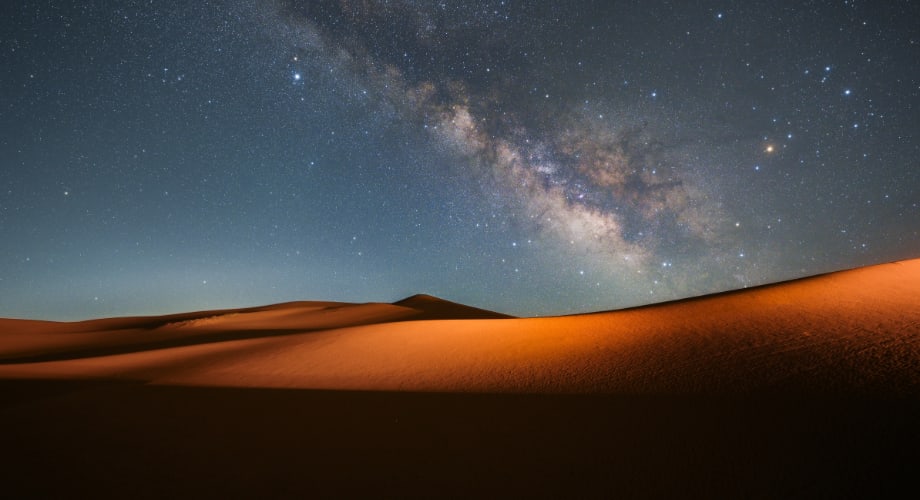
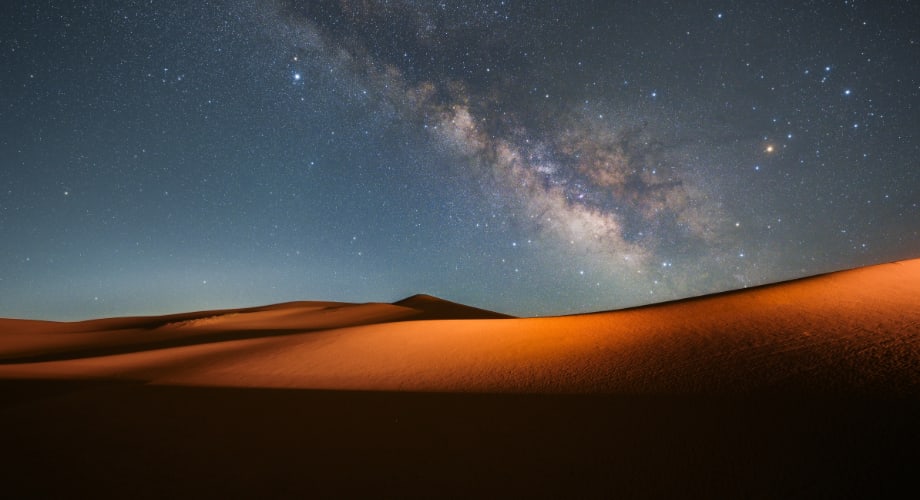
He began by pointing out the Southern Cross (Crux), a constellation invisible from London, and then led me on a tour of the deep sky objects. The Carina Nebula, a vast cloud of gas and dust where stars are born, was a particular highlight. Through the telescope, it appeared as a swirling tapestry of crimson and gold. The lack of light pollution was astounding; the Milky Way stretched across the sky like a river of diamonds. For an astrophysicist accustomed to observing through filters and screens, witnessing the cosmos with such clarity was nothing short of transformative. Namibia is truly a Namibia Dark Sky Reserve Photography paradise.
Damaraland's Petrified Forest: Whispers of Ancient Times
Leaving the celestial behind, I journeyed north to Damaraland, a region of rugged mountains and vast plains. My destination was the Petrified Forest, a graveyard of ancient trees turned to stone millions of years ago. The landscape was eerie and surreal, with fossilized trunks scattered across the desert floor.
As a scientist, I found the process fascinating. These trees, likely swept downriver from lush forests to the north during a past geological era, were buried in sediment rich in dissolved minerals. Over millennia, the organic matter of the wood was replaced by silica, a process called permineralization. The result is stone replicas of trees, preserving their form in exquisite detail. It's a tangible reminder of Petrified Forest Namibia Geological History, where the past is etched in stone.
Tracking Desert Elephants: A Lesson in Resilience
Damaraland also presented the opportunity to track desert-adapted elephants. I joined David, a conservationist, on a quest to find these elusive creatures. The conditions were harsh – scorching heat, thorny scrub, and endless horizons. The elephants, however, have adapted remarkably. They can go for extended periods without water, thanks to their ability to extract moisture from vegetation and conserve it efficiently.
After hours of searching, we finally spotted a small herd grazing near a dry riverbed. Witnessing these magnificent animals thriving in such a challenging environment was a testament to the power of adaptation and the importance of conservation efforts. Experiencing Damaraland Elephant Tracking Tours is a great way to understand how resilient these creatures are.
Skeleton Coast Scenic Flight: Where Desert Meets Ocean
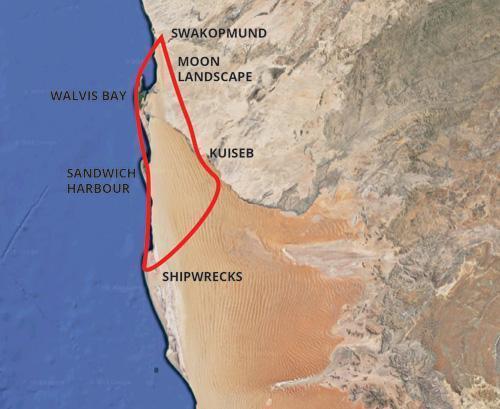
The highlight of my trip was undoubtedly the scenic flight over the Skeleton Coast. From above, the landscape was breathtaking – a dramatic juxtaposition of towering ochre-colored sand dunes and the turquoise-blue Atlantic Ocean. Shipwrecks, skeletal remains of ill-fated vessels, dotted the coastline, a stark reminder of the coast’s treacherous nature. This is why many travelers opt for a Skeleton Coast Fly-In Safari.
The Skeleton Coast's unique geology is a product of several factors, including the cold Benguela Current, which creates dense fog and unpredictable weather, and the relentless pounding of the surf against the desert landscape. This creates a surreal, desolate beauty unlike anything I've ever seen. Landmarks like Sandwich Harbour, where towering dunes meet the sea, and the distant silhouette of Brandberg Mountain, added to the grandeur of the spectacle.
Sandboarding in Swakopmund: A Leap of Faith
In Swakopmund, a coastal town known for its adventure activities, I decided to step outside my comfort zone and try sandboarding. Initially hesitant, I soon found myself strapped to a board and hurtling down a dune. The thrill was exhilarating, the challenge significant. The sand was incredibly fine, creating a smooth, fast ride. It was a joyful, unexpected experience, a reminder that sometimes the best discoveries come from embracing the unknown. Many Sandboarding Swakopmund Packages exist for beginners.
Namibian Culinary Delights: A Taste of the Land
My Namibian adventure was also a culinary journey. I sampled several local delicacies:
- Biltong: I tried Biltong for the first time, purchasing some from a local vendor. Its savory, air-dried flavor reminded me of a cross between beef jerky and Italian prosciutto, but with its own unique, earthy notes.
- Kapana: In Katatura, a township outside Windhoek, I indulged in Kapana from a street vendor. The grilled beef was smoky and flavorful, seasoned with a blend of local spices that created a delicious, fiery kick.
- Kabeljou: A dinner at a seaside restaurant in Swakopmund featured fresh grilled Kabeljou (Cob), a local fish. The delicate, flaky texture and subtle flavor were a perfect complement to the ocean view.
- Sundowners: Each evening, I savored sundowner drinks – Windhoek Lager or a gin and tonic – at the lodges, reflecting on the day's adventures under the vast African sky.
Conclusion: A Transformative Journey
My 7-day trip to Namibia was more than just a vacation; it was a transformative experience. It deepened my appreciation for the beauty and fragility of both the Earth and the cosmos. The clarity of the Namibian night sky reignited my passion for astrophysics, while the stark beauty of the landscape and the resilience of its wildlife left me in awe. Is Namibia safe for solo female travelers astrophysics? I felt safe and welcomed throughout my journey.
What is the best time to stargaze in Namibia? The dry season, from May to October, offers the clearest skies. Where can I see desert elephants in Namibia? Damaraland is the prime location.
Namibia surpassed all my expectations. I encourage every reader of vistalocation.com to embark on their own Namibian awakening. Come witness the celestial wonders and earthly extremes firsthand. Book your Namibia Adventure Travel today!