Celestial Canvas: Solar-Powered Astrophotography...
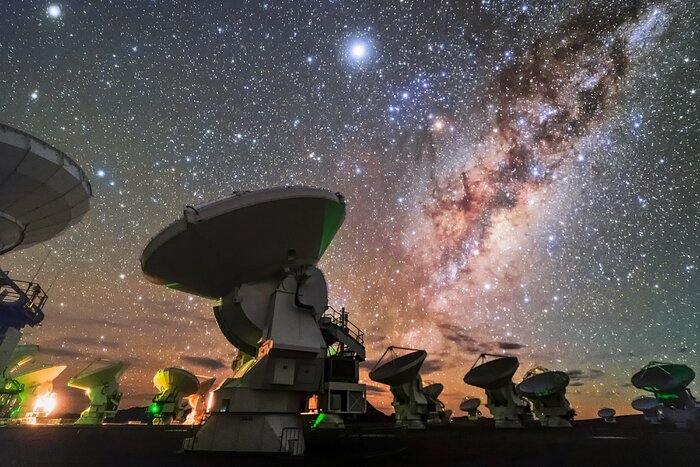
Imagine a place where the stars burst forth with unparalleled clarity, where ancient wisdom meets cutting-edge technology, and where sustainable practices fuel the pursuit of cosmic beauty. That place is the Atacama Desert, and vistalocation.com offers an exclusive Atacama astrophotography tours experience, capturing the night sky with a Phase One camera powered entirely by the sun. Join us on an unforgettable journey as we document a week-long, solar powered astrophotography Atacama expedition culminating in a collaborative session with renowned travel astrophotographer Babak Tafreshi under the auspices of The European Southern Observatory (ESO).
Unveiling the Cosmic Secrets of the Atacama
The Atacama Desert, located in Chile, boasts some of the darkest and clearest skies on Earth. This arid plateau, shielded by the Andes Mountains, offers minimal light pollution and exceptional atmospheric stability, making it a haven for astronomers and astrophotographers alike. It is arguably the best astrophotography location in the Atacama Desert. The unique conditions allow for breathtaking views of the Milky Way, nebulae, and distant galaxies.
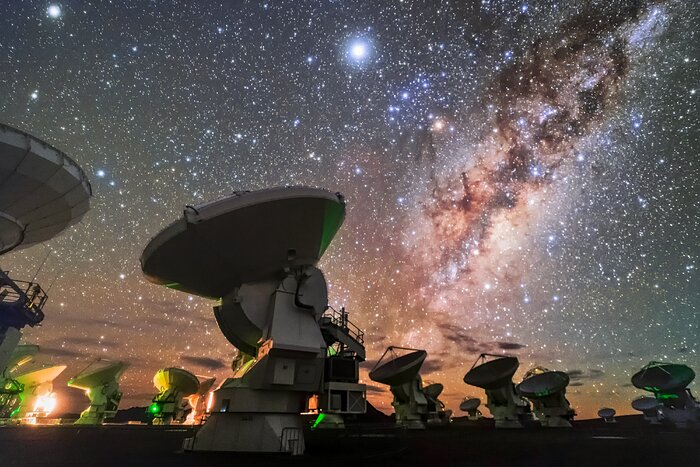
Our expedition pushed the boundaries of sustainable astrophotography, utilizing a state-of-the-art solar array to power our equipment, minimizing our environmental footprint while maximizing our ability to capture the cosmos. This sustainable astrophotography approach reflects vistalocation.com's commitment to responsible tourism and preserving the pristine environment of the Atacama.
The Heart of Our Setup: Phase One and Rokinon
At the core of our imaging setup was the Phase One XF IQ4 150MP Achromatic camera, paired with a Rokinon 135mm f/2 lens. The Phase One's monochrome sensor, devoid of a Bayer filter, allows for unparalleled light sensitivity and sharpness, capturing subtle details that would otherwise be lost.
The Rokinon 135mm lens, known for its speed and sharpness, provided an ideal focal length for capturing wide-field views of the Milky Way and detailed images of nebulae. This combination proved to be exceptionally powerful for revealing the beauty of the Atacama night sky.
Why Phase One for Astrophotography?
What is the best camera for astrophotography in the Atacama? The Phase One XF IQ4 150MP Achromatic offers several advantages for astrophotography:
- High Resolution: The 150MP sensor captures an incredible amount of detail.
- Monochrome Sensor: Enhanced light sensitivity and sharpness compared to color sensors.
- Dynamic Range: Exceptional dynamic range for capturing both faint and bright objects in the same frame.
- Modularity: The XF system allows for customization with different lenses and accessories.
Powering the Dream: Solar Energy in the Desert
One of the most innovative aspects of our expedition was the use of solar power. A portable solar array provided all the electricity needed to run our cameras, computers, and other equipment. The benefits of solar powered astrophotography are clear:
- Environmental Sustainability: Reduced carbon footprint compared to traditional generators.
- Silent Operation: No noisy generators to disturb the tranquility of the desert.
- Remote Accessibility: Ability to operate in remote locations without access to the power grid.
Capturing the Light: Post-Processing Techniques
The raw images captured in the Atacama are just the starting point. Extensive post-processing is required to bring out the full potential of the data. We employed a range of techniques, including luminance masks and deconvolution, to enhance image clarity and detail.
Luminance Masks: Sculpting the Light
Luminance masks are powerful tools for selectively adjusting the brightness and contrast of different areas of an image. By creating masks based on the luminance values of the image, we can target specific features, such as nebulae or galaxies, and enhance their visibility without affecting other areas.
Deconvolution: Sharpening the Stars
Deconvolution is a technique used to remove the blurring effects of atmospheric turbulence and optical imperfections. By applying deconvolution algorithms, we can sharpen the stars and reveal finer details in the image. Deconvolution enhances Phase One XF astrophotography to a remarkable degree.
Suhail's Whisper: Bedouin Astronomy in the Atacama
As our week progressed, we explored not only the modern techniques of astrophotography but also the ancient wisdom of Bedouin astronomy. Our journey led us to understand the cultural significance of the constellation Suhail (Canopus) and its role as a seasonal marker. What is the Suhail constellation and its significance?
In Bedouin tradition, the appearance of Suhail heralds the end of summer and the onset of cooler weather. It marks the time for planting and harvesting, and its position in the sky provides a valuable navigational tool for desert travelers. This connection to the land and the stars is deeply ingrained in Bedouin culture, providing a rich context for our astrophotography endeavors.
A Meeting of Minds: Babak Tafreshi and the ESO
The culmination of our expedition was a collaborative astrophotography session with the esteemed travel astrophotographer Babak Tafreshi, under the patronage of the European Southern Observatory (ESO). Tafreshi, known for his stunning images of the night sky from around the world, brought his expertise and artistic vision to our project.
Under the dark Atacama sky, Tafreshi shared insights into his techniques and philosophy, emphasizing the importance of connecting with the landscape and the cultural significance of the night sky. The ESO, a leading astronomical organization, provided invaluable support and resources, highlighting the importance of international collaboration in advancing our understanding of the universe.
Capturing the Cosmos Together
The collaborative session involved setting up multiple telescopes and cameras, each capturing different aspects of the night sky. We combined our expertise and equipment to create a mosaic image of a large region of the Milky Way, revealing intricate details of nebulae, star clusters, and dust lanes. What are the best astrophotography locations in the Atacama Desert? The synergy between our team and Babak Tafreshi's experience allowed us to capture truly exceptional images.
The European Southern Observatory (ESO) and the Atacama
The ESO operates several world-class observatories in the Atacama Desert, including the Very Large Telescope (VLT) and the Atacama Large Millimeter/submillimeter Array (ALMA). These facilities are at the forefront of astronomical research, pushing the boundaries of our understanding of the universe.
The ESO's presence in the Atacama underscores the region's importance as a global center for astronomy. Their commitment to education and outreach provides opportunities for aspiring astronomers and astrophotographers to learn from the best in the field. Vistalocation.com partners with the ESO to offer unique educational experiences for its luxury astrophotography travel clients.
Viral Video: Celestial Canvas Unveiled
The essence of our expedition was captured in a breathtaking viral video, showcasing the fusion of solar power, high-end astrophotography, and Bedouin astronomy.
Hook: Powering Up
The video opens with a rapid time-lapse of a solar panel array unfolding and powering up in the desert at sunrise. Action words like "Unfolding," "Powering," and "Bursting" (as stars appear in time-lapse) immediately grab the viewer's attention.
Scene: A Golden Hour Embrace
Cinematic 4K footage showcases the Atacama landscape in golden hour lighting. A dramatic low-angle shot focuses on the Phase One camera pointed at the night sky, emphasizing the desolate beauty surrounding it. Slow-motion shots capture the camera shutter firing, revealing the Phase One's sensor in detail. An orbiting shot showcases the entire setup.
Twist: Ancient Wisdom Under a Modern Sky
Mid-shoot, Babak Tafreshi suddenly appears with a traditional Bedouin elder. The elder points out Suhail in the sky with a laser pointer, bridging ancient knowledge with modern technology. The unexpected appearance and clear focus on the gear, landscape, and people create a powerful emotional connection.
The Magic of the Atacama Captured
The video encapsulates the amazement at the vastness of the cosmos and the seamless blend of ancient knowledge and modern technology, all within the cinematic, dramatic, and high-tech visual style that defines our journey. This video provides a visual feast for potential customers seeking Atacama astrophotography tours.
Your Journey to the Stars Awaits
Our solar-powered astrophotography expedition in the Atacama Desert was more than just a photography trip; it was a journey of discovery, connecting us to the cosmos, the land, and the wisdom of ancient cultures. Through Luxury astrophotography travel, vistalocation.com offers a unique and sustainable way to experience the beauty of the universe. Contact us today to book an Atacama astrophotography experience and embark on your own celestial adventure.
The Atacama Desert awaits, ready to share its dark skies and cosmic wonders.