Bhutan: Beyond the Brochure
Landing in Paro fel...
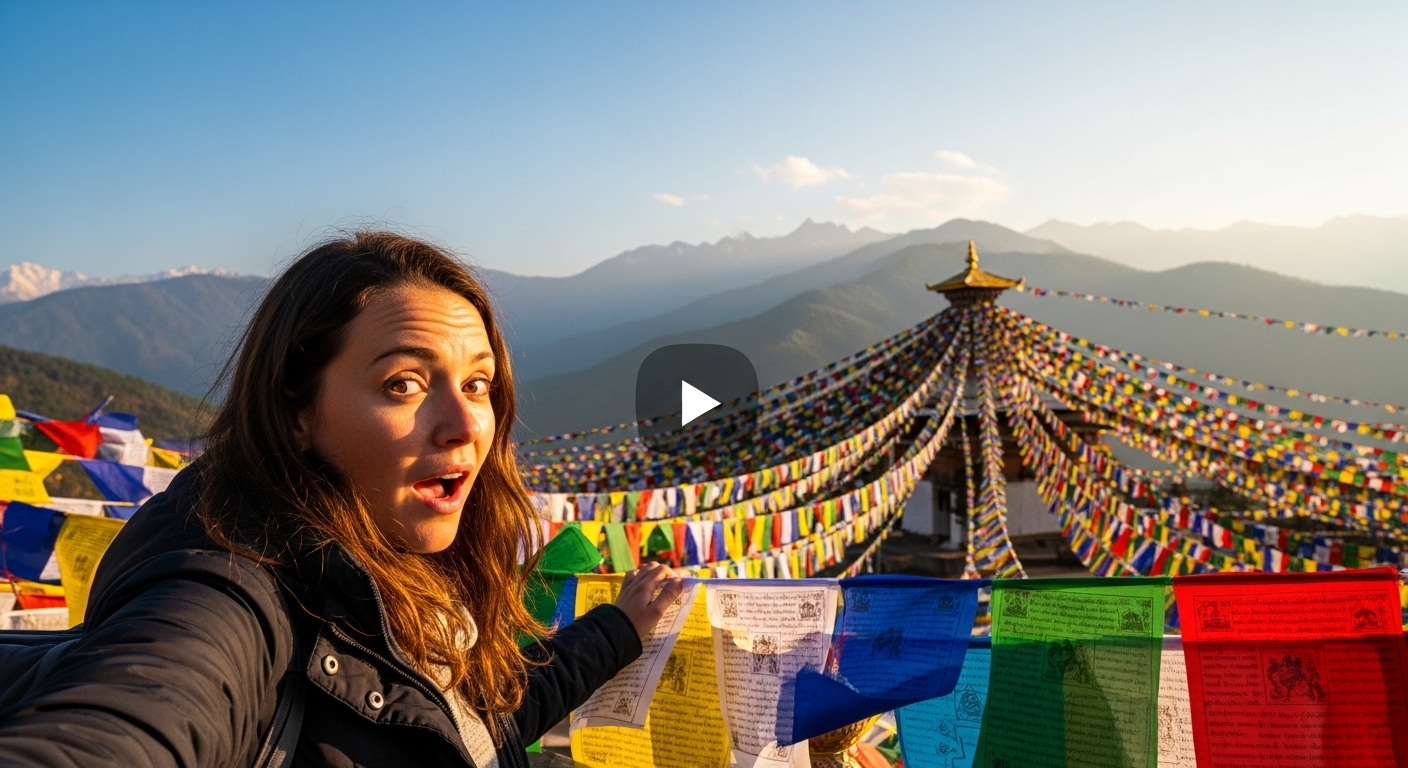
Landing in Paro felt like stepping onto another planet – a planet draped in prayer flags and whispered secrets. I immediately knew I was in for something extraordinary. The vibrant colors of the prayer flags, each syllable of Om Mani Padme Hum snapping in the wind, hit me first. I almost tripped over my own feet trying to reach one, a testament to my eagerness! Bhutan cultural immersion tour? More like a spiritual awakening waiting to happen.
Here's the video that captures that first, chaotic, beautiful moment:

That trip, my first solo adventure to the Land of the Thunder Dragon, was more than just a vacation; it was an immersion into a culture so vibrant, so deeply rooted in tradition, and so refreshingly different from anything I'd ever experienced. Vistalocation.com asked me to share my authentic Bhutan travel experiences, and it's my pleasure to take you beyond the glossy brochures and into the heart of Bhutan.
A Dance with Deities: Sha Nga Cham at the Tsechu Festival
My visit coincided with a local Tsechu, a religious festival filled with masked dances and sacred rituals. The highlight was undoubtedly the Sha Nga Cham, or Black Hat Dance. The dancers, adorned in elaborate costumes and fearsome masks, moved with a deliberate grace that belied the intensity of the performance. Knowing that the dance originated from the vision of Tertön Pema Lingpa, a 14th-century treasure discoverer, added a layer of depth to the spectacle.
The most striking element of the dance was the mudra: both hands clasped together and pointed downward toward the earth. It felt like a grounding force, a connection to something ancient and powerful. What does the Sha Nga Cham mudra symbolize? It’s a gesture of subduing negative forces and clearing obstacles, a powerful visual representation of good triumphing over evil.

Whispers on the Wind: Tiger's Nest and Ancient Prophecies
No trip to Bhutan is complete without a hike to Tiger’s Nest Monastery (Paro Taktsang). The climb is challenging, but the reward is immeasurable. At the teahouse halfway up, I overheard a local elder discussing the termas supposedly hidden by Guru Rinpoche around Paro Taktsang. He spoke of a self-arisen image of Vajrayogini, a powerful female Buddha.
The elder then shared a prophecy: “When the iron bird flies and horses run on wheels, a great master will unearth the secret teachings of Guru Rinpoche, bringing enlightenment to all beings lost in the darkness of ignorance.” Tiger's Nest terma prophecies are a testament to Bhutan's deep spiritual heritage. This resonated deeply, making me wonder if Bhutan's embrace of technology while preserving its traditions is, in a way, fulfilling that prophecy.

The Pride of the Pasture: A Yak Herding Festival
My journey off the beaten path travel led me to a yak herding festival, a celebration of the hardy animals that are integral to Bhutanese life. I had the privilege of interviewing Tashi, the winning farmer. His yaks were magnificent Drukpa yaks, known for their thick, shaggy coats that protect them from the harsh Himalayan climate.
Tashi spoke passionately about his yaks, but his joy was tinged with concern. He worries about the climate change impacts on the grasslands that feed his animals. Drukpa yak climate change adaptation is a pressing issue for these herders. He's adapting his herding practices, moving his yaks to higher altitudes for longer periods to find suitable grazing land. These yak herding festivals celebrate traditional Bhutanese practices, and highlight the unique way of life in the high altitude valleys.

The Art of the Arrow: Bhutanese Archery
Archery is more than just a sport in Bhutan; it’s a cultural institution. I watched an archery demonstration, mesmerized by the archers' skill and the intricate rituals surrounding the competition. The bows, or Da, are crafted from a specific type of bamboo: Melocanna baccifera.
The curing process is fascinating, involving smoking the bamboo over a dung fire for several weeks. Melocanna baccifera bamboo archery in Bhutan is a testament to the ingenuity of Bhutanese artisans. This meticulous process ensures the bamboo is strong and flexible, capable of launching arrows with incredible accuracy.

From Forest Floor to Culinary Delight: The Matsutake Mushroom
I stumbled upon a Matsutake mushroom auction in a local village. The bidding was fierce, with the mushrooms fetching incredibly high prices. Foraging matsutake mushrooms in Bhutan is an economic activity, and the high prices reflect their value, both culinary and medicinal.
Later, I assisted in preparing Ema Datshi, Bhutan’s national dish, using the local cheese, Churu. It was a culinary adventure! What is Ema Datshi made of? It's a simple yet flavorful stew of chilies and cheese, a staple in every Bhutanese household.

A Fiery Secret: Bhutanese Chili-Garlic Oil
Learning to make Momos from a street vendor was another highlight. The vendor's preparation method of the chili-garlic oil sauce was particularly intriguing. First, he toasted Sichuan peppercorns, locally grown garlic, and sun-dried red chilies. Then, he infused them in hot mustard oil. The aroma alone was intoxicating!
This Bhutanese chili-garlic oil recipe is what elevated the momos to another level. Where to find Sichuan peppercorn in Bhutan? It's available in most local markets, a testament to the country's rich agricultural diversity. This adds a complex layer of flavor, both spicy and numbing, which is unique to Bhutanese cuisine.

Rhythms of the Rice Field: The Red Rice Harvest
I had the opportunity to assist with the red rice harvest, specifically the threshing process. Using traditional wooden tools, we separated the grains from the stalks. It was hard work, but incredibly rewarding. Best time to visit Bumthang Valley for red rice threshing? Late autumn, when the fields turn a stunning golden hue.

Sounds of Serenity: The Paro Valley Soundscape
The Paro Valley is alive with sound. The Himalayan Monal's call is most prevalent at dawn, a haunting melody that echoes through the mountains. Photographs of Himalayan Monal pheasant in Bhutan are truly stunning. Later, the cicadas' chirping intensifies during the hottest part of the afternoon. What does a Himalayan Monal Pheasant Call Sound Like? It sounds very similar to a whistle, sharp and clear.
A Fortress of Faith: Rinpung Dzong
A visit to Rinpung Dzong is a must. The architecture is breathtaking, and the intricate details are captivating. I was particularly struck by the Parasol's silk panels, embroidered with images of the Ashtamangala (eight auspicious symbols). Buy Ashtamangala silk panel embroidery in Bhutan and you will have a genuine reminder of your trip.

Beyond the Scenery: A Journey of Transformation
Bhutan isn't just a destination; it's an immersion into a world where ancient traditions meet modern challenges, where the whispers of the mountains carry the wisdom of generations. It's a place where Gross National Happiness is valued above all else, and where the simple act of sharing a meal with a local family can be more enriching than any five-star experience.
My solo female travel authentic Bhutan experiences were transformative. I realized that Bhutan offered me more than just stunning landscapes – it offered a deeper understanding of life, culture, and resilience. If you're looking for a truly authentic and transformative travel experience, I urge you to consider Bhutan. Plan Your Trip Now! Vistalocation.com/bhutan-tours offers a range of Bhutan cultural tour packages, including options for solo female travelers.