Beyond the Lens: Finding Happiness in Bhutan's P...
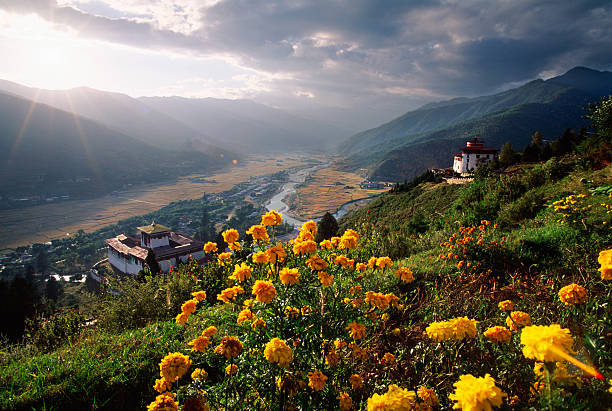
I've always been a creature of stark landscapes, drawn to the raw, untamed beauty of the wilderness. My photography, mostly in black and white, aims to capture the drama and grandeur of nature at its most elemental. So, when I booked my trip to Bhutan, my focus was purely photographic. I envisioned capturing the majestic Himalayan peaks, the ancient forests, and the pristine rivers. My destination: the legendary Paro Valley, a photographer's dream. Little did I know that my journey would extend far beyond the lens. My initial intention was simply to capture Paro Valley Bhutan Photography, but I found something much deeper.
From the airplane window, the Paro Valley unfolded beneath me, a tapestry of terraced rice paddies shimmering in the morning light, framed by the snow-dusted peaks of the Himalayas. My initial thoughts weren't spiritual, but compositional: the light ratio on the paddy fields, the textures of the pine forests clinging to the mountainsides, the glacial rivers snaking through the valley floor. I needed to capture THAT. It was all about the images, the composition, and the perfect light.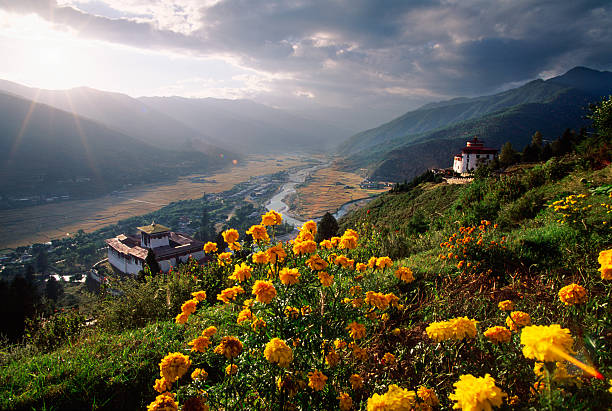
The Ascent to Tiger's Nest: A Shift in Perspective
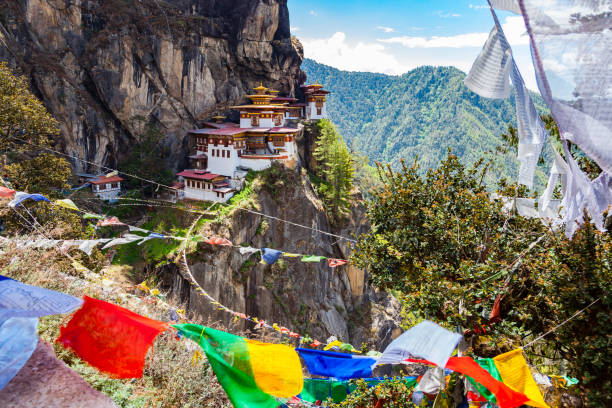
The Tiger's Nest Monastery, or Taktsang, is arguably Bhutan's most iconic landmark. Perched precariously on a cliff face, it's a sight to behold, even for a seasoned landscape photographer like myself. The trek up was challenging, physically demanding. I was focused on finding the perfect angles, the best vantage points to showcase its dramatic setting. My initial plan was to create a Tiger's Nest Monastery Photography Guide, focusing on lighting and composition.
But as I ascended, something shifted. It wasn't just the altitude. It was the constant presence of prayer flags fluttering in the wind, their vibrant colors a stark contrast against the muted greens and browns of the landscape. It was the scent of incense wafting from the monastery, a calming, almost hypnotic aroma. And it was the sound of monks chanting in the distance, a low, resonant hum that seemed to vibrate through the very air.
These details, initially distractions, became integral to the experience. I began to see beyond the visual. I started to feel the spiritual significance of this place, the deep-rooted connection between the Bhutanese people and their faith. The trek wasn't just a physical challenge; it was a journey inward.
Paro Tshechu: Capturing Sacred Moments
My visit coincided with the Paro Tshechu, an annual religious festival held at the Rinpung Dzong. I'd read about it, of course, and seen photographs. I was prepared for the vibrant costumes, the masked dances, the general spectacle. I was eager to capture the Paro Tshechu Festival Photographer Perspective.
But nothing could have prepared me for the sheer emotional power of the event. The unfurling of the Thangka, a massive embroidered tapestry depicting Guru Rinpoche, was a particularly moving experience.
The dawn light was soft, diffused, as the Thangka was slowly revealed. The intricate details of the religious artwork were illuminated, the colors vibrant and alive. I struggled to capture the moment, the challenge of photographing movement in low light testing my skills. But it wasn't just a technical challenge; it was an emotional one. The reverence in the faces of the Bhutanese people, their unwavering faith, was palpable. It was a privilege to witness such a sacred ritual. Imagine the 'Guru Rinpoche Thongdrel' unfurling on silk, shot with a shallow depth of field, blurring the crowd to highlight the Thangka's vibrant colors.
Finding Joy in Archery: A Cultural Exchange
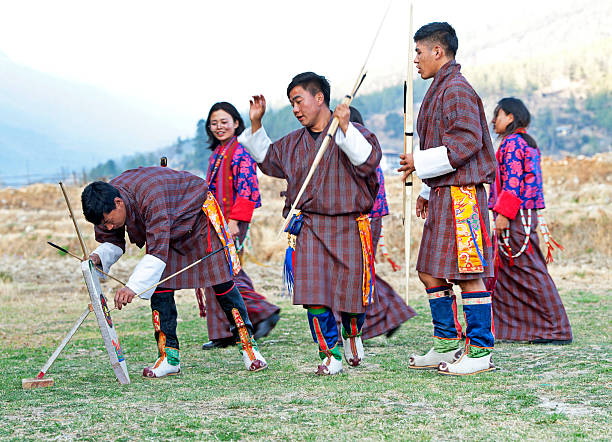
Bhutanese archery is more than just a sport; it's a cultural celebration. I decided to try my hand at it, fully expecting to fail miserably. And I did. My arrows landed nowhere near the target, much to the amusement of the local archers.
But the experience was about more than just hitting the target. It was about sharing a laugh, connecting with the Bhutanese people on a personal level. I focused my lens on capturing the Bhutanese Archery Experience Paro Valley: the traditional bows and arrows, the colorful targets, the celebratory songs that erupted after each successful shot. The joy and camaraderie were infectious, a reminder that happiness can be found in the simplest of things.
A Taste of Bhutan: Beyond the Tourist Menu
I made a conscious effort to venture beyond the usual tourist fare and immerse myself in Bhutanese cuisine. The Bhutanese cuisine Ema Datshi recipe and experience was an eye-opener. Ema Datshi, the national dish, a fiery chili cheese stew, was an unexpected explosion of heat and cheesy flavor. It's simple, yet deeply satisfying. The Momos, steamed dumplings filled with various meats and vegetables, were another favorite, each bite a burst of flavor and texture.
Then there was Suja, the traditional butter tea. My initial reaction was… less than enthusiastic. The salty, almost savory taste was unusual, to say the least. But as I spent more time in Bhutan, I began to appreciate it. It became a comfort, a ritual, a symbol of Bhutanese hospitality.
Beyond the Lens: A Changed Perspective
I still captured stunning photographs of the Paro Valley. The Rinpung Dzong bathed in golden light at sunset. The glacial rivers reflecting the starry night sky. I came to Bhutan seeking landscapes, but I found something more profound: a connection to the Bhutanese philosophy of Bhutan Gross National Happiness Travel.
I came seeking landscapes, but found something more profound: a connection to the Bhutanese philosophy of Gross National Happiness (GNH). GNH, a holistic measure of well-being, emphasizes sustainable development, cultural preservation, good governance, and environmental conservation. It's a philosophy that permeates every aspect of Bhutanese life, and it's undeniably contagious. How does Finding Happiness Bhutan Travel Blog fit in? It's the way of life here.
I left Bhutan with images, but more importantly, with a sense of purpose. Perhaps you are wondering "What is Gross National Happiness in Bhutan?" It is more than a slogan, it is a daily practice. I came to Bhutan to capture its beauty, but Bhutan captured something within me. If you want to experience your own personal journey, consider booking a Bhutan photography tour guide.