Beyond the Horizon: Photographing the Surreal Sa...
Stepping onto the Salar de Uyuni for the first time felt like stepping onto another planet. The sheer scale of it is simply impossible to comprehend until you're there. Imagine a canvas of blinding white stretching in every direction, the horizon dissolving into a shimmering haze. It's a place where the earth meets the sky in a seamless embrace, and the silence is broken only by the whisper of the wind and the click of your camera shutter. As a landscape and astrophotographer, I've chased light across the globe, but nothing could have prepared me for the otherworldly beauty and unique photographic challenges of Bolivia's Salar de Uyuni. My 3-day guided tour was an immersion into a surreal landscape, an experience that pushed my creative boundaries and left me utterly breathless – both from the altitude and the views.
Photographic Paradise: Sunrise, Sunset, and Stars
The photographic opportunities on the Salar are endless, but our tour was specifically designed to capture the most magical moments: sunrise, sunset, and the starlit nights. Our first stop was near Colchani, the gateway town to the Salar, famed for its salt harvesting. Here, as the sun began its ascent, the thin layer of water that often covers the salt flats transformed into a giant mirror. The sky erupted in vibrant hues of orange, pink, and purple, perfectly reflected on the ground beneath our feet. It was a truly breathtaking spectacle, requiring wide-angle lenses to capture the immensity of the scene and capture the reflections of the clouds.
Capturing Unique Perspectives on Incahuasi Island
The next day took us to Incahuasi Island, also known as Fish Island, a rocky outcrop dotted with giant cacti. This location offered a completely different perspective, allowing us to use the cacti as foreground elements against the vast expanse of the salt flats. The contrast between the rugged texture of the cacti and the smooth, reflective surface of the Salar created stunning compositions. We experimented with different angles and focal lengths to emphasize the scale of the landscape and create visually compelling images. This is where those forced perspective shots really come to life!
Astrophotography: Unveiling the Milky Way
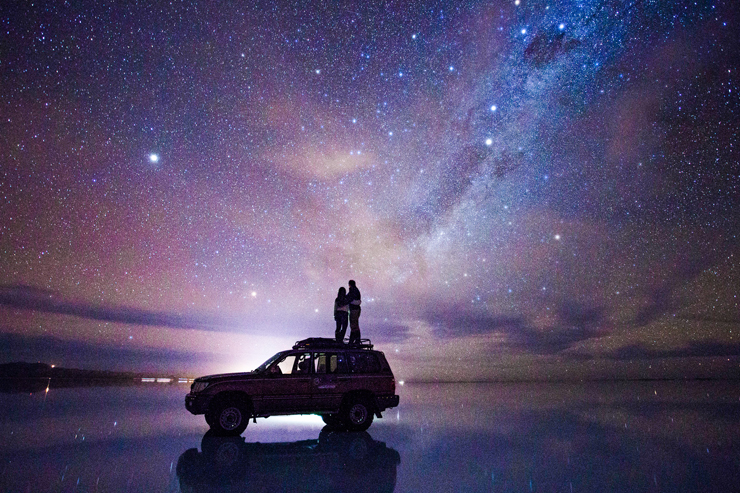
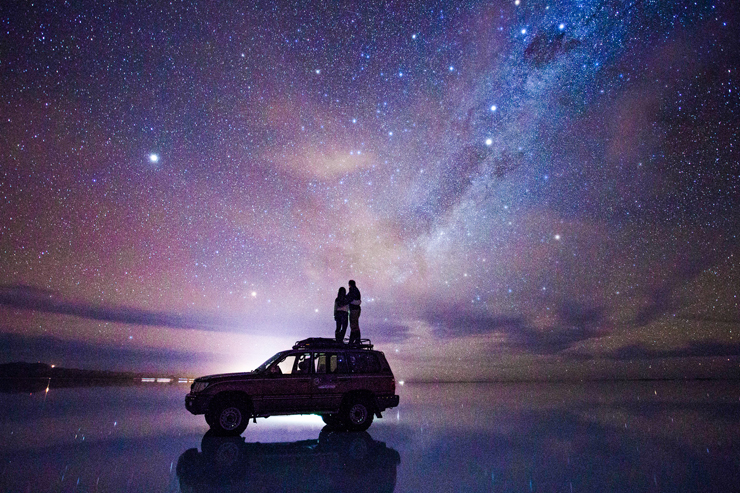
But the highlight of the trip was undoubtedly the astrophotography. Away from city lights, the Salar de Uyuni boasts some of the darkest skies on Earth. The complete absence of light pollution allowed the Milky Way to blaze across the night sky in all its glory. Photographing the stars on the Salar presented unique challenges. The freezing temperatures drained batteries quickly, so bringing spares is essential. We also had to contend with the wind, which could cause camera shake. But the effort was more than worth it. Seeing the Milky Way reflected on the salt flats was an experience I'll never forget.
Best Camera Settings for Salar de Uyuni
- Aperture: Use a wide aperture (f/2.8 - f/4) to capture as much light as possible in low-light conditions. For landscape shots during the day, use f/8 to f/11 for greater depth of field.
- ISO: Start with a low ISO (100-400) during the day and increase it (800-3200) for astrophotography, adjusting as needed to balance brightness and noise.
- Shutter Speed: Experiment with shutter speeds. During the day, use faster shutter speeds to freeze action. At night, use longer shutter speeds (15-30 seconds or more) to capture the stars, but be mindful of star trails. Use a remote shutter release or a timer to avoid camera shake.
The Tour Experience: Jeeps, Guides, and Salt Hotels
Our 3-day tour was well-organized and catered specifically to photographers. We traveled in sturdy jeeps, essential for navigating the rugged terrain. Our guide was incredibly knowledgeable, not only about the best photography spots but also about the local flora, fauna, and history of the region. He knew all the secret spots, the perfect angles, and the ideal times to be in each location.
The accommodation was basic but comfortable. We stayed in "salt hotels," constructed entirely from salt bricks. They were surprisingly cozy, providing a welcome respite from the cold desert nights.
The camaraderie among the photographers on the tour was also a highlight. Sharing tips, techniques, and experiences with fellow enthusiasts enriched the entire journey.
Food and Altitude: A Unique Culinary and Physical Challenge
Eating at high altitude presents its own set of challenges. The altitude saps your appetite and can make even simple meals feel like a chore. Coca tea became my constant companion, helping to alleviate the symptoms of altitude sickness. The local cuisine was surprisingly hearty. We often had quinoa soup, a staple in the Andes, which was both warming and nutritious. The texture was a bit grainy, but the flavor was comforting.
One evening, we were served llama steak. It was lean and slightly gamey, with a distinct flavor that I found quite enjoyable. It was grilled, and seasoned simply with salt and pepper, allowing the natural taste of the meat to shine through. Remember to eat slowly and drink plenty of water!
Salar de Uyuni Altitude Sickness Photography Tips
- Acclimatize: Spend a few days in La Paz or another high-altitude city before heading to the Salar de Uyuni to help your body adjust.
- Hydrate: Drink plenty of water and avoid alcohol and caffeine.
- Coca Tea: Coca tea is a traditional remedy for altitude sickness and can help alleviate symptoms.
- Eat Light Meals: Avoid heavy, greasy foods that can be difficult to digest at high altitude.
- Rest: Get plenty of rest and avoid strenuous activity.
Optical Illusions and Surreal Landscapes
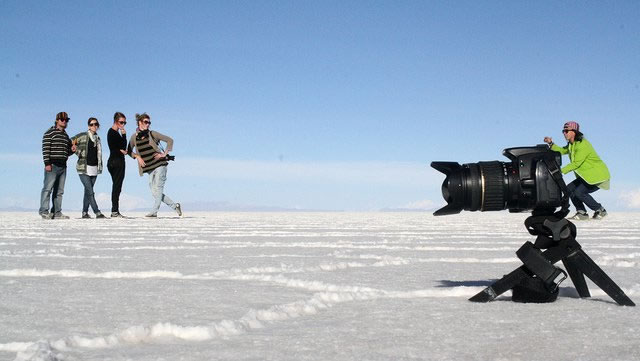
The Salar de Uyuni is a playground for the imagination, creating endless optical illusions. The vast, white expanse distorts perspective, making it possible to create forced perspective shots where people appear miniature or gigantic. Driving for hours across the seemingly endless white surface is a surreal experience, like navigating a dreamscape. It's a place where reality bends and the ordinary becomes extraordinary.
Unique Perspective Photos Salar de Uyuni Tips
- Get Low: Shooting from a low angle can exaggerate the sense of scale and make objects appear larger.
- Use Props: Incorporate props like toys, figurines, or even other people to create interesting perspective illusions.
- Experiment with Distance: Play with the distance between the subjects and the camera to create different effects.
- Have Fun: Don't be afraid to get creative and experiment with different ideas. The possibilities are endless!
Conclusion: A Photographer's Dream
The Salar de Uyuni is more than just a destination; it's an experience that will stay with you long after you've left. It's a place that challenges your perception of reality, ignites your creativity, and connects you with the raw beauty of our planet. As a photographer, I can honestly say that it's one of the most unique and unforgettable places I've ever visited. If you're looking for a photographic adventure that will push your boundaries and leave you in awe, then I highly recommend a visit to the Salar de Uyuni.
Practical Tips for Your Salar de Uyuni Photography Trip:
- Pack warm clothes: The temperatures can drop dramatically, especially at night.
- Bring extra batteries: The cold will drain your batteries quickly.
- Consider a photography-specific tour: These tours are designed to maximize your photographic opportunities.
- Protect your gear: The salt dust can be damaging to your equipment, so bring protective covers and cleaning supplies.
- Check Availability: The best tours fill up quickly, so book in advance!