Beyond the Bucket List: An Ethical Awakening in...
We live in a world of sensory overload. Instagram feeds flash with picture-perfect destinations, tempting us to chase the next "it" location and tick off another box on our ever-growing bucket lists. But lately, I've been craving something more, a deeper connection with the places I visit, and a way to travel that leaves a positive impact. That's what led me to Bhutan, a country renowned for its stunning landscapes and its unique philosophy of Gross National Happiness (GNH). I sought sustainable tourism in Bhutan, hoping to find a different way to travel.
What I found was far more complex and compelling than any postcard-perfect image. Bhutan is a land of breathtaking beauty, yes, but it's also a nation grappling with the challenges of modernization, navigating the delicate balance between preserving its rich cultural heritage and embracing the opportunities of the 21st century. My journey became an ethical awakening, forcing me to confront my own role as a traveler and to consider how I could contribute to a more responsible and sustainable future for this remarkable country.
Discovering GNH Roots: A Sustainable Homestay Experience
One of the most impactful experiences of my trip was my visit to a rural village participating in the "GNH Roots" homestay program. Forget sterile hotel rooms; this program connects travelers with local families, offering a genuine glimpse into traditional Bhutanese life. Stepping into the simple, yet welcoming home of my host family, I felt an immediate sense of connection. I spent my days learning about their daily routines, helping with chores, and sharing stories over steaming cups of suja, Bhutanese butter tea.
I had the opportunity to interview Karma Tshering, the visionary founder of GNH Roots. He explained that the program's primary goal is to empower local communities and preserve their cultural heritage in the face of rapid modernization. "Tourism can be a powerful force for good if it's done right," Karma told me. "But it's crucial that the benefits flow directly to the people who are the custodians of our culture."
Karma Tshering explained how sustainable tourism initiatives in Bhutan are important because the homestays provide a vital source of income for families, allowing them to improve their living standards without having to leave their villages in search of work. It's a virtuous cycle: the income generated helps families maintain their traditional homes and lifestyles, which in turn attracts more visitors eager to experience authentic Bhutanese culture. The program also emphasizes cultural exchange and skills training. Villagers learn new skills in hospitality and communication, while visitors gain a deeper understanding of Bhutanese values and traditions.
The Paradox of Paradise: Critiques of Gross National Happiness
Bhutan's commitment to Gross National Happiness is admirable, a refreshing alternative to the relentless pursuit of economic growth that dominates much of the world. But my conversations with local people revealed a more nuanced reality. While GNH emphasizes well-being and environmental conservation, the modernization in Bhutan can make those things difficult to achieve.
In Thimphu, I met Sonam, a bright and ambitious young woman who had recently moved from her village to the capital city in search of better economic opportunities. Her story offered a poignant counterpoint to the idyllic image often associated with GNH. "Life in the village was simple and peaceful," she told me, "but there were limited opportunities. I wanted to pursue my education and build a career, and that wasn't possible in my village." Sonam’s experience highlighted the socioeconomic disparities that can exist beneath the surface of the GNH narrative. While GNH aims to promote holistic well-being, the pursuit of economic advancement can sometimes lead to difficult choices and the displacement of individuals from their traditional ways of life.
The Ethical Photographer's Dilemma: Jambay Lhakhang Drup
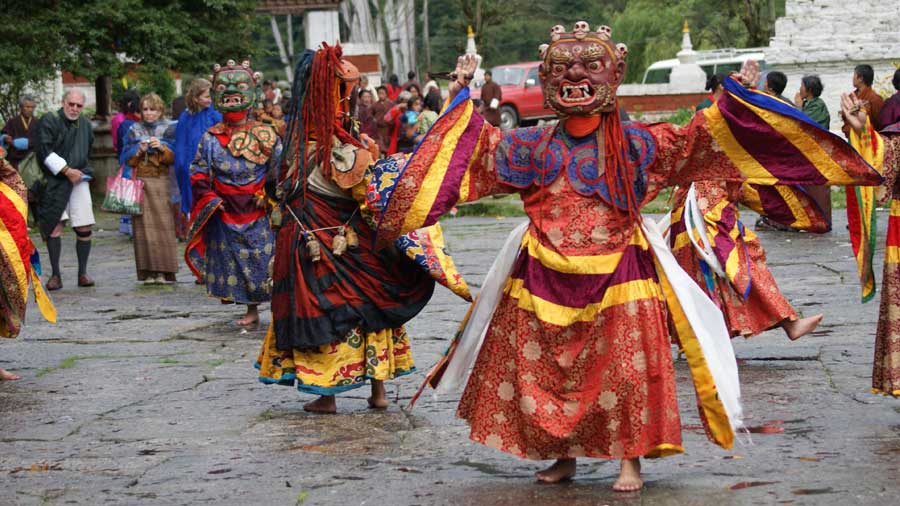
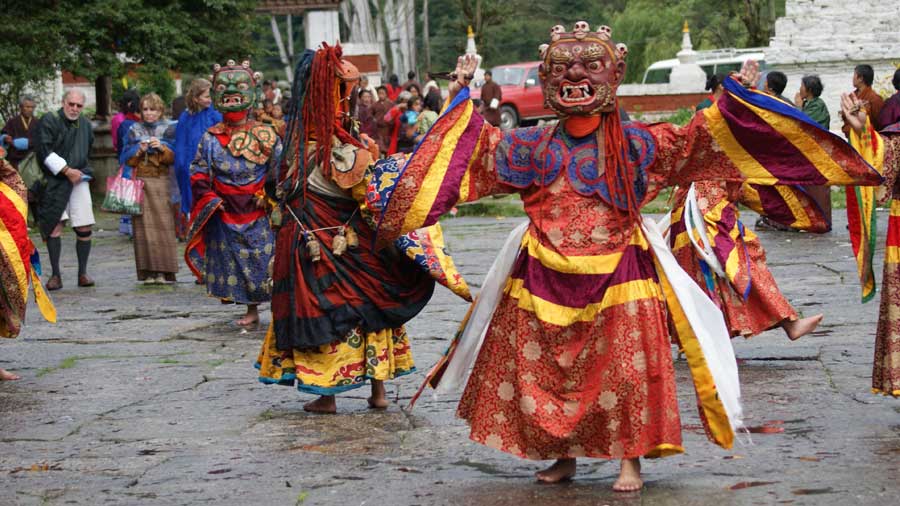
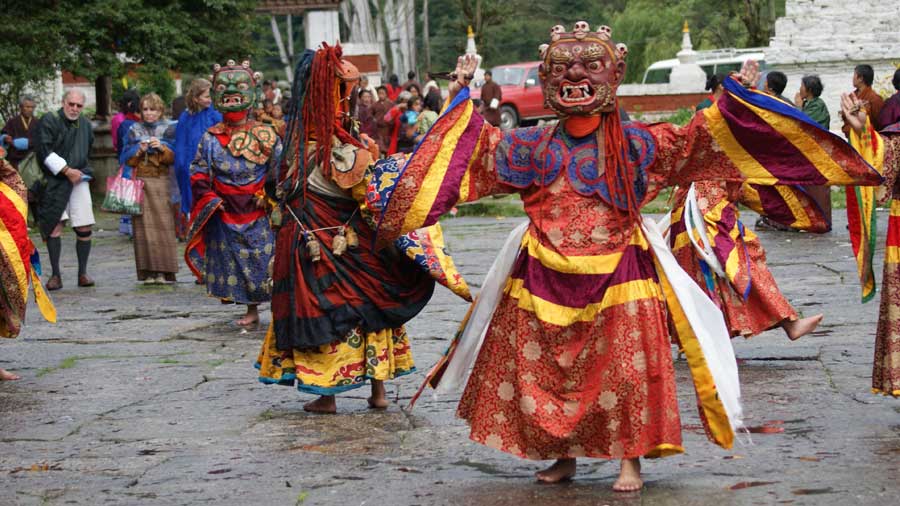
Attending the Jambay Lhakhang Drup festival in Bumthang was an unforgettable experience. The vibrant colors, the masked dances, the palpable sense of devotion – it was a sensory feast. But as I raised my camera to capture the spectacle, I felt a nagging sense of unease. Was I simply a tourist, intruding on a sacred ritual and reducing it to a series of photographs?
There was one moment in particular that gave me pause. During a fire ritual, a group of monks chanted prayers, their faces etched with concentration. I hesitated to photograph them, feeling that it would be disrespectful to intrude on their private devotion. I made the conscious choice to use my 35mm f/1.4 lens, allowing me to capture the scene without being intrusive and to better immerse myself in the moment.
Instead of snapping away indiscriminately, I focused on observing the ritual with reverence, allowing myself to be fully present in the moment. Before taking any photos, I moved carefully and sought permission, ensuring that my presence wouldn't disrupt the ceremony or offend anyone. I started to better understand ethical photography in Bhutan.
Beats of Change: Discovering Bhutanese Rap
Bhutan's cultural landscape is far more diverse than I had imagined. Beyond the ancient monasteries and traditional arts, a vibrant contemporary culture is taking shape. One of the most unexpected discoveries of my trip was the burgeoning Bhutanese rap scene.
In a small recording studio in Thimphu, I met Namgay Jigs, a young rapper who is using his music to address social issues and promote cultural preservation. His music is a powerful fusion of traditional Bhutanese instruments, like the dramnyen (a long-necked lute), with modern hip-hop beats. "We want to tell our stories, our way," Namgay explained. "We want to show the world that Bhutan is more than just mountains and monasteries."
One of Namgay's songs, "The Dragon's Whisper," resonated deeply with me. The lyrics, a mix of Dzongkha and English, spoke of the importance of preserving Bhutanese identity in the face of globalization: "Our traditions are the roots that keep us strong, the whispers of the dragon guiding us home. But the world is changing, the winds are blowing, we must hold on tight, or we risk losing what we know."
Connecting with Dzongkha: A Personal Endeavor
Beyond seeking out cultural experiences, I wanted to actively engage with Bhutanese culture in a meaningful way. I spent an afternoon learning to write in the Dzongkha script with a local calligrapher. The intricate strokes and delicate curves of the letters were initially daunting, but with patience and guidance, I slowly began to grasp the fundamentals. The experience was both challenging and incredibly rewarding, giving me a newfound appreciation for the beauty and complexity of the Bhutanese language.
Traditional vs. Modern Education in Bhutan
In a rapidly changing world, the contrast between traditional and modern values in Bhutan is striking. This is captured in a TikTok video showcasing traditional education vs. modern.
- HOOK (0-3 seconds): A slow-motion, extreme close-up of a young Bhutanese monk's hand diligently copying a prayer from a traditional manuscript using a bamboo pen and ink. The hand moves with precision and focus. Action word: Delicately.
- SCENE (3-6 seconds): Split-screen.
- LEFT SIDE: The Bhutanese monk continues writing with unwavering focus. Wide shot, depth of field.
- RIGHT SIDE: A child (Western-dressed, modern setting - cluttered desk, video game posters) stares blankly at a laptop screen during an online lesson. Zoom on the child's face showing disengagement. Low-angle.
- TWIST (6-9 seconds): The Bhutanese monk pauses, looks directly at the camera with a genuine smile. Cut to the Western child rapidly slams the laptop shut in frustration, revealing a messy, cluttered room. The twist: the monk's mindful approach contrasts the child's distracted, overwhelmed experience. Action Word: Suddenly.
A Photographer's Reflection: Respecting Sacred Moments
My journey through Bhutan forced me to confront my responsibilities as a photographer. Here's my advice:
- Before Taking a Photo, Always Ask for Permission
- Never Disrupt Religious Events for a Photo
- Never Pay a Person in Exchange for Taking Their Photograph
- Remember that you are a guest in their country
- Always consider the impact on the local community
Concluding Thoughts: Navigating the Complexities of Ethical Travel
Bhutan is a country that defies easy categorization. It's a land of ancient traditions and modern aspirations, of breathtaking beauty and complex social realities. My journey was an ethical awakening, forcing me to confront my own assumptions and to consider the impact of my travels.
As I left Bhutan, I carried with me a profound sense of gratitude and a renewed commitment to responsible travel. It's not enough to simply tick off bucket-list destinations; we must strive to connect with the places we visit in a meaningful way, to support local communities, and to respect the cultures and traditions that make each destination unique. Bhutan is a reminder that travel can be a force for good, but only if we approach it with humility, empathy, and a willingness to learn. Seek out authentic experiences that support local communities by booking Bhutan homestays.