A Historian's Haunted Holiday: Transylvania Beyo...
Good day. I am Dr. Alistair Leopold, a retired professor of Eastern European Folklore and Architecture. My academic pursuits have taken me to some rather obscure corners of the continent, but I confess, Transylvania always felt a tad… theatrical. The relentless marketing of vampires and spooky castles struck me as rather vulgar, a sort of historical burlesque. However, professional curiosity, coupled with an attractively priced off-season tour, proved too tempting to resist. I embarked on a late October to early November sojourn, bracing myself for kitsch and hoping for a glimmer of genuine historical insight. What I found was a bit of both, served with a generous helping of damp autumnal charm.
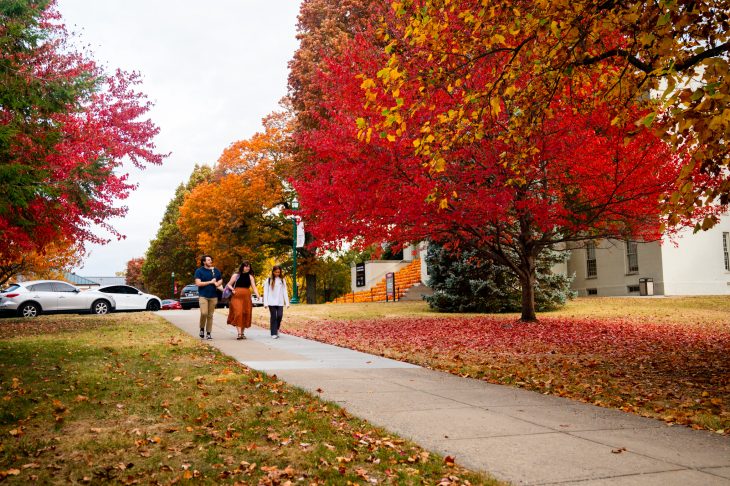
Corvin Castle in the distance, bathed in autumn light and hinting at a melancholic beauty. The image establishes the setting and the tone of Dr. Leopold's visit.
Bran Castle: A Halloween Masquerade
My Transylvanian adventure began, predictably, at Bran Castle. The "Halloween Event" was in full swing. The air thrummed with the predictable bass of a sound system playing something vaguely gothic, while synthetic cobwebs clung precariously to the medieval stonework. Tourists, many in Dracula capes purchased at the gate, shuffled through the castle rooms, snapping photographs.
Now, let's address the elephant in the room, or rather, the bat in the belfry: Bran Castle’s association with Vlad the Impaler. The connection is tenuous at best. Vlad may have passed through on occasion, possibly even been imprisoned there briefly, but it was hardly his primary residence. The event, of course, played up the connection, with costumed actors lurking in corners, delivering theatrical pronouncements about blood and vengeance.
The historical inaccuracy was, frankly, amusing. One could almost feel the shade of a real historian, perhaps a Habsburg administrator from the Austro-Hungarian empire, rolling their eyes. Still, the atmosphere was undeniably… present. The low, grey light of late October filtered through the narrow windows, casting long, eerie shadows. And the vin fiert (mulled wine) was surprisingly palatable, providing a welcome warmth against the evening chill. While not a bastion of historical accuracy, the event did offer a glimpse into the region's willingness to embrace (and perhaps exaggerate) its captivating myths and legends.
Sighisoara: Shadows of the Strigoi
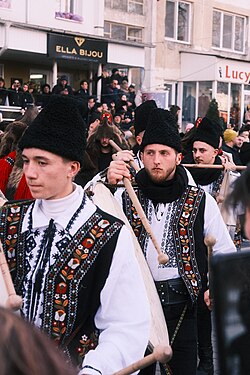
This image captures the atmosphere of Sighisoara, emphasizing the medieval architecture and the fading autumnal light. It complements the description of the "strigoi" tour and Vlad Tepes's birthplace.
Sighisoara, a UNESCO World Heritage site, proved a more rewarding experience. I joined a "strigoi" (vampire) themed walking tour. The guide, a young woman with an infectious enthusiasm, led us through the winding, uneven cobblestone streets, recounting tales of Vlad Tepes (Vlad the Impaler), who was born in the city, and the ancient Romanian folklore surrounding vampires.
Now, Romanian vampires are a far cry from the romantic figures of Western literature. Strigoi are often revenants, troubled souls who return to haunt the living. The folklore is rich with rituals and superstitions to ward them off. The tour guide, while admittedly embellishing for dramatic effect, did a commendable job of grounding the stories in local tradition.
Walking through Sighisoara in the fading autumnal light was a genuinely evocative experience. The medieval architecture, with its towering clock tower and colorful burgher houses, seemed to breathe with history. Vlad's birthplace, marked with a simple plaque, offered a somber reminder of the man behind the myth. Even dodging the cobblestones threatening to upend me was a reminder of the city's long existence.
A Taste of Tradition: Romanian Cuisine
No historical expedition is complete without sampling the local fare. Romanian cuisine, I discovered, is hearty and flavorful. I sampled sarmale (cabbage rolls stuffed with meat and rice), a staple of Romanian cooking. The version I tasted was savory and well-seasoned, the cabbage tender and the filling rich with spices. Then there was plăcintă, a savory pie filled with cheese and herbs. Flaky and delicious, it provided much-needed sustenance during my explorations. I failed to find cozonac however.
And, of course, one cannot visit Romania without trying țuică, the local plum brandy. It is… an experience. The initial sweetness gives way to a potent warmth that spreads through one's chest. It's not for the faint of heart, but it certainly adds a certain joie de vivre to the proceedings.
Corvin Castle: Gothic Grandeur
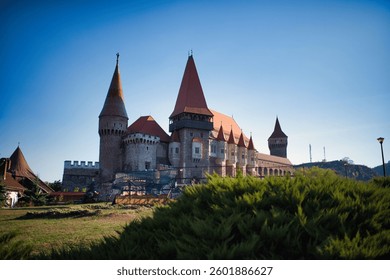
This photo illustrates the imposing presence and Gothic architecture of Corvin Castle, enhancing the description of the castle's history and grandeur.
Corvin Castle, also known as Hunedoara Castle, was perhaps the most visually impressive site of my journey. Perched dramatically on a rocky outcrop, its Gothic architecture is truly awe-inspiring. Legends abound, including the claim that Vlad the Impaler was imprisoned here for seven years.
The castle's history is rich and complex, with various owners and architectural additions over the centuries. The light filtering through the high, arched windows created a dramatic effect, illuminating the vast halls and courtyards. It’s not difficult to imagine knights and nobles striding through those halls, plotting and scheming. The castle's silhouette against the autumn sky was particularly striking, a stark reminder of its enduring power.
Bucovina's Painted Monasteries: A Riot of Color
A day trip to the painted monasteries of Bucovina provided a welcome contrast to the brooding castles. The bus ride itself was picturesque, winding through rolling hills dotted with small villages and farmhouses.
The monasteries themselves are remarkable. Covered in vibrant frescoes depicting biblical scenes, they are stunning examples of Byzantine art. The paintings, executed in the 15th and 16th centuries, served as visual Bibles for the largely illiterate population. The intricate details and vibrant colors are truly breathtaking, a testament to the skill and artistry of the monks who created them.
Viscri: A Saxon Sanctuary
The fortified church in Viscri, a UNESCO World Heritage site, offered another glimpse into Transylvania's rich history. This Saxon village, with its traditional houses and cobblestone streets, feels frozen in time.
The church itself is a testament to Saxon ingenuity. Built to withstand sieges, its thick walls and sturdy towers provided refuge for the villagers. The guide, a local resident with a deep knowledge of the village's history, led us through the church, explaining its architecture and its significance to the community. The interior, simple yet elegant, was bathed in sunlight streaming through the stained-glass windows.
Autumn's Embrace: The Transylvanian Landscape
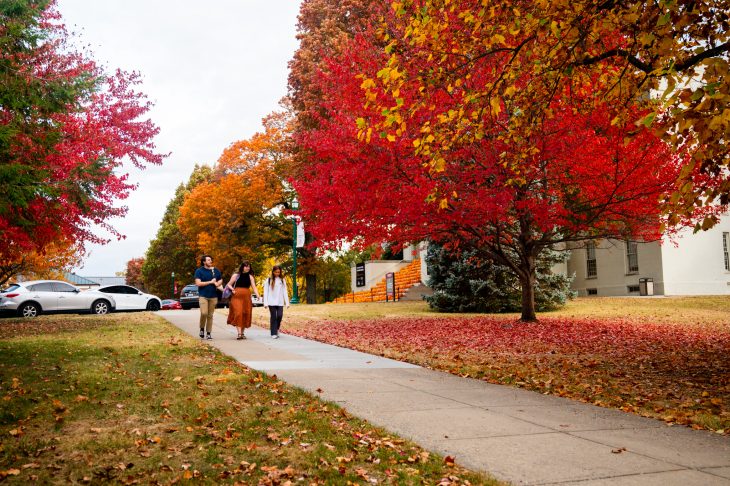
Throughout my travels, the Transylvanian landscape proved to be a constant source of beauty, even in late autumn. The forests, though past their peak foliage, still retained patches of vibrant color. Misty mornings shrouded the rolling hills, creating an atmosphere of melancholic beauty. Imposing castles perched on crags, their silhouettes softened by the mist, added to the dramatic effect. And the medieval villages, nestled in valleys, exuded a sense of timeless charm.
The air was crisp and clean, carrying the scent of damp earth and decaying leaves. It was a landscape that seemed to whisper stories of the past, of ancient forests and hidden secrets.
Concluding Remarks: Beyond the Hype
Transylvania, I confess, surprised me. While the commercialization of its vampire legends is undeniable, there is a genuine historical and cultural richness to be discovered. The castles, the churches, the villages, and the landscape all offer a glimpse into a fascinating past.
If you are interested in history and folklore, and can tolerate a bit of touristy theatrics, I recommend a visit. Just be sure to venture beyond the well-trodden paths and seek out the hidden gems. Perhaps consider visiting earlier in Autumn than I, in order to see the foliage in its prime. And do be prepared for the țuică. It is, after all, a crucial element of the Transylvanian experience.