A Decade in the Amazon: Witnessing Beauty and Ba...

The Amazon. The name alone conjures images of vibrant life, untold mysteries, and a wilderness unlike any other. For the past ten years, this extraordinary rainforest has been my office, my muse, and the source of my deepest inspiration – and my greatest heartbreak. My name is Isabella Rodriguez, but most people call me Isa. I’m a wildlife photographer and conservationist, and my journey into the heart of the Peruvian Amazon began unexpectedly with a student exchange. The sheer scale and untamed beauty of this place captivated me, and within a year, I was volunteering with a local conservation group. That experience quickly evolved into a decade-long commitment to documenting the devastating impact of illegal gold mining on this precious ecosystem, a mission that has become my life's work. This is my story, and the story of a rainforest hanging in the balance.
Three Days on the Madre de Dios: A River of Contrasts
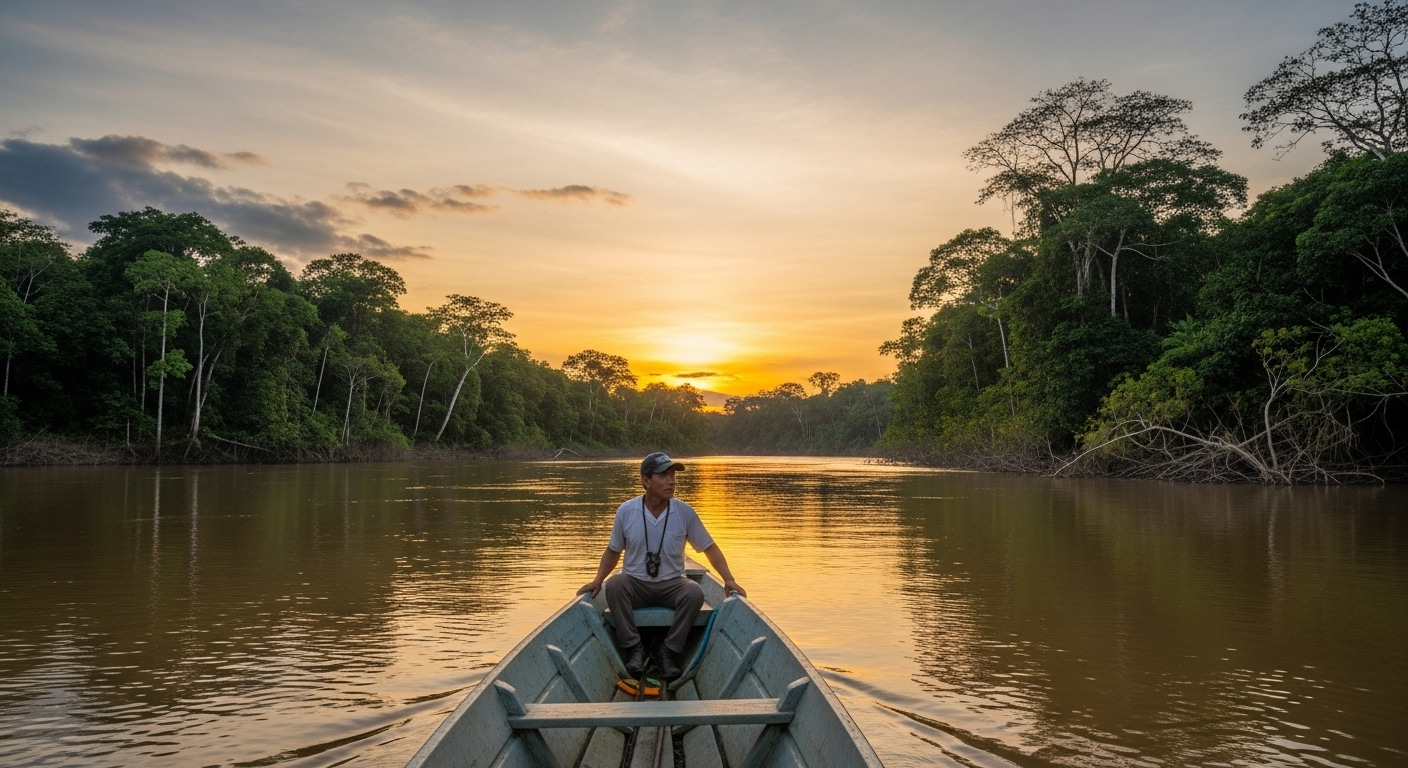
My work often takes me deep into the rainforest, and a recent three-day river expedition along the Madre de Dios with Ricardo, an Ese Eja indigenous guide, perfectly encapsulates the challenges and rewards of conservation in the Amazon. The Madre de Dios, a vital artery of the rainforest, is both a lifeline and a battleground.
Navigating its waters isn't easy. The river's currents can be treacherous, and the ever-present threat of illegal mining operations looms large. Sadly, we encountered several dredges tearing into the riverbanks, leaving behind a wake of destruction and mercury contamination. It's estimated that illegal mining is stripping away an average of 2,500 acres annually in this region, a statistic that becomes painfully real when you witness the devastation firsthand.
But amidst the destruction, there is still hope. On our journey, we were rewarded with glimpses of the Amazon's unparalleled biodiversity. We spotted vibrant scarlet macaws soaring overhead, their calls echoing through the canopy. One magical afternoon, we even encountered a family of giant river otters, their playful antics a reminder of what's at stake.
Ricardo’s traditional knowledge was invaluable. He could read the river like a book, expertly navigating the currents and identifying wildlife by their calls and tracks. “Preserving our traditional knowledge is vital," Ricardo told me. "It’s how we’ve lived in harmony with the rainforest for centuries. If we lose that knowledge, we lose a part of ourselves and our ability to protect this place.” His wisdom and connection to the land underscored the importance of working alongside indigenous communities in conservation efforts.
Camera Traps: Unseen Wildlife, Ethical Considerations

A crucial aspect of my work involves using Bushnell Trophy Cam Aggressor camera traps to document elusive wildlife in the rainforest near Tambopata National Reserve. These cameras allow us to capture images of jaguars, tapirs, and other species that are difficult to observe directly.
However, the use of camera traps also raises ethical considerations. It's essential to minimize disturbance to wildlife and ensure that the data collected is used for conservation purposes. We carefully select camera locations to avoid sensitive areas and regularly check the cameras to minimize any potential impact.
The data we collect is shared with researchers and conservation organizations to help inform conservation strategies. It’s a powerful tool, but one that must be used responsibly.
Visiting the Ese Eja: Reforestation and Cultural Preservation
One of the most inspiring aspects of my work is collaborating with Ese Eja communities actively involved in reforestation projects near Puerto Maldonado. These communities are on the front lines of conservation, working tirelessly to restore degraded land and preserve their cultural heritage.
I had the privilege of interviewing Elena, a community elder, about their traditional knowledge of medicinal plants and their efforts to preserve their culture in the face of environmental threats. "The rainforest is our pharmacy, our supermarket, our home," Elena explained. "We are losing our traditional knowledge as the forest disappears. But we are fighting back. We are planting trees, teaching our children about our culture, and working to protect our way of life."
Elena’s words resonated deeply. The Ese Eja’s commitment to preserving their culture and the rainforest is a testament to the resilience and wisdom of indigenous communities.
A Taste of the Amazon: Sustainable Cuisine

No journey into the Amazon is complete without experiencing its unique cuisine. The rainforest provides a bounty of ingredients, and local communities have developed sustainable ways to harvest and prepare them.
One unforgettable dish is Juane, a flavorful combination of rice and chicken wrapped in bijao leaves. It's traditionally prepared for special occasions within the Ese Eja community, symbolizing celebration and connection to the land.
The sustainable harvesting of Paiche (Arapaima) fish is also crucial for local food security. Paiche is one of the largest freshwater fish in the world and a vital source of protein for river communities. Sustainable fishing practices ensure that Paiche populations remain healthy and that this valuable resource is available for future generations.
And then there's Camu Camu, a small, vitamin C-rich fruit with a tart and refreshing flavor. Camu Camu has the potential to drive sustainable economic development in the region, providing a valuable source of income for local communities while promoting rainforest conservation. Its health benefits are remarkable, offering a natural boost to the immune system.
Landscape of Hope and Despair: A Stark Contrast
The Amazonian landscape presents a stark contrast between the dense, untouched primary rainforest and the scarred landscapes of illegal gold mining sites.
In the primary rainforest, towering trees reach for the sky, their branches adorned with vibrant bromeliads and orchids. The air is thick with humidity and the sounds of countless creatures. It's a place of unparalleled biodiversity, a living testament to the power and resilience of nature.
But just a short distance away, the devastation caused by illegal gold mining is heartbreaking. Deforestation has left behind barren landscapes, and mercury contamination has poisoned the soil and water. The scale of the destruction is staggering, a constant reminder of the urgent need for conservation efforts.
To experience the true vastness of the rainforest canopy, I recommend a visit to the Refugio Amazonas eco-lodge canopy walkway. Refugio Amazonas isn't a luxury resort, but rather a place that combines basic tourism with serious scientific research. Walking among the treetops, you gain a new perspective on the rainforest's complexity and beauty. The vibrant colors of the canopy, the symphony of bird calls, and the sheer scale of the landscape are truly awe-inspiring.
Ethical Considerations: A Complex Reality
Conservation in the Amazon is not a simple endeavor. It involves navigating complex ethical considerations and balancing competing interests.
Economic development is essential for improving the lives of local communities, but it must not come at the expense of environmental protection. Collaboration between local communities, governments, and NGOs is crucial for finding sustainable solutions that benefit both people and the environment.
Addressing the root causes of illegal mining, such as poverty and lack of economic opportunities, is also essential. By providing alternative livelihoods and empowering local communities to protect their resources, we can create a more sustainable future for the Amazon.
Voices from the Amazon: Interviews
Here are some brief excerpts from interviews I conducted:
- Ricardo (Ese Eja guide): "Our traditional knowledge is our inheritance. It connects us to the rainforest and guides our conservation efforts. We must pass it on to future generations."
- Elena (Ese Eja elder): "The mining is destroying our culture and our way of life. We are fighting to protect our land and our traditions for our children and grandchildren."
- Researcher from the Amazon Conservation Association (ACA): "Illegal mining is a major threat to the Amazon, but we are making progress. By working with local communities and governments, we can combat illegal mining and promote sustainable development."
Viral Video Concept: Deforestation vs. Reforestation
Imagine this: A rapid drone shot pulls back from a single, vibrant rainforest tree. The style is cinematic, hyperlapse, with golden hour lighting and saturated colors. The camera moves smoothly, orbiting the tree. Suddenly, the lush greenery vanishes. The view rapidly transitions into a barren, muddy wasteland of an illegal gold mining site. The camera then hyperlapses through months, showing a small reforestation plot, and speeds up. Small seedlings rapidly grow into saplings, then into a thriving piece of rainforest, juxtaposed with the continued destruction on the other side of the screen, until it ends on a thriving small plot. This powerful visual contrast captures the essence of the challenge and the hope for the Amazon's future.
Take Action: Support Amazon Conservation
The future of the Amazon depends on our collective action. You can support the Amazon Conservation Association (ACA) [amazonconservation.org] by donating to their reforestation projects and advocacy efforts. ACA provides critical funding and resources to local communities working to protect the rainforest. Every contribution, no matter how small, can make a difference.
The Amazon is a treasure worth protecting. Let's work together to ensure that it thrives for generations to come.